


Matthews Logo

Navigation Menu

Thomas Wilkinson

Associate Vice President | industrial | Atlanta, GA
Image of Thomas Wilkinson
About Thomas

Thomas Wilkinson serves as Associate Vice President at Matthews™, specializing in the acquisition, disposition, 1031 Exchange, and leasing of high-value industrial assets, primarily in the Atlanta metro. Thomas uses his in-depth commercial real estate knowledge and effective sales skills to execute clients’ objectives beyond expectations. His passion and commitment to providing top-tier service are seen through every step of the real estate investing process.


Prior to Matthews™, Thomas worked as a business analytics assistant, inputting, analyzing, and gathering data to pitch to local investors and property owners in Charlotte, NC and the surrounding markets.


B.S., Finance
University of Alabama


Professional Accomplishments
  • 2025 – Sales Achievement Award – Matthews™

Affiliations & Memberships
  • Georgia Real Estate Commission
  • License No. 416083 (GA)
Contact Thomas

Thomas Wilkinson in the Media

Unlocking Value in Shallow-Bay Industrial: The 2025 Update

Read More
2024 | Industrial Market Report | Atlanta, GA image

2024 | Industrial Market Report | Atlanta, GA

Read More
Industrial Market Report | Atlanta, GA image

Industrial Market Report | Atlanta, GA

Read More
Industrial Development | Movement in the Markets image

Industrial Development | Movement in the Markets

Read More

Case Studies

Image of How Matthews™ Drove an 83% Value Increase for McDonough Industrial Park Success Story

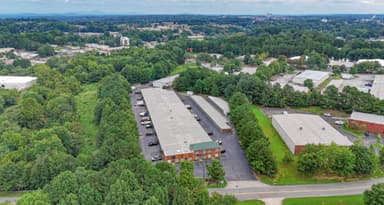
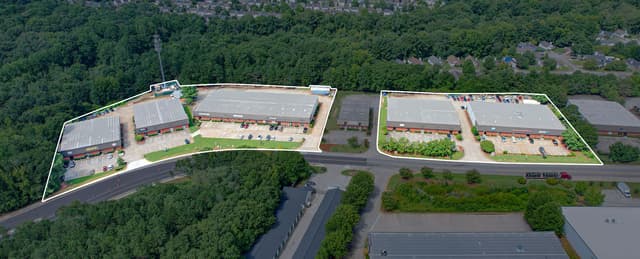
How Matthews™ Drove an 83% Value Increase for McDonough Industrial Park

Matthews™ arranged the sale of McDonough Industrial Park, a five-building shallow bay industrial property located at 221–373 McDonough Pkwy in McDonough, Georgia. The asset, positioned within the greater Atlanta industrial corridor, traded to an out-of-state buyer following a highly competitive marketing process. Notably, the Matthews agents™ had also facilitated the property’s prior sale approximately two years earlier, making this the second transaction the firm completed for the asset. After strategic repositioning by the owners, the McDonough Industrial Park sold for an in-place 4.79% cap rate.   Challenge At the time of the prior transaction, the property was fully occupied but faced structural challenges that limited investor confidence. Lease agreements featured little to no expense reimbursements, creating ambiguity in underwriting long-term cash flow. In addition, several suites were built out with excessive office space, reducing their functionality for modern shallow-bay industrial users. While occupancy remained strong, the lease structures and physical configuration constrained the asset’s appeal to both institutional and private equity buyers seeking predictable income streams. The challenge was to reposition the property into a more institutional-quality investment capable of commanding premium pricing in a competitive market.   Strategy The owners implemented an approximately 18-month repositioning plan focused on operational clarity and physical enhancements. Lease structures were revised to improve operating expense recoveries and enhance income predictability. In addition, excess office buildouts were reduced across multiple suites, converting underutilized space into more functional warehouse configurations tailored to small-bay industrial tenants. Exterior improvements, including updated signage, parking lot enhancements, and overall property presentation, further elevated the asset’s profile.   The Matthews™ agents leveraged their deep market knowledge and established investor relationships to launch a targeted marketing campaign that emphasized the improved income profile and strong Southeast industrial fundamentals. Within the first month, more than 15 tours were conducted, many with out-of-state groups, resulting in almost 20 offers.   Result The competitive process ultimately resulted in a sale to an out-of-state buyer at approximately $112 per square foot, representing an approximate 83% increase in value from the spring 2024 transaction. The sale demonstrated sustained investor appetite for shallow-bay industrial assets in growth markets like the Atlanta metro and highlighted the measurable impact of disciplined repositioning.   By advising on both the initial disposition and the subsequent sale following operational improvements, the Matthews™ agents delivered continuity, strategic guidance, and exposure to deep capital pools. Ultimately, they maximized pricing and reinforced the firm’s expertise in the evolving industrial investment landscape.

Image of Thomas Wilkinson Author

Thomas Wilkinson

Associate Vice President

Image of How Matthews™ Unlocked Significant Value for a Private Equity Firm Through a Strategic Sale-Leaseback Success Story

How Matthews™ Unlocked Significant Value for a Private Equity Firm Through a Strategic Sale-Leaseback

Matthews™ agents, Harrison Auerbach and Thomas Wilkinson, were engaged by a large middle market private equity company following the acquisition of a uniform company with multiple locations throughout the Southeast. One of the industrial buildings, located in Charlotte, North Carolina had been purchased as part of a broader operating company transaction, despite the firm displaying little interest in owning real estate long-term. In the absence of internal benchmarks for rental rates, valuation, or optimal lease structure, the client turned to Auerbach and Wilkinson to determine how the asset could be positioned to generate immediate value through a strategic sale-leaseback.   Challenge The private equity firm faced several challenges with long-term real estate ownership. They lacked an established framework for assessing market rent, lease terms, or investor expectations in the Charlotte region. Without clarity regarding the relationship between achievable rent levels, lease length, credit profile, and cap rate, the firm struggled to understand the property’s true disposition potential in the private capital investment space. A few years after closing on the operating company, they sought guidance from the Matthews™ agents to uncover the property’s value and identify a path toward maximizing sale proceeds.   Strategy To address these obstacles, the agents performed a comprehensive underwriting of the property. They completed a detailed market rent study that identified realistic, supportable rent for comparable assets and created sensitivity scenarios illustrating how different rent levels would influence valuation. Auerbach and Wilkinson then provided recommendations for the appropriate lease term, annual escalations, and operational responsibilities that would attract investors while aligning with the tenant’s functional needs. The agents also produced valuation models that demonstrated how various pricing scenarios would be affected by changes in lease structure and credit perception.   Before the lease was officially executed, they launched a targeted national marketing campaign directed at private capital, sale-leaseback investors, institutions, and 1031 exchange buyers. The offering reached tens of thousands of vetted buyers, and the association with private equity ownership enhanced the perceived ‘creditworthiness’ of the tenant. The result? Multiple competitive offers from institutional groups and family offices.   Result Auerbach and Wilkinson’s strategic approach delivered an exceptional outcome for the seller. The property achieved an all-cash closing above the initial list price, surpassing both the agents’ original projections and the private equity f irm’s internal expectations. The process moved swiftly from marketing to closing, with no disruptions. Ultimately, the private equity group realized meaningful profit on a piece of real estate they were obligated to acquire with no intent to hold long-term. This transaction demonstrates how the agents’ early involvement converted non-core assets into immediate, quantifiable value.   Auerbach and Wilkinson provide clarity and certainty by evaluating a property’s present value, how lease terms impact valuation, and ultimately determining whether to retain, sell, or re-position an asset.

Image of Harrison Auerbach Author

Harrison Auerbach

Senior Vice President & Director