
7-Eleven’s Strategic Shift Reflects a Changing Convenience Store Industry
In 2024, Alimentation Couche-Tard, the parent company of Circle K, made headlines after submitting a buyout offer for 7-Eleven to Seven & I Holdings. Seven & I rejected the proposal, arguing the offer undervalued the company and its future potential.
Since then, 7-Eleven has moved aggressively to reposition itself for the future. The company has accelerated the closure of underperforming and outdated locations while simultaneously investing in a new generation of larger, food-focused stores. It has also explored plans for a North American IPO. Together, these moves show how one of the world’s largest convenience store operators is adapting to changing consumer behavior, margin pressure, and a more competitive retail environment.
The Shift Toward Food-Focused Stores
For decades, convenience stores relied heavily on fuel sales and traditional grab-and-go retail. That model no longer carries the same strength it once did. Consumers now expect higher-quality food options, faster service, and a more modern experience. Technology has also changed purchasing behavior, making it harder for older store formats to compete.
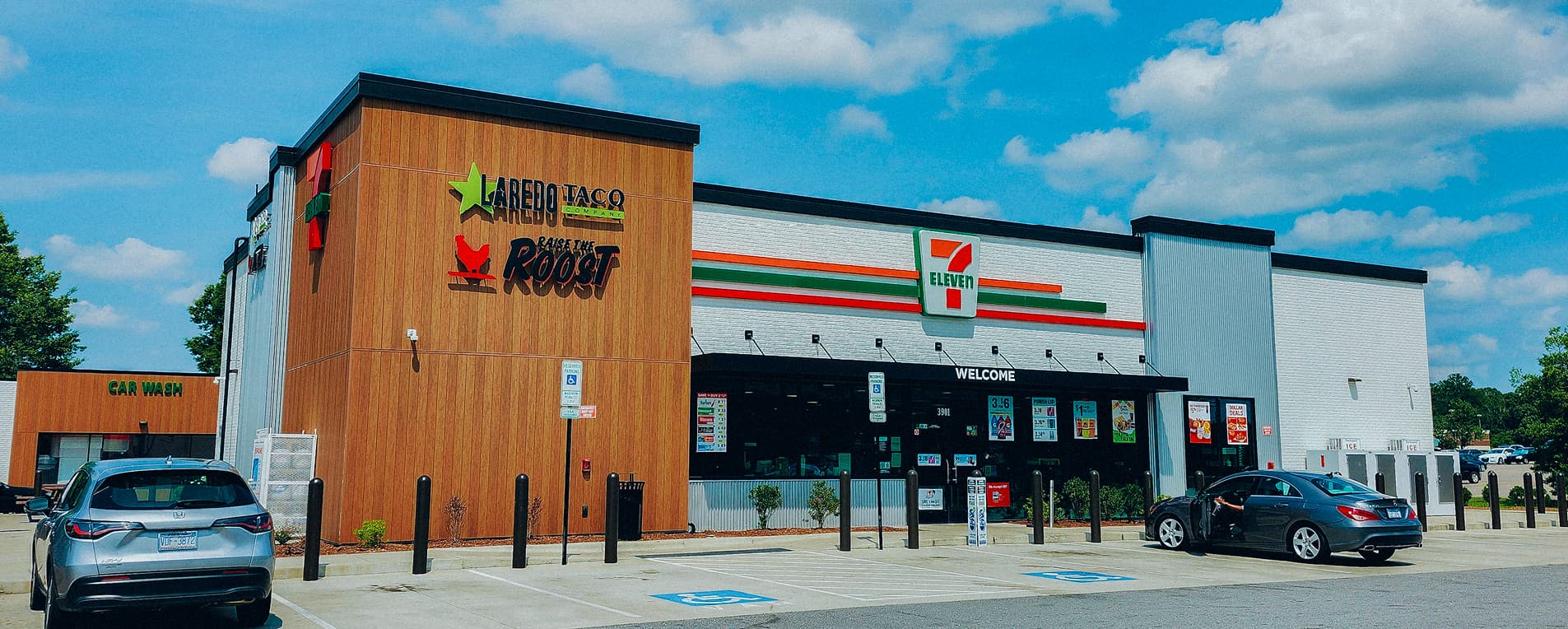
7-Eleven recognized that shift and began investing heavily in food-driven locations designed to increase traffic and customer engagement. The company’s newer “standard” stores feature restaurant concepts like Laredo Taco Company and Raise the Roost Chicken & Biscuits. These locations create a more experience-oriented model than the traditional convenience store setup.
Early performance from these stores has reportedly generated stronger sales results, which helps explain why 7-Eleven plans to open approximately 1,300 new large-format stores by 2030, even as it closes older locations that no longer fit its long-term strategy.
Delays in the North American IPO
Stephen Dacus, who became president and representative director of Seven & I Holdings in 2024, introduced plans for a North American IPO as part of a broader effort to unlock shareholder value and create greater operational flexibility. The proposed structure would separate the North American business into its own publicly traded company while allowing Seven & I to retain majority ownership.
At the time, the strategy aligned with broader investor interest in scalable retail and food-service platforms with strong brand recognition and predictable cash flow. A standalone North American entity could have positioned 7-Eleven for faster growth and more efficient decision-making.
More recently, however, 7-Eleven announced that it would delay the IPO process, which was originally expected to move forward by the end of 2026.
The company reported a 0.4% decline in North American profits during fiscal year 2025. Seven & I Holdings also projected revenue to decline 9.4% and net profit to fall 7.8%. Lower-income consumers continue feeling pressure from inflation and elevated gas prices, reducing discretionary spending across convenience retail.
The delayed IPO reflects a company responding to changing market conditions while protecting long-term value.
645 Store Closures in Fiscal Year 2026
7-Eleven also announced plans to close approximately 645 stores across North America during fiscal year 2026, making it one of the company’s most aggressive single-year reductions in recent history.
On the surface, large-scale closures often create concern among investors and property owners. In reality, the closures represent a portfolio optimization strategy already underway for years. 7-Eleven has consistently closed more stores than it has developed over the past half decade, reflecting a gradual effort to eliminate underperforming locations and redirect capital into higher-performing assets.
Despite the aggressive pace, the closures account for only about 5% of the company’s North American store count. The company continues investing heavily in larger-format stores expected to generate stronger long-term returns.
Strong national retailers rarely remain static. They evolve before they are forced to. 7-Eleven’s recent decisions reflect a company willing to modernize its store base, reshape its portfolio, and adapt to a different retail environment than the one that fueled its growth over the past twenty years.
What This Means for Property Owners
For property owners and investors, the conversation should extend beyond headlines surrounding store closures or delayed IPO plans. The more important question is whether the underlying real estate remains fundamentally strong.
Too often, investors place too much emphasis on tenant strength alone. Strong real estate performs even during periods of tenant transition. Location quality, traffic patterns, site utility, replacement tenant demand, and rental sustainability ultimately matter more than temporary shifts within a single brand’s business cycle.
7-Eleven remains one of the strongest convenience store operators in the world. At the same time, the company is entering a period of transition that may create both risk and opportunity across certain assets and markets.
In moments like this, disciplined investors return to fundamentals.
The focus should remain on the long-term durability of the real estate itself and the ability to replace both tenant and income if market conditions change.