ICSC Las Vegas 2025 – Navigating Economic Fluctuations
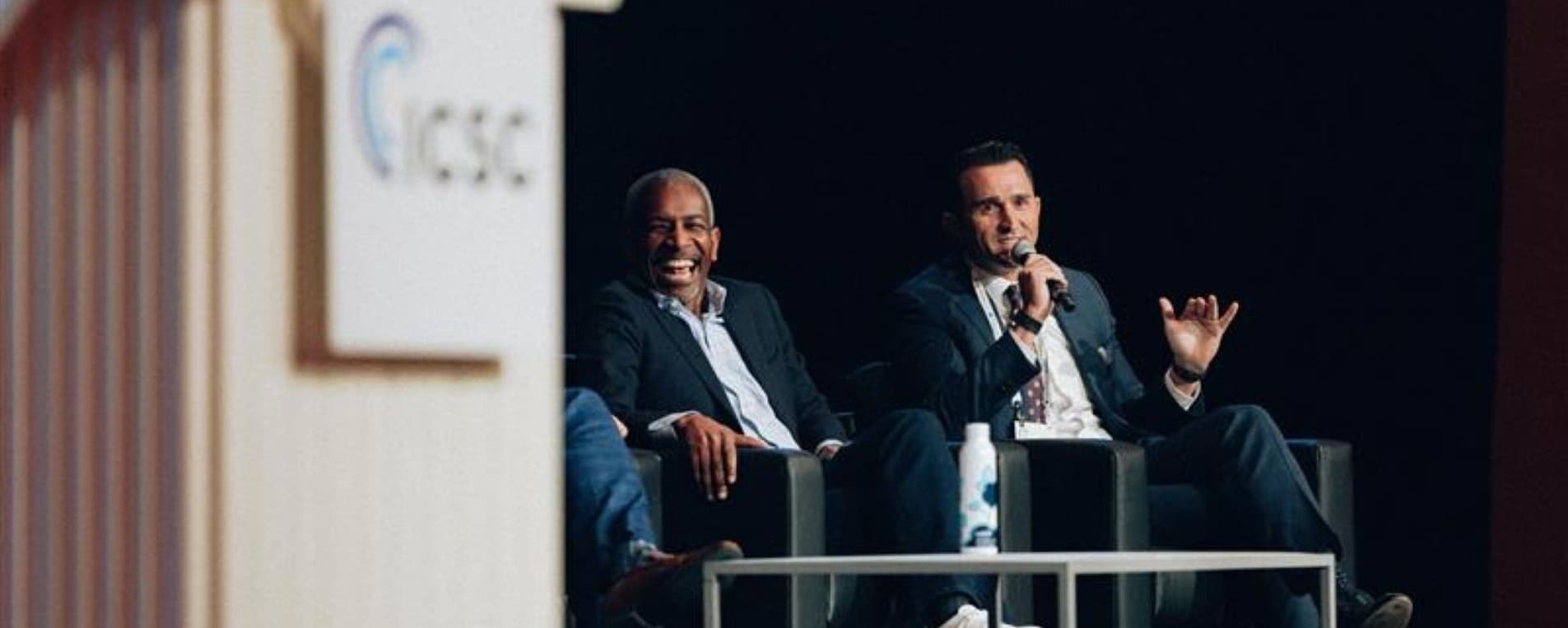
Navigating the Noise – Retail Real Estate Strategies from the Front Lines
As the industry converges for this year’s most anticipated marketplace gathering, ICSC Las Vegas, we stand at the crossroads of transformation and resilience with retail fundamentals at the forefront. Over the three days, the Las Vegas Convention Center became a crucible of insight, innovation, and inspiration as professionals from across the retail real estate spectrum engage in pivotal conversations that define the future of the retail industry. In an opening professional development workshop, “Navigating Economic Fluctuations” industry leaders came together to reflect on the dynamic and at times unpredictable macroeconomic landscape.
Setting the Stage: The New Market Reality
Kicking things off, Daniel Taub from Marcus & Millichap drew the audience into an interactive and sobering moment—asking attendees who entered the industry post-2012 to stand. It was a demographic reminder that many professionals have yet to be fully tested by a complete economic cycle.
Spencer Levy of CBRE provided a macroeconomic overview, presenting a dual-lens view of the economy. “The way I look at the world is philosophical,” he said. “One end of the spectrum is the now. The other is the math.”
He explained that the “now” represents the emotional reactions to market volatility, inflation, tariffs, and interest rate shocks. These elements shape public sentiment but are transitory. While the “math” speaks to long-term fundamentals: durable demand, stable valuation framework, and the inevitable return of capital when the price is right.
Levy referenced what economistic call the Wealth effect—a consumer psychology trigger that’s often overlooked in retail investment models.
Levy cautioned that while short-term metrics can trigger market anxiety, long-term fundamentals—including a weaker dollar attracting foreign capital—paint a more optimistic picture. He emphasized the importance of focusing on productivity, not just efficiency, using Buc-ee’s as a metaphor for retail innovation.
“If your 401K is down 15%, you’re not going to buy that big-screen TV. You might not even go out to dinner. And that’s why the University of Michigan’s consumer sentiment index just hit a new low.” But, he added, “this too shall pass. The second half of the year looks better.”
Strategy Over Sentiment: Fundamentals First
Reggie Livingston of Acadia Realty Trust honed in on the importance of sticking to fundamentals, even when the noise gets loud.
“We talk internally about separating the weather from the climate,” he said. “The weather is today’s noise—headlines, market jitters, politics. But the climate is the long-term trajectory. And nothing about the weather changes our belief that retail stores are still the fastest path to profitability for a brand.”
Livingston cautioned against letting short-term volatility dictate long-term strategy:
“If your strategy is getting rewritten every time there’s a Fed announcement, it was never a strategy to begin with.”
Retail Fundamentals: A Structural Advantage
Andrea Drasites of Blackstone emphasized how long-term fundamentals offer hidden value in retail—especially open-air and high-street segments.
“There’s been virtually no new supply in street or open-air retail over the last decade,” she said. “Meanwhile, demand has stabilized and even grown in certain corridors. Prices are still depressed relative to replacement cost. That’s a value opportunity.”
Blackstone has responded with action: acquiring a $4 billion open-air retail platform and continuing to allocate capital toward retail in high-density, high-income corridors.
Drasites also pointed to a critical metric for asset performance: Same-store NOI growth
“If you can push rent and occupancy, that NOI growth cures a lot of evils. Especially in an uncertain base rate environment.”
And even if cap rates stay elevated, Drasites argued, smart balance sheet management and operational discipline can still unlock value.
“If you zoom out, the trend line is smooth. Retail isn’t in a downturn—it’s recalibrating.”
Retail Fundamentals: A Structural Advantage
Kyle Matthews, CEO & Founder of Matthews Real Estate Investment Services, brought a unique perspective to the table, one that blended personal experience with a company-wide lens. “The professionals who came in after 2012 haven’t seen a true cycle,” he said. “Covid was abrupt but temporary. What we’re experiencing now is different. It’s long, uneven, and weeding out the unprepared.”
He cautioned against nostalgia, noting that younger professionals don’t always respond well to “back in my day” stories. Instead, he offers conviction: “This is the best thing that will happen to you—if you survive it. It forces discipline. It exposes complacency. If you push through, the next cycle will be a gold rush. But you can’t give up.”
Matthews emphasized the importance of controlling the controllables—from outreach and follow-up to using AI tools to sharpen execution.
“Good times are fun, but it’s in tough times that people get weeded out. This is when careers are made,” Matthews emphasized.
The Buc-ee’s Blueprint: Operational Excellence
Levy offered a colorful analogy to illustrate the importance of retail execution and operational differentiation.
“I took my kids to a high-end gold resort in Texas. What did they want to do every day? Go to Buc-ee’s—the gas station,” he laughed. “Why? Because Buc-ee’s isn’t just a gas station. It’s clean, it’s cool, it’s got great brisket.”
The takeaway?
“In an old-school industry like retail, the winders will be the ones who operate better—grow the top line through productivity, not just cost cutting.”
Capital Deployment with Purpose
Across the board, panelists agreed: now is the time to invest defensively and offensively. Whether through refreshing assets, renewing tenants selectively, or cleaning up centers to make them shopper-friendly, operational excellence is key.
Drasites summarized it:
“Invest capital now while others are hesitating. Renew where it makes sense, but don’t give away 10-year options unless you’re sure. Protect your downside. And make your properties places people actually want to go.”
She also addressed the debate over short-term leases:
“Yes, shorter leases can technically devalue an asset. But smart buyers will pay for flexibility and optionality—if the real estate is good.”
Curated Corridors and Suburban Strategy
Livingston elaborated on Acadia’s “barbell strategy,” balancing high-street assets in urban cores with large-format suburban centers.
“High street is more volatile, but sales are above pre-Covid peaks, even if rents aren’t,” he said. “We focus on corridors like SoHo and Melrose where we can own 20 to 30 storefronts, not just a few. That way, we can curate the experience.”
On the suburban front, Acadia favors power centers over grocery-anchored deals, which have become highly competitive.
“Not all power centers are equal. But when you find the right one, the yield premium over grocery can be worth the added cap.”
Levy agreed: “Grocery is great, but fairly priced. Reggie is looking for the best risk-adjusted return—and that’s where smart capital goes.”
Data, AI, and the Limits of Prediction
Panelists also discussed how they’re using data and AI to enhance operations. Matthews noted that AI has already made a deflationary impact on expenses and increased efficiency across marketing, underwriting, and transaction workflows at the company.
“It’s not about being replaced by AI. It’s about being replaced by someone who uses AI better than you.” Matthews continued, “We’ve build a culture that leans into new tools. When AI showed up, we didn’t wait for a roadmap. We told every department head: ‘you’re a technologist now—go out there an learn.”
Still, Levy noted, predictive analytics are still in their infancy:
“AI is great for efficiency. But not yet for intuition. You can’t quantify cool. And until you can, we’re still relying on judgment.”
Drasites agreed: “We’re swimming in data across 250 portfolio companies. But the real trick is turning that into insight. We want to move from retrospective to predictive—but it’s a journey.”
Warning Signs and Emerging Risk Factors
As bullish as the panelists were on fundamentals, they were candid about warning signs.
“Delinquencies are ticking up,” Drasites noted. “Not just big defaults, but micro indicators—tenants paying a week late, nail salons going month-to-month.”
Livingston added: “Mom-and-pops will sign any lease you put in front of them. But paying it? That’s a different story.”
Other risk factors include:
- Shallow replacement demand: “Category killers dominate,” Drasites said. “If a major tenant exits, there’s not a deep bench to backfill.”
- Unemployment: “If jobless claims rise, people stop spending,” Livingston warned.
- Drugstores and specialty retail: “Certain categories—like drugstores—account for a massive amount of space. If those falter, it’ll ripple.”
Yet despite these concerns, Drasites closed with optimism:
“Dislocation brings opportunity. This isn’t 2009. The fundamentals are strong. Rents are rising. Vacancy is historically low. Retail is resilient.”
Final Words: Lessons for the Long Run
As the session wrapped, each panelist shared one enduring takeaway:
- Kyle Matthews: “You’re not as good as you were in 2021. You’re not as bad as you think now. Keep going.”
- Reggie Livingston: “Strategy evolves, but culture and people make the difference.”
- Spencer Levy: “Don’t follow the money—lead it. And don’t underestimate the long game.”
- Andrea Drasites: “Be curious. Stay grounded. And walk your real estate. No AI can do that for you.”