Matthews Logo

Navigation Menu

Insights

Jacksonville, FL Industrial Market Report Q1 2026

Read More
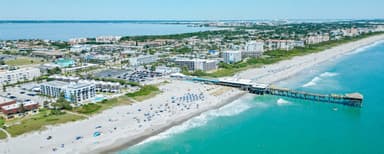
Brevard County, FL Retail Market Report Q1 2026 image

Brevard County, FL Retail Market Report Q1 2026

Read More
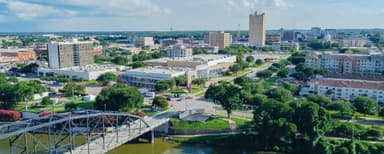
Waco, TX Multifamily Market Report Q1 2026 image

Waco, TX Multifamily Market Report Q1 2026

Read More
Chattanooga, TN Retail Market Report Q1 2026 image

Chattanooga, TN Retail Market Report Q1 2026

Read More

Featured Podcast Episodes

The Matthews™ Podcast — Adam Bell

Read More
podcast-icon

The Matthews™ Podcast — Bo Kemp

Bo Kemp on the Strategic Advantage in Regional Development In this episode of the Matthews™ Podcast, host Matthew Wallace is joined by Bo Kemp, CEO of the Southland Development Authority, to discuss how regions compete for transformative projects in an era where infrastructure, power, and coordination determine where capital can actually deploy.   With a focus on aligning municipalities, investors, and long-term infrastructure planning across Chicago’s Southland, Kemp shares why economic development today is less about incentives and more about execution at scale. The Rise of Powered Land as the New Competitive Edge For decades, location and labor drove site selection. Today, Kemp explains, the defining variable is power.   Data Center Demand: Next-generation industrial users, particularly data centers, require massive, reliable power loads that few regions can deliver immediately. Infrastructure Readiness: It’s not just acreage that matters, but contiguous, develpment ready land with utilities, water access, grid connectivity, and workforce support. Grid Access Advantage: Chicago’s Southlands benefits from access to two electrical grids, including PJM, creating flexibility and capacity that many competing markets cnanot offer. Long Horizon Development in a Short-Term World Kemp emphasizes that the hardest part of large-scale development isn’t attracting interest but aligning stakeholders around projects that require 50- to 100-year thinking.   Public-Private Alignment: Successful projects demand trust between municipalities, utilities, developers, and capital partners. Political and Community Buy-In: Without local-level cohesion, even well-capitalized projects can stall. Strategic Patience: Regions that plan infrastructure ahead of demand are the ones positioned to capture generational investment. Capital Meets Infrastructure Looking ahead, Kemp discusses new initiatives designed to bridge real estate investment with energy and infrastructure strategy. Horizon South Realty Group: A platform focused on unlocking development opportunities across the Southland. The $100M Monarch Fund: A vehicle designed to pair equity with infrastructure and energy initiatives to accelerate large-scale projects. Key Takeaways for CRE Professionals Think Beyond the Dirt: Land value increasingly depends on power and access to infrastructure, not just location. Follow the Utilities: Grid capacity and energy strategy are becoming primary drivers of capital allocation. Alignment is the Asset: Regions that can coordinate across public and private sectors will win the next cycle of industrial growth.  

podcast-icon

The Matthews™ Podcast — Jeff Enck

Jeff Enck on Southeast Shopping Center Trends In this episode of the Matthews™ Podcast, host Matthew Wallace continues the publication takeover series with Part 3 of the National Shopping Center Overview, breaking down the Southeast with Matthews™ Senior Vice President Jeff Enck.   With 25+ years of retail investment sales experience and hundreds of transactions closed across the Southeast, Enck shares why strip centers have moved from underrated to one of the most competitive retail investment categories in the country, and what that means for both private and institutional capital. The Role of Strip Centers as a Primary Asset Class Traditionally, retail real estate was often viewed through the lens of grocery-anchored or power cents. However, Enck notes that over the last decade, and specifically the last two to three years, unanchored strip centers have shifted their strategies to exit grocery-anchored and power centers in favor of strips. Industrial Adoption: Major groups, including the first publicly traded REIT solely focused on strip centers (Curbline), have shifted their strategies to exit grocery-anchored and power centers in favor of strips. The “Apartmentization” of Retail: Investors are increasingly treating strip centers like “retail multifamily”. Because the bays are typically uniform (1,500 to 2,500 square feet), owners expect regular tenant turnover as an opportunity to reset and increase rents. Operational Efficiency: Re-tenanting smaller bays is more capital-efficient than filling large big-box spaces, often requiring less tenant improvement (TI) allowance. Essential Service Retail (ESR) and the Amazon Impact The narrative of the “retail apocalypse” has shifted as investors recognize the durability of “essential service retail”. Recession and Internet Proofing: Success in the space is driven by tenants that cannot be easily replaced by e-commerce, such as urgent care, hair salons, dentists, and local restaurants. The Amazon Synergy: Ironically, the rise of Amazon has helped strip centeres by creating a need for shipping hubs. Many centers now feature UPS or Pack Mail stores to handle the heavy volume of consumer returns. The Human Factor: COVID-19 revealed that local “mom and pop” tenants are often more resilient than national credit tenants because their personal livelihoods are tied to the business, making them more willing to collaborate with landlords during crises. Investment Dynamics of the Southeast Enck highlights the Southeast as a particularly attractive region due to its fundamental economic drivers. Growth Drivers: Tax-friendly states, job importation, and low cost of living have led to a massive influx of population, which in turn fuels the need for retail support. Market Concentration: Major metros like Charlotte, Tampa, Atlanta, Orlando, and Nashville are all performing solidly. Yield Opportunities: While core markets see heavily compressed cap rates, investors are increasingly looking toward secondary markets like Savannah, Knoxville, and Greenville to find better yield The Future of the Asset Class Early Innings of Institutionalization: The strip center market remains highly fragmented. Enck estimates that only about 1.5% to 2% of the approximately 68,000 unanchored centers nationwide are currently institutionally owned. Rent Growth Strategy: The primary attraction for large groups is “mark to market” opportunities—buying seasoned properties (10–30 years old) and raising below-market rents. Supply Constraints: New construction of traditional strips is limited due to high construction costs. Most new development is focused on small 2–4 tenant out-parcels (e.g., Chipotle and Starbucks) where rents are already at their peak, limiting future growth potential. Key Takeaways for CRE Professionals Stick to a Specialization: Enck advises young brokers to choose a property type and geographic focus and stay with it, rather than jumping between asset classes based on what is currently popular. Understand Risk from the Buyer’s Perspective: Learning how buyers evaluate risk, a lesson Enck learned from early struggles with difficult listings, is essential for long-term success Value of Professional Representation: Because 80% of strip center owners only own one or two properties, there is a significant opportunity for brokers to provide professional guidance to private clients.      

podcast-icon

The Matthews™ Podcast — Amy Rubenstein

The Operational Edge in Workforce Housing with Amy Rubenstein In this episode of the Matthews™ Podcast, host Matthew Wallace is joined by Amy Rubenstein, CEO and Founder of Clear Investment Group, to discuss what it takes to stabilize distressed workforce housing and turn operationally broken assets into durable, livable communities.   While the multifamily sector often gets framed through the lens of new development, luxury amenities, and top-tier Class A product, Rubenstein focuses on a different reality. Across the country, millions of renters live in aging properties that have been neglected for years, where operational breakdowns, deferred maintenance, and instability have real consequences for residents and investors alike. Rubenstein believes that restoring these assets is not only a business opportunity but a responsibility.   Drawing on decades of experience across ownership, investment strategy, and operations, Rubenstein shares how Clear Investment Group identifies underperforming market-rate workforce housing and turns it into stable, functioning communities through disciplined execution, data-driven decision-making, and operational rigor. The Operational Reality of Distress Workforce housing sits in a unique place in the market. It serves working families and individuals who often earn too much to qualify for subsidized housing, but not enough to absorb constant rent increases.   Rubenstein notes that Clear Investment Group typically focuses on households in the $35,000-$85,000 income range, where demand remains durable, but quality supply is limited.   The challenge is that distressed workforce assets are rarely distressed for just one reason. Typically, multiple systems fail at once: property management, resident screening, maintenance, collections, and oversight.   Fixing that requires a different kind of operator. Restoring Stability and Performance Rather than chasing yield through superficial renovation, Clear Investment Group’s value restoration philosophy is stabilized through fundamentals like: Correcting operational inefficiencies Improving safety and livability Restoring resident trust Reducing delinquency and loss-to-lease Building repeatable processes across assets The Role of Data and AI in Multifamily Operations Clear Investment Group uses data and AI to strengthen both underwriting and operations to: Tighten underwriting assumptions Improve due diligence accuracy Monitor performance in real time Identify early warning signs in delinquency and collections Make operational policy changes based on resident payment behavior Key Takeaways for CRE Professionals Workforce housing is one of the most durable demand drivers in multifamily Distress is often operational, not just physical Value restoration requires discipline, not just capital Data and AI can materially improve underwriting and day-to-day decision-making Real transformation happens through execution and consistency   Listen on:

podcast-icon

The Matthews™ Podcast — Ed Laycox

Mid-Atlantic Shopping Center Trends with Ed Laycox In this episode of The Matthews™ Podcast, host Matthew Wallace continues the Publication Takeover Series with part two of the National Shopping Center Overview to unpack the trends shaping the Mid-Atlantic with Matthews™ Executive Vice President Ed Laycox.   With over 20 years of experience and 200 transactions totaling over $1 Billion, Laycox brings a practical, deal-level view of what’s shaping retail investment decisions right now. He breaks down where capital is moving, how buyer profiles are evolving, and why grocery-anchored centers continue to command outsized attention.   A Career Built in Grocery-Anchored Retail Laycox’s career has been defined by a deep focus on grocery-anchored and necessity-based retail, particularly in suburban and tertiary markets through the Mid-Atlantic. Early on, he gravitated toward these assets because of their durability and the consistency of consumer demand. Over time, that focus helped him develop a nuanced understanding of how everyday retail performs across different economic cycles.   Rather than chasing headline markets, Laycox spent years building relationships with owners in smaller, less institutional submarkets. That approach allowed him to see firsthand how population growth, income levels, and consumer behavior ultimately drive shopping center performance. Capital is Following Suburban Growth Capital is continuing to shift away from urban cores into surrounding suburban and secondary markets. Laycox points to growth across areas surrounding Washington, D.C., as well as markets like Richmond, Charlottesville, Northern Virginia, and parts of Maryland, where higher-income households are increasingly willing to live farther from city centers.   As these areas grow, ownership profiles have changed. What were once predominantly family-owned assets are now attracting larger private equity groups and more institutional-style capital, drawn by population growth and the stability of grocery-anchored retail. Tenant Demand Is Splitting, Not Weakening Laycox describes today’s tenant landscape as increasingly divided between necessity-based uses and discretionary or experiential concepts. Grocery, food, and auto-related tenants continue to anchor centers and provide stability, while uses such as fitness, personal services, and entertainment concepts are often able to support higher rents.   At the same time Laycox cautions that not every concept works everywhere. In deeper tertiary markets, there’s often only room for one experimental tenant in a given category. Adding competition too quickly can strain demand and disrupt an otherwise healthy center. Navigating Choppy Capital Markets Financing conditions remain uneven, and Laycox does not shy away from describing the last few years as a bumpy period for retail investment sales. Despite that volatility, he emphasizes that capital hasn’t disappeared. Deals are getting done, particularly when transactions are well structured and thoughtfully executed.   He notes that challenging markets often separate active operators and advisors from those who step to the sidelines. Brokers and investors who are willing to stay engaged and problem-solve tend to gain market share when conditions improve. Laycox adds: Having the ability to find ways to get deals done is where the real value of brokerage comes into play in these types of markets. Grocery-Anchored Remains the Leading Thesis Looking ahead, Laycox is clear that grocery-anchored retail remains one of the strongest investment stories in the Mid-Atlantic and nationally. As the cost of dining out continues to rise, consumers are allocating more spending toward groceries, driving consistent sales growth across many stores.   One emerging issue he flags is the rising cost of insurance. As premiums increase, insurance is likely to become a more significant factor in lease negotiations and NOI discussions as leases roll. Laycox believes this expense pressure is underappreciated and will play a larger role in investment decisions over the next several years. Understanding the “Solve for X” Mindset In a market where traditional financing often feels like a barrier, Laycox advocates for a proactive, problem-solving approach to brokerage. “Solving for X” means looking beyond the high interest rates to find the specific structures—whether through creative capital sources or lease restructuring—that make a deal viable for both the buyer and the seller. In 2026, this approach is especially essential as pricing expectations reset and both sides get more flexible on structure. Key Takeaways for Investors The Mid-Atlantic opportunity is increasingly defined by where the demand is deepest and how risk is priced. Grocery-anchored centers remain the clearest defensive play, but outcomes hinge on market-by-market execution. The best deals are the ones that match tenant mix to local spending power, account for rising expense pressure like insurance, and use smart structure to bridge the gap between buyer and seller expectations. What Separates Productive Agents in This Cycle The most effective agents are leaning into problem-solving, not just pricing. In a market where capital is selective and execution takes more effort, value comes from understanding risk, setting expectations early, and helping both sides navigate structure. Consistency, local market knowledge, and the willingness to stay engaged through uncertainty are what build trust and sustain long-term relationships.