Seven Midwest States, Seven Election-Year Catalysts for Net Lease Owners
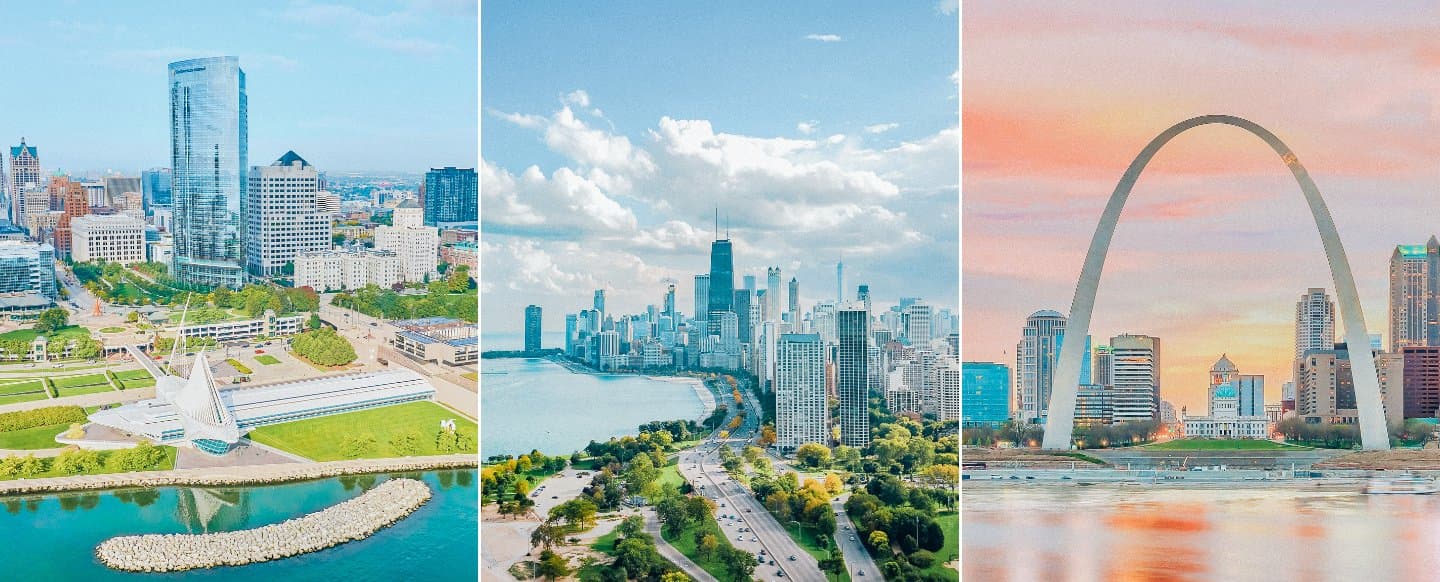
The midterm elections are next week, and seven Midwest states have ballot measures, governor’s races, or pending approvals that are likely to affect net-leased properties.
Indiana
Voters in three northeast Indiana counties (Allen, which includes Fort Wayne area, along with DeKalb and Steuben) will decide on November 3, 2026, whether to allow inland casino gambling in their county. Only one inland casino license will be awarded among the counties under House Enrolled Act 1038. A “yes” vote on the referendum (“Shall inland casino gambling be permitted in [county]?”) allows that county to compete for applications to the Indiana Gaming Commission. A “no” vote permanently bars another referendum in that county under the current law. The winning project must include at least $500 million private investment in the casino and non-gaming amenities, with 60% spent within two years of licensing, plus substantial state license payments.

What It Means for QSR
A new casino would mean a larger, more stable customer base with more disposable income for QSR Net Leased operators.
Wisconsin
The Wisconsin governor’s race will likely determine whether the proposed Madison–Milwaukee Amtrak extension (Hiawatha West) receives state funding. The project needs roughly $54 million to $55 million in state matching capital funds, plus an estimated $2.5 million annual operating subsidy. Both would be decided in the 2027–29 budget. Democratic Governor Tony Evers and most Democratic candidates for governor support the state share. Leading Republicans, including U.S. Rep. Tom Tiffany and top legislative leaders, oppose it, arguing the money would be better spent elsewhere. Without the state match, the project cannot move forward despite more than $218 million already secured in federal funding.

What It Means for QSR
QSRs along I-94 may see weaker drive-thru sales once Amtrak service between Madison and Milwaukee offers an alternative to driving the corridor. In contrast, QSRs near the new stations should gain a substantial number of new customers.
Michigan
Although not subject to a referendum, Michigan’s political calendar is still shaping a major project. Developers in Detroit race to clear the next round of approvals before the state’s next governor is chosen and takes office. General Motors and Bedrock (Dan Gilbert) are advancing a roughly $2.2 billion partial demolition and mixed-use redevelopment of the Renaissance Center complex and adjacent East Riverfront. The plan calls for demolishing two towers, converting the remaining towers to hotel, residential, and office uses, adding new housing, and creating substantial public riverfront space. Financing combines private capital with public incentives, including a Transformational Brownfield Plan. Developers are targeting final local and state approvals by the end of 2026 so that demolition and early site work can begin in the second half of 2027. Detroit City Council’s December recess creates a practical deadline for a pre-Thanksgiving vote; missing that window risks pushing Michigan Strategic Fund action into the next administration after the November 2026 gubernatorial election and delaying the project’s start. Community-benefits negotiations and required public-notice periods remain the main variables that could affect the precise hearing and vote dates. Neither major-party candidate—Jocelyn Benson nor John James—has publicly taken a detailed position on the project. Approvals are therefore moving forward under the Whitmer administration with the explicit goal of locking in key decisions before the new governor is sworn in in January 2027.

Missouri
Amendment 7 (on the November 2026 ballot) would create a permanent public endowment fund. Once the fund’s investment earnings grow large enough to fully replace state tax revenue, those earnings could be used to eliminate state-imposed taxes, including the state portion of property taxes. This is a long-term, multi-generational concept, and supporters have framed it as a 100+ year idea. It does not change property tax rates, assessments, or local levies in the near or medium term, and it does not require the state to seed the fund. A separate, more concrete proposal to phase out Missouri’s individual income tax was rejected by voters in August 2026. For commercial real estate owners and investors, Amendment 7 has no near- or medium-term impact on operating costs, property taxes, or valuations. It simply preserves a distant, theoretical pathway for reducing or eliminating certain state taxes decades from now if the fund ever reaches the required size.
What It Means for QSR
Demand for all non-income-tax-states is very high amongst all investors. It makes it easier for QSR operators to operate with less financial obligations and give customers more spending power.
Minnesota
Amy Klobuchar (Democratic-Farmer-Labor) and Lisa Demuth (Republican) are the two major-party candidates for governor. Both say they will not raise taxes and would prefer to lower them if possible. Klobuchar proposes partnering with the private sector to add 100,000 housing units, streamlining permitting and construction rules and expanding markets for Minnesota products, including biofuels and other rural goods. She also plans to cut income-tax rates for lower earners, identify roughly $1 billion in savings, and improve the business climate through regulatory reform and fewer mandates. Her rural plan promotes sustainable aviation fuel from local crops, traditional biofuels such as ethanol and biodiesel (including year-round E15), bio-based manufacturing of packaging and building materials from corn, soybeans, and sugar beets, and growth in industrial hemp. Those steps could support processing facilities, jobs, and farm income in smaller towns which would increase demand for main-street commercial space. Demuth’s plan includes about $150 million in property-tax cuts, allowing localities and school districts to opt out of certain unfunded mandates, using surpluses for rebates, and streamlining county welfare mandates. She also proposes ending automatic gas-tax increases, moving the corporate tax rate closer to the national average, cutting permitting timelines by at least 25% through executive order and broader reform, repealing the nuclear-power ban, and supporting Iron Range mineral development.

What It Means for QSR
Both candidates’ plans should have a positive impact on QSR throughout the state. Cutting income tax for the lower income tax bracket, containing gas taxes, and investing in rural Minnesota are all positives that should keep Minnesota attractive for QSRs.
Iowa
Iowa is not on the ballot, but the bigger development for real estate is already law as of this past May. Governor Kim Reynolds signed a property tax reform law in May 2026, projected to deliver roughly $4 billion or more in savings over several years. A nuclear power plant is also in the works for eastern Iowa and could change the makeup of the region. The Duane Arnold Energy Center in Palo, Iowa (a 615 MW boiling-water reactor shut down in 2020) is targeting a restart in late 2028 or early 2029. NextEra Energy, the majority owner, is driving the project. It is backed by a 25-year power purchase agreement with Google and a U.S. Department of Energy loan of up to $1.9 billion. Construction and preparatory work are underway. The remaining hurdles are primarily federal Nuclear Regulatory Commission (NRC) approvals to restore the plant from decommissioning status to full operating status. NextEra has filed several key licensing actions, and the NRC has accepted for review. NextEra says the NRC aims to complete the main licensing actions before January 2028, leaving time for fuel loading and startup testing before the early-2029 target.

What It Means for QSR
The power plant is forecasted to bring roughly 450 permanent and 1,500 jobs to Eastern Iowa increasing demand for QSRs and their products. Likely increasing the possibility for QSR to sign long term lease and exercise their lease term options.
Illinois
The ongoing discussions regarding the Chicago Bears leaving Soldier Field after calling it home for 55 seasons since 1971 and moving to nearby Hammond, Indiana seems to have no clear verdict. Illinois Gov. JB Pritzker seems to be throwing everything and the kitchen sink to keep the team in the state, which is why his reelection this coming November is huge. Should the State of Illinois elect its first Republican Governor since 2014 by voting in Darren Bailey negotiations could have new dichotomy and a fresh restart.

What It Means for QSR
A Chicago Bears stadium in Hammond would be one of the largest economic development projects in Northwest Indiana in decades, but the net impact depends heavily on the final deal structure and coinciding with new development. QSRs in the area would undoubtedly experience a sharp increase in customers, and new brands would likely start to scout for nearby locations.
Conclusion
In conclusion, buyers, sellers, and operators of QSR properties need to be paying attention to population shifts, wealth concentrations, and traffic drivers impacted by political policies and massive infrastructure projects, now and in the future. For more information, please contact a Matthews™ specialized agent. Trever Gallina Senior Vice President (917) 692-9929 trever.gallina@matthews.com