
7-Eleven Shifts Its Focus from Store Count to Store Performance
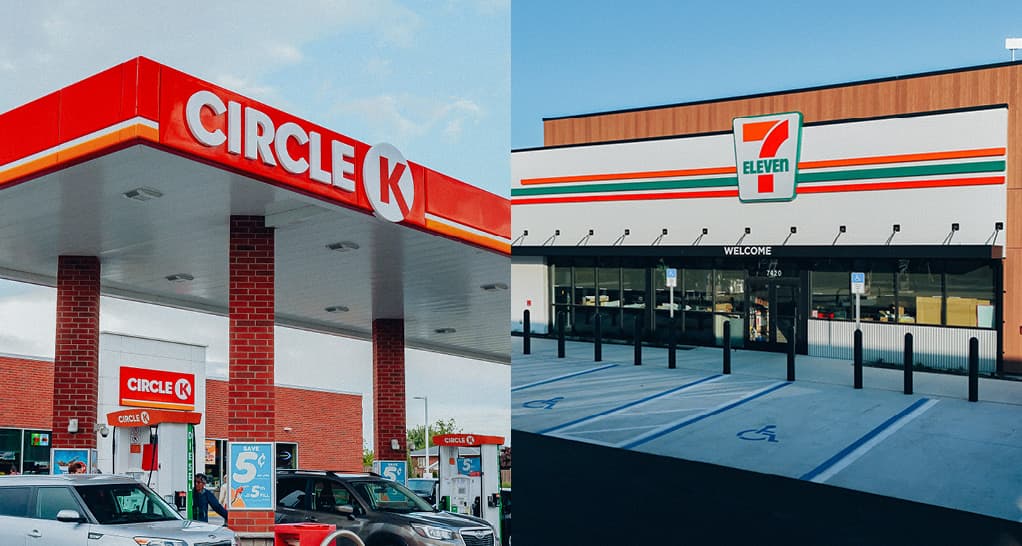
7-Eleven remains one of North America’s largest convenience retailers, but its latest strategy points to a more disciplined approach to its store network. The company is closing underperforming locations, converting selected sites to wholesale and franchise operations, and investing heavily in stores that can support prepared food, private-label products, fuel, loyalty programs and delivery.
For owners and investors, the shift puts more weight on the quality of the individual property. Brand recognition still matters, but access, demographics, site functionality, store-level performance and the property’s ability to support different operating models will play a larger role in long-term value.
A Smaller, More Productive Network
7-Eleven, Inc. ended fiscal 2025 with 12,712 stores, down from 12,963 the previous year. The company opened 122 locations and closed 373, reducing its network by 251 stores. The portfolio included 7,280 franchised stores, 5,432 company-operated stores and 8,162 locations with fuel.
The company also reduced its store count in fiscal 2024, when 474 closures outpaced 315 openings. Over two years, 7-Eleven’s North American network declined by more than 400 locations.
That optimization is continuing. 7-Eleven has outlined plans to close approximately 295 underperforming stores while also converting roughly 350 sites to wholesale operations. Rather than treating every weaker company-operated location as a closure candidate, the company appears to be using several strategies to improve the economics of its network.
At fuel locations converted to wholesale operations, 7-Eleven has removed the 7-Eleven branding from the fuel canopy and convenience store and transitioned fuel operations to SEI Fuels, its wholesale fuel subsidiary. SEI Fuels supplies fuel to independent operators and other wholesale customers. The result can be a property that continues operating as a fuel and convenience site even though it is no longer operated or branded as a traditional 7-Eleven.
The company is also shifting more stores from corporate operation to franchise ownership. 7-Eleven expects to convert approximately 390 company-owned stores to franchised locations during the fiscal year as part of a broader plan to franchise roughly 2,600 stores through 2030.
These moves suggest that portfolio optimization is not simply about reducing store count. It also involves determining the most efficient operating structure for individual locations.
The closures and conversions do not signal a move away from physical retail. More than half of the North American population lives within two miles of a 7-Eleven, giving the company broad reach across in-store sales, loyalty and delivery.
Instead, 7-Eleven is placing a higher standard on each location. Stores must generate strong sales, support local market coverage and accommodate the company’s foodservice and digital strategy, or provide sufficient value under a franchise or wholesale structure.
Higher Profit Despite Softer Sales
U.S. same-store merchandise sales declined 0.4% in fiscal 2025 after falling 2.7% the year before. Consumers remained cautious, particularly in lower-income households.
Despite the sales pressure, operating income increased from approximately $2.17 billion to $2.22 billion. Selling, general and administrative expenses declined from about $9.41 billion to $9.31 billion. Merchandise gross margin increased from 33.3% to 33.4%, while average daily sales per store rose from $5,657 to $5,717.
These results support the company’s focus on portfolio optimization. Closing weaker stores, shifting company-operated locations to franchise or wholesale structures and concentrating capital on stronger stores can reduce costs and improve returns across the network.
7-Eleven is also targeting efficiencies across procurement, fuel, store operations and the supply chain. The company plans to keep expense growth below growth in sales and gross profit, placing greater emphasis on returns than total store count.
Foodservice Raises the Bar for Real Estate
Prepared food continues to play a larger role in 7-Eleven’s operating model. The company is expanding fresh food, proprietary beverages, prepared meals and restaurant-style offerings to increase customer visits and improve margins.
More than 1,000 stores already include restaurant concepts, and the company plans to continue investing in food-focused formats.
That effort is part of a much larger reinvestment program. During its investor day, 7-Eleven outlined plans to remodel more than 7,000 stores through 2030. The scale of that program reinforces the divide that may emerge between locations capable of supporting the company’s next-generation format and properties that would require disproportionate investment to get there.
The strategy changes what 7-Eleven needs from its real estate. Stores may require more interior space, upgraded equipment, greater utility capacity and layouts that support food preparation, merchandising and delivery.
Trade areas must also generate demand throughout the day. Residential density, nearby employment, commuter traffic and proximity to schools, hospitals and entertainment districts can help support breakfast, lunch and other meal occasions.
Older stores may require significant capital to meet these operating standards. In some cases, the building or parcel may not offer enough flexibility to justify the investment. Those properties could face a different outcome, including closure, franchising, conversion to a wholesale fuel operation or eventual redevelopment.
Digital Growth Rewards Strong Locations
7-Eleven also uses its store network to support digital ordering and delivery. The 7NOW platform operates from approximately 7,500 U.S. stores and generates roughly $1 billion in annual sales.
The company continues to invest in delivery, mobile ordering and the 7Rewards loyalty program. These channels allow stores to serve walk-in customers, fuel customers and nearby households from the same location.
Stores in dense residential and mixed-use areas may benefit most from this model. Higher population density, shorter delivery times and stronger order volume can improve delivery economics.
Locations with limited staffing, inefficient layouts or weaker surrounding demand may struggle to support the same level of digital activity.
What Owners and Investors Should Watch
A 7-Eleven lease offers recognizable tenancy and the potential for long-term income, but the corporate name does not remove store-level risk. The company’s evolving portfolio strategy also means that closure is not the only potential outcome for a location.
As 7-Eleven reviews its network, a property could receive additional investment, transition from corporate operation to a franchisee, be converted to a wholesale fuel model or ultimately close. For real estate investors, understanding which outcome a property can support is becoming increasingly important.
Owners and investors should focus on several property-level factors:
- Access and visibility: Convenient ingress and egress, strong traffic counts and clear exposure.
- Parcel flexibility: Space for fuel, parking, delivery activity, drive-through use or future redevelopment.
- Building functionality: Capacity for refrigeration, food preparation and upgraded equipment.
- Trade-area demand: Residential density, daytime population and nearby customer generators.
- Fuel economics: For gasoline locations, fuel volume and the site’s ability to remain viable under a wholesale operating model.
- Operator flexibility: Whether the property can remain successful under corporate, franchise or independent operation.
- Alternative-use value: Strong land fundamentals and flexible zoning if 7-Eleven ultimately vacates.
Strategic stores may receive additional investment as part of the company’s planned remodeling program. Other locations may remain in the system but transition to franchise ownership, reducing 7-Eleven’s direct operating exposure while preserving the brand and retail operation.
Fuel properties present another potential path. A location converted to SEI Fuels may remain active as a convenience and gasoline business even if 7-Eleven branding is removed. For landlords and investors, that distinction matters: a change in operating structure or branding does not necessarily mean the underlying real estate has lost its retail value.
Stores that overlap with nearby locations, require significant capital or cannot support foodservice, digital operations or an alternative operating structure may face greater closure or nonrenewal risk.
Outlook
7-Eleven continues to view its physical network as a competitive advantage. The company is not simply stepping away from real estate or shrinking for the sake of becoming smaller. It is becoming more selective about where it deploys capital and how individual stores are operated.
The combination of approximately 295 planned closures, roughly 350 wholesale conversions, continued franchising and more than 7,000 planned remodels illustrates a broader transformation of the portfolio. The objective appears to be a network with fewer marginal company-operated stores, more asset-light operating structures and greater investment in locations with the strongest long-term potential.
Stores with strong access, flexible layouts, favorable demographics and the ability to support foodservice and digital sales should hold greater strategic value. Fuel sites that remain viable under wholesale operation may have another path forward, while properties suited to franchise operation may continue under the 7-Eleven banner without remaining company-operated.
For owners and investors, the takeaway is increasingly property-specific: the strength of the 7-Eleven name remains important, but the underlying real estate and store economics will determine which locations receive investment, which change operating models and which ultimately leave the network.