Matthews Logo

Navigation Menu

Image of From Peak to Discipline: What Has Changed in Multifamily Investing Success Story

From Peak to Discipline: What Has Changed in Multifamily Investing

The multifamily market over the past few years has not broken, but it has clearly reset.   At its peak in 2021 and early 2022, the sector was defined by abundant liquidity, aggressive pricing, and a broad expansion of the buyer pool. Capital was widely available, debt was cheap and flexible, and underwriting often leaned on continued rent growth and cap rate compression to justify pricing. Competition for assets was intense, and transactions frequently moved forward on compressed timelines as investors raced to deploy capital in a market that appeared to be accelerating.   That environment has meaningfully shifted. Higher interest rates, rising operating costs, and tighter capital markets have forced a recalibration across nearly every part of the investment process. The pace of transactions has slowed, financing structures have become more conservative, and investors are spending more time evaluating operational and financial risks before committing to acquisitions.   Today’s market is more measured, more selective, and increasingly driven by execution rather than momentum. A Buyer Pool Defined by Experience At the height of the market, access to capital and deal flow expanded rapidly. A new wave of syndicators and first-time operators entered the space, many drawn by the visibility of outsized returns and the perception that multifamily was a one-directional trade.   In many cases, those groups were willing to take on higher leverage, shorter-term debt, and more aggressive assumptions in order to win deals. Execution risk was often underestimated, and underwriting frequently left little margin for shifts in interest rates, operating costs, or leasing performance.   As liquidity has tightened and capital has become more selective, the buyer pool has shifted back toward more experienced operators and well-capitalized investors. Institutional buyers, established regional operators, and experienced groups are again dominating transaction activity. Meanwhile, many newer entrants have stepped to the sidelines or are working through assets acquired under more optimistic assumptions.   At the same time, investors who allocated capital during the peak are now placing greater emphasis on track record, discipline, and operational capability when selecting partners. The focus has shifted away from rapid growth and toward consistency and execution across market cycles.   The result is a more competitive environment, but one where bids are grounded in fundamentals. Source : Altus Group   Operations Have Moved to the Forefront If the previous cycle was driven primarily by revenue growth, the current one is defined by cost control and operational efficiency.   Operating an apartment asset today is materially more complex than it was just a few years ago. Property taxes and insurance costs have risen sharply in many markets, particularly in high-growth Sunbelt regions where reassessments and natural disaster risk have pushed expenses higher. Payroll costs have increased as operators compete for skilled maintenance and leasing staff, while construction-related inflation has raised the cost of unit turns, repairs, and capital improvements.   At the same time, rent growth has slowed significantly from the historic levels seen during the pandemic-era housing shortage. In some markets, new supply has created short-term pressure on occupancy and pricing power, requiring operators to compete more actively through concessions, marketing, and resident retention strategies. Delinquency has also become a more meaningful variable in certain tenant segments as household budgets adjust to higher living costs.   These pressures have compressed margins and exposed operational inefficiencies that may have gone unnoticed in a rising market.   In response, owners and operators are placing greater focus on expense management, process improvement, and scalability. Portfolio-level purchasing, centralized leasing models, and more data-driven asset management are becoming increasingly common. Technology is playing a larger role as well, with many groups exploring ways to integrate automation and artificial intelligence into leasing, maintenance scheduling, and back-to-office operations.   Performance today is less about how quickly rents can be pushed and more about how effectively an asset can be run. Financing Has Shifted from Aggressive to Defensive Debt strategies during the market’s peak were largely built around speed and flexibility.   Bridge loans and floating-rate structures were widely used, often paired with value-add business plans that relied on near-term rent growth to drive refinancing or sales. In a low-rate environment with strong demand for housing, that approach allowed investors to amplify returns while maintaining relatively short hold periods.   Many of those loans are now approaching maturity in a very different capital markets environment. Higher borrowing costs and lower asset valuations have created refinancing gaps for some properties, requiring additional equity contributions, loan modifications, or extensions. In certain cases, assets acquired with aggressive leverage have become difficult to refinance altogether without substantial restructuring.   That experience has driven a clear shift in how investors approach financing today. There is a renewed preference for longer-term, fixed-rate debt, often sourced through agency lenders or other stabilized financing channels. Investors are prioritizing lower leverage, stronger debt service coverage, and structures that provide flexibility across changing market conditions.   Debt is no longer viewed simply as a tool to enhance returns. It is increasingly treated as a central component of risk management. Underwriting Is Grounded in Reality Perhaps the most meaningful change is in how deals are evaluated.   Underwriting often relied heavily on forward-looking assumptions to justify pricing. Rent growth projections were frequently aggressive, expense growth was understated, and exit assumptions often depended on continued cap rate compression.   In today’s market, that approach no longer holds. Underwriting has shifted towards in-place performance and downside protection. Rent growth assumptions are more modest and frequently aligned with long-term historical averages rather than short-term spikes. Expense projections are more conservative and reflect the persistent inflationary pressures affecting property taxes, insurance, and labor.   Exit cap rates are typically modeled wider than entry, and sensitivity analyses have become a more prominent part of the investment process.   Just as important, there has been a shift in how investors think about value. Where cap rates once served as the primary lens for evaluating acquisitions, basis has taken on equal importance. Investors are increasingly focused on replacement cost, comparable sales history, and the long-term durability of an asset’s location and tenant demand.   Rather than simply asking what yield a property offers today, buyers are asking whether the entry price provides sufficient protection across a range of economic outcomes.   Where Investors Are Focusing in 2026   While underwriting standards have tightened, capital has not disappeared. Instead, it has become more targeted. Investors are increasingly concentrating on markets with durable population growth, diversified employment bases, and long-term housing demand.   Several metropolitan areas stand out as focal points for multifamily investment in 2026:   • New York, NY • San Francisco, CA • San Jose, CA • Boston, MA • Chicago, IL • Atlanta, GA • Washington, D.C. • Northern New Jersey • San Diego, CA • Orange County, CA Source: Matthews™ Research   These markets share many of the characteristics investors now prioritize: population growth, constrained housing supply, and employment drivers capable of supporting long-term renter demand. An Ever-Evolving Cycle The current multifamily environment is marked by greater discipline, yet it is far from static. Real estate markets inherently move in cycles, with investor behavior closely following shifts in liquidity and capital availability. As interest rates stabilize and transaction activity gradually increases, risk tolerance is likely to expand, drawing new participants into the market. The caution and selectivity that define today’s conditions will eventually give way to renewed competition for assets, a dynamic that has repeated across past cycles and reflects the enduring rhythms of real estate investing.   This ongoing reset does not eliminate future volatility. Instead, it provides a clearer framework for evaluating and managing risk when market conditions are less forgiving, allowing investors to make informed decisions that balance opportunity with prudence.   The multifamily sector today is defined less by rapid appreciation and more by execution and operational precision. The buyer pool is more experienced, financing is structured with stability in mind, and underwriting reflects a broader range of potential outcomes. Those best positioned in this environment are not counting on a return to peak conditions. Rather, they are the investors who can operate effectively within current constraints while remaining agile enough to respond as the cycle inevitably shifts again.

Image of Austin Graham Author

Austin Graham

First Vice President & Associate Director

Image of Chicago, IL Retail Market Report Q1 2026 Success Story

Chicago, IL Retail Market Report Q1 2026

Chicago’s retail market is transitioning through a period of recalibration, with recent trends reflecting both demand-side softness and tightening supply conditions. Net absorption has turned negative, driven largely by a wave of store closures and more than 800,000 SF of space removed through demolitions, reversing gains recorded in the prior year. At the same time, supply dynamics are shifting in a more supportive direction. New construction remains historically limited, and net deliveries have been negative, contributing to a modest tightening in availability. Vacancy has held relatively stable at 4.9%, suggesting that reduced inventory is helping offset weaker demand. Rent growth has slowed to 1.3%, reflecting tempered pricing power. Overall, the market is gradually moving from contraction toward stabilization.   Key Findings Chicago’s retail market is transitioning toward stabilization, with negative absorption and slower leasing offset by limited new supply and ongoing demolitions, helping maintain relatively stable vacancy and gradually tightening availability. Construction activity remains constrained, with minimal new starts and net negative deliveries supporting long-term fundamentals by limiting excess supply and directing tenant demand to existing space. Investment activity remains steady but cautious, with volume slightly below historical averages, while stable pricing and strong private investor participation reflect confidence in suburban retail fundamentals.   Chicago Retail Supply & Demand Dynamics Source: CoStar Group, Inc.   Chicago Demographics Source: CoStar Group, Inc. Unemployment Rate: 4.7% Current Population: 9,419,470 Households: 3,713,997 Median Household Income: $94,529   Chicago’s economy entering Q1 2026 remains supported by a large population base of 9.4 million, providing a substantial consumer foundation for retail demand. The unemployment rate of 4.7% reflects a relatively stable labor market, and supports discretionary spending across key retail corridors. The metro’s diversified employment base and strong infrastructure continue to anchor economic resilience and consumer activity, further reinforced by major employers such as Amazon, Advocate Healthcare, Northwestern Medicine, and the University of Chicago. These fundamentals position Chicago as a steady, mature retail market with consistent demand drivers, despite broader macroeconomic uncertainty and shifting population trends within the region.   Population, Labor Force, & Income Growth Source: CoStar Group, Inc.   Chicago Retail Construction Retail construction activity in Chicago remains subdued, constrained by elevated costs and limited access to financing. Approximately 1.1 million SF is currently underway, representing just 0.2% of total inventory, well below the national average. Development starts have slowed to historically low levels, while demolitions continue to outpace new supply, contributing to tighter market conditions. Most new projects are build-to-suit or pre-leased, minimizing their impact on availability. Activity is concentrated in suburban submarkets with strong demographics and accessibility. Looking ahead, construction is expected to stay limited, supporting market stability by shifting tenant demand toward existing space rather than new development.   SF Construction Starts Source: CoStar Group, Inc.   SF Under Construction Source: CoStar Group, Inc.   Chicago Retail Sales Chicago’s retail investment market is showing signs of stabilization, with transaction volume totaling $3.1 billion over the past year, slightly below the five-year average. Activity has shifted toward smaller, lower-priced assets, with properties under $4 million accounting for the majority of trades, while larger transactions remain limited. Private investors continue to dominate, increasing their share of acquisitions, as institutional participation has moderated. Buyer interest remains focused on suburban centers and necessity-based retail formats. Pricing has held relatively steady at approximately $187 per SF, indicating stable valuations despite slower rent growth. Overall, sales trends reflect a cautious but active investment environment.   Chicago Retail Sales Volume Source: CoStar Group, Inc.   By the Numbers Q1 2026 | Source: CoStar Group, Inc. Sales Volume: $770M Price Per SF: $187 Cap Rate: 8.2% Vacancy Rate: 4.9% Rent Growth: 1.3% Asking Rent Per SF: $22.27 SF Under Construction: 1.1M SF Delivered: 173K SF Absorbed: (583K)    

Image of Chicago, IL Multifamily Market Report Q1 2026 Success Story

Chicago, IL Multifamily Market Report Q1 2026

Fundamentals remained firm entering Q1 2026 as leasing demand continued to keep pace with new supply. Vacancy held near 5.0%, remaining well below the national average and reflecting sustained absorption alongside limited inventory expansion. Net absorption remained positive across both urban and suburban submarkets, with Downtown Chicago accounting for a disproportionate share of demand given its role as the region’s primary employment and lifestyle hub. Asking rents averaged approximately $1,950 per unit, with annual growth just above 3.0%, continuing to outperform national benchmarks . Growth was strongest among Class A assets, though mid- and lower-tier properties also recorded steady gains, supported by constrained supply and limited trade-out options. Concession levels remained low, signaling continued landlord pricing power and stable lease-up conditions. Key Findings Chicago remains highly supply-constrained, with vacancy near 5.0% as demand continues to keep pace with annual deliveries. Construction remains limited, with ~9,800 units underway (1.7% of inventory), supporting rent growth just above 3.0%. Investment activity is stabilizing, with sales volume reaching approximately $6 billion, driven by steady fundamentals and demand for quality assets. Chicago Multifamily Supply & Demand Dynamics Source: CoStar Group, Inc. Chicago Demographics Source: CoStar Group, Inc. Unemployment Rate: 5.3% Current Population: 9,395,623 Households: 3,704,570 Median Household Income: $94,329 Chicago benefits from a highly diversified and resilient economic base anchored by finance, healthcare, manufacturing, logistics, and professional services. The metro hosts a deep pool of office-using employment, supported by 24 Fortune 500 headquarters and a well-educated workforce, with 39% of adults holding a bachelor’s degree or higher. While broader population growth has been modest, higher-income households continue to concentrate in Downtown Chicago, the North Lakefront, and select suburban nodes. Relative affordability compared with peer coastal markets, combined with proximity to major employment centers and infrastructure advantages, continues to underpin multifamily demand. Recent Office Expansions in Chicago Source: CoStar Group, Inc. Bain and Company PxC Medline Boston Consulting Group Population, Labor Force, & Income Growth Source: CoStar Group, Inc. Chicago Multifamily Construction Construction activity remains constrained entering Q1 2026, with roughly 9,800 units underway, representing a limited pace of inventory expansion relative to market size . Development has slowed due to elevated construction costs, tighter financing conditions, and longer entitlement timelines, all of which have reduced new project starts. Following a surge in deliveries in 2023, recent completions have begun to decline and are expected to trend lower through 2026. New supply remains heavily concentrated in luxury product, with higher-end units comprising the majority of both recent deliveries and the active pipeline. Downtown Chicago continues to account for the bulk of development activity, while suburban construction remains more selective and limited in scale. As a result, the overall pipeline is expected to remain insufficient to meet demand, reinforcing tight vacancy and supporting rent growth. Units Construction Starts Source: CoStar Group, Inc. Units Under Construction Source: CoStar Group, Inc. Chicago Multifamily Sales Investment activity entering 2026 shows signs of stabilization, with annual sales volume reaching approximately $6 billion . While transaction activity remains below prior cycle peaks, deal flow has improved as pricing expectations between buyers and sellers begin to align. Higher interest rates continue to shape underwriting, contributing to modest cap rate expansion and a more selective investment environment. Investors remain focused on well-located, institutional-quality assets, particularly in core urban submarkets with durable demand drivers. Value-add strategies are still active, though underwriting assumptions have become more conservative, especially around rent growth and exit pricing. Chicago’s stable operating fundamentals and relative affordability compared to coastal markets continue to support investor interest. As capital markets stabilize further, transaction activity is expected to gradually increase through 2026. Chicago Multifamily Sales Volume Source: CoStar Group, Inc. By the Numbers Q1 2026 | Source: CoStar Group, Inc. Sales Volume: $1.9B Price Per Unit: $229K Cap Rate: 6.7% Vacancy Rate: 5.0% Rent Growth: 3.1% Asking Rent Per Unit: $1.9K Units Under Construction: 10.4K Units Delivered: 865 Units Absorbed: 989

Image of Midwest Self-Storage: Steady Hands Heading Into 2026 Success Story

Midwest Self-Storage: Steady Hands Heading Into 2026

The last two years tested self-storage more than any period since the Great Financial Crisis. Across 2024–2025, elevated borrowing costs and a persistent bid–ask gap cut transaction volume and pushed the sector into price discovery. Public REIT results show the reset clearly: by Q3 2025, national same-store revenue and NOI fell year-over-year, while operating expenses stayed high, led by property taxes and property insurance. Occupancy softened as move-ins slowed. Across 2025, REIT portfolios ran lower than the same quarters in 2024, but stabilized around 91%–92% on average each quarter. In oversupplied markets, operators leaned on discounting to maintain leasing velocity. Regional Divergence: High-Supply Markets Resetting vs. Disciplined Markets Stabilizing   The downturn has not hit all regions evenly. Markets that added the most supply during the pandemic expansion are now working through the toughest reset. Yardi data show several fast-growth metros expanded inventory by low-to-high teens over the last three years, including mid-single-digit growth in the last twelve months alone. Those high-delivery markets have posted some of the steepest rent declines; by mid-2025, several large metros were still seeing street-rate drops in the 3%–4% range as new supply met slower demand growth. Disciplined, needs-based markets stabilized earlier, and the Midwest sits at the front of that group. National asking rates turned positive again in late 2025. October’s national street-rate index was about 0.7% above the prior year, and move-in rents exceeded move-out rents for the first time this cycle. With more limited new supply and steadier demand, the Midwest enters 2026 in a stronger relative position. Why the Midwest Is Holding Steady Supply Discipline Supply remains the clearest differentiator, and the Midwest continues to screen as structurally disciplined. Most major Midwest metros are running below national delivery averages. Columbus illustrates measured growth: deliveries equaled about 1.2% of inventory in 2024, yet the market still sits near 4.5 square feet per capita. Cleveland remains tight on a per-capita basis even after a delivery uptick, underscoring how small the absolute base is. Detroit has also stayed supply-constrained relative to the national high-delivery cohort; new starts remain limited compared with metros that carried mid- to high-single-digit shares of stock under construction at points this cycle.   Midwest markets are adding units, but they do so from a smaller per-capita footprint and at a slower pace than the country’s highest-growth development markets, many of which expanded inventory by ~10%–20% in short bursts. That contrast best demonstrates the region’s lower development risk. Source : Yardi Matrix   Needs-Based Demand Demand quality provides the second stabilizer. In the Midwest, storage usage relies less on cyclical migration patterns and more on persistent household needs: smaller living footprints, life-event churn, and steady small-business use. Cleveland and Columbus already illustrate the point (average apartments ~790 and ~881 square feet, respectively). Other Midwest metros show the same “space-light” profile: ~728 square feet in Detroit, while Chicago’s newer units rank among the smallest large-metro footprints at ~797 square feet.   National comparisons sharpen the story. Many high-growth metros still deliver meaningfully larger apartments on average, often in the mid-900s sf range, versus low-900s in the Midwest, even after downsizing trends in select cities.    Population trends add another layer of stability. Midwest household growth has stayed modest but steady (e.g., Cleveland ~+0.7% YoY, Columbus ~-0.7%). That profile supports a reliable, less cyclical storage customer base through rate cycles, unlike markets where demand swings with migration volatility.   Net: smaller Midwest living spaces + stable household churn create a more durable demand stream than markets dependent on fast-cycle population surges. Operating Performance: Stabilization Signals Operational performance across the Midwest looks more like normalization than contraction. National street rates bottomed in 2025 and have inched higher since; Yardi Matrix’s National Self Storage Advertised Street Rate Index (the national average advertised asking rent per square foot) stood ~0.7% above October 2024. Core Midwest metros are even higher up, with Chicago rents up roughly 2.1% annually and Minneapolis around 2.9%.   Occupancy has remained healthy even as leasing softened nationally. REIT net move-ins minus move-outs fell to a five-year low in 2025, but pricing improved: move-in rents exceeded move-out rents for the first time this cycle, and the rent gap between new and existing customers narrowed to ~40% from ~60% a year earlier. That shift signals returning pricing traction without requiring a meaningful occupancy trade-off.   Expense growth is cooling on a year-over-year basis. Same-store operating expenses are still rising, but the pace slowed in Q3 2024 versus Q3 2023, with ExtraSpace at +1.9% YoY, Public Storage at +2.6% YoY, and NSA at +1.2% YoY, even as taxes and repairs remain elevated. As inflation moderates and insurance stabilizes, operators are pushing efficiency through centralized call centers, automated leasing, dynamic pricing, and lean staffing. Capital Markets: Liquidity Returning Selectively Capital markets are thawing, and supply-disciplined Midwest metros are benefiting early. Community banks and credit unions have re-engaged with stabilized storage assets as underwriting visibility improves. Deal structures have adapted to bridge valuation gaps: seller financing, preferred equity, and assumable low-rate loans show up more often, alongside longer diligence windows and earn-out frameworks. Liquidity is returning selectively, and capital is flowing first to markets where cash flow does not depend on aggressive rent assumptions. Investor Positioning for 2026 Investor sentiment has shifted toward resilience. Buyers now prioritize assets that can hold cash flow through uncertainty instead of chasing peak-growth submarkets. Infill Midwest locations fit that profile because supply pressure stays modest and demand remains durable. Moderate rent rebounds in Chicago and Minneapolis reinforce that these metros can outperform national averages without the volatility tied to oversupply cycles.   Portfolio strategy also drives allocation. Many institutional groups built heavy exposure to high-delivery markets during the pandemic run-up, so Midwest acquisitions now hedge development risk elsewhere. Private investors, typically more flexible on deal size and comfortable underwriting in higher-rate environments, often re-enter first and set the tone for broader capital redeployment. Bottom Line After a turbulent cycle, the Midwest appears positioned to lead the early phase of self-storage recovery. Moderate pipelines, density-supported demand, and structurally tight inventory insulate these metros from the oversupply dynamics still weighing on the nation’s highest-delivery markets. With street rates positive year over year, move-in pricing improving, and expense growth decelerating, the 2026 setup favors investors who pivot toward constrained infill Midwest assets where returns depend on disciplined execution, not rent spikes.

Image of Russell Handelman Author

Russell Handelman

Associate

Image of Top 10 Multifamily Markets in 2026 Success Story

Top 10 Multifamily Markets in 2026

New York, NY By the Numbers 2025 | Source: Matthews™ Research Sales Volume: $8.3B Average Price Per Unit: $404.5K Cap Rate: 5.3% Vacancy Rate: 3.0% Annual Rent Growth: 7.0% Annual Net Absorption: 14,580 Units   New York’s multifamily sector remains one of the tightest and most resilient leasing markets in the country, supported by strong fundamentals and sustained investor interest.   Manhattan continues to assert itself as the premium rental market with effective rents surpassing pre-pandemic highs, while Brooklyn has evolved into a primary economic hub, attracting a younger, renter base that’s driving competition across the borough.   Year-to-date total sales volume in New York has reached $8.3 billion, paired with an average price per units of $404, 500, reflecting continued confidence in the market despite elevated borrowing costs. Performance remains competitive with a 5.3% cap rate, underscoring New York’s status as a high-barrier metro.   While investors have retreated from Manhattan’s most expensive core submarkets, capital is aggressively targeting high-yield opportunities in areas like Harlem and the Financial District, where redevelopment potential and discounted pricing remain compelling. The borough’s cap rates have stabilized between 6.0% and 6.3%, with per-unit pricing rising for six consecutive quarters, signaling the early stages of recovery. Brooklyn has also seen sales accelerate, with institutions accounting for a growing share of activity. Cap rates have compressed modestly, now aligning with Manhattan in the low 6%- range, while pricing remains elevated for waterfront assets.   Operating conditions continue to outperform national benchmarks. The market’s 3.0% vacancy rate is well below the U.S. average, driven by structural undersupply, muted construction, and stable in-migration.   Manhattan’s limited construction is hampered by construction costs and regulatory hurdles, causing a sharp drop in building filings. This is keeping the borough’s vacancy rate low, and is expected to fall to roughly 2.4% by 2026. Brooklyn, despite experiencing the highest level of completions in more than a decade, maintains one of the lowest vacancy rates nationally at 2%, supported by demographic tailwinds and demand for larger floor plans.   These dynamics have propelled strong rent momentum market wide. Annual growth sits at 7.0%, with Manhattan expected to post gains near 6.8% by year-end 2025 and Brooklyn recording 6.7% growth alongside a cumulative 44% rent increase since 2019.   Demand remains healthy across all boroughs, evidenced by 14,850 units of annual net absorption, supported by a strengthening labor market. New York City is projected to add 38,000 jobs in 2025, and in-person office attendance (particularly in Manhattan) has surged to 95% of its 2019 levels. The workers returning to office is amplifying demand for centrally located, premium rental housing. Looking ahead to 2026, slow entitlement processes, ongoing supply constraints, and durable demand drivers will continue to support low vacancy and positive rent growth. Manhattan’s long-term development opportunities increasingly lie in conversions, value-add repositioning and niche submarket plays, while Brooklyn’s most compelling strategies focus on delivering larger, family-sized units through reconfigurations of existing small stock.   The recent election of Mayor Zohran Mamdani introduces increased attention around affordability and tenant protection policies, including the discussion of a rent freeze for stabilized units. While these proposals may influence sentiment at the margins, the market’s global prominence, economic depth continue to anchor its long-term performance.   Maintaining quality of life is Manhattan is a demand driver that has been top of mind for developers and investors alike. Police Commissioner Jessica Tisch has agreed to remain in her role, and under her leadership the NYPD recently reported the fewest shooting incidents for the month of October since safety and private sector investment will be key in ensuring New York City’s prosperity for the years to come.” -Brock Emmetsberger, Executive Vice President   Brooklyn, Manhattan, & U.S. Rent Growth Source: Matthews™ Research, CoStar Group, Inc.   New York Vacancies Remain Well Below U.S. Norms Source: Matthews™ Research, CoStar Group, Inc.   Bay Area: San Francisco & San Jose By the Numbers 2025 | Source: Matthews™ Research San Francisco Sales Volume: $8.3B Average Price Per Unit: $404.5K Cap Rate: 5.3% Vacancy Rate: 3.0% Annual Rent Growth: 7.0% Annual Net Absorption: 14,580 Units   San Jose Sales Volume: $8.3B Average Price Per Unit: $404.5K Cap Rate: 5.3% Vacancy Rate: 3.0% Annual Rent Growth: 7.0% Annual Net Absorption: 14,580 Units   The San Francisco Bay Area is entering 2026 on new footing, reasserting itself as one of the nation’s most dynamic multifamily markets. Supported by a powerful combination of tech-led job creation, population stabilization, and strengthening investor confidence, demand has reinvigorated investment.   Across the region, demand is being reshaped by the rapid expansion of the AI ecosystem. San Francisco is experiencing a sharper and more immediate surge in activity driven by AI firms expanding office footprints and accelerating hiring. In comparison, San Jose’s performance is tied to Silicon Valley’s long-standing economic gravity and a renter base shaped by decades of exceptional wage growth and high barriers to homeownership.   AI companies (databricks, openAI, and anthropic being a few of the many) have pushed office vacancy way down and helped increase multifamily rent growth. [In addition,] San Francisco’s unemployment rate compared to the rest of California, was around 3.5% [with] California’s above 5%. This has helped bring private and institutional buyers back to the market. – Jack Markey, Associate   San Francisco posted $2.3 billion in annual sales volume, with assets trading at an average of $428,000 per unit and cap rates compressing to 4.5%, signaling investors’ increasing willingness to price in near-term rent acceleration tied to AI-driven demand. San Jose recorded $1.9 billion in sales, with average pricing at $488,000 per unit and slightly higher cap rates at 4.6%.   While San Francisco is seeing faster cap rate compression amid strong bidding for well-located product, San Jose continues to attract capital seeking stability, income durability, and access to one of the wealthiest and most credit-stable renter populations in the nation. Across both metros, the investment narrative is improving, but San Francisco’s upside thesis is more growth-oriented, while San Jose’s is grounded in consistency and long-term absorption. Operating conditions are tightening throughout the Bay Area. San Francisco’s vacancy rate fell to 3.3% and annual rent growth reached 5.3%. This strength is supported by renewed population gains, limited new supply, and an inflow of high-income workers in the AI sector. The market’s acute supply-demand imbalance is highlighted by the absorption of 4,094 units outpaced deliveries.   San Jose posted slightly higher vacancy at 3.6%, paired with 3.1% annual rent growth and a similar 4,191 units of net absorption. This is one of the strongest demand performances the metro has recorded in the past decade.   Supply levels remain constrained across both metros, though San Francisco faces the most severe development limitations. Rising construction costs, zoning restrictions, and protracted entitlement timelines continue to suppress new starts, allowing demand to outpace completions and strengthening landlords’ pricing power.   San Jose’s supply environment, while also tight, is less structurally constrained. The metro’s pressure comes from decades of undersupply relative to household formation and for-sale housing costs that consistently rank among the highest in the country. With mortgage rates near 7% and home prices continuing to climb, San Jose now has the nation’s largest rent-versus-own affordability gap, pushing new households directly into the renter pool and reinforcing long-term multifamily stability.   Looking ahead to 2026, the AI sector plays a pivotal role in reshaping the market’s trajectory and both cities are well positioned. The expanding cluster of major AI and tech firms has fueled renewed office activity, contributed to a 1.3% uptick in population, and supported what is shaping up to be the strongest demand cycle since before the pandemic. Constrained supply, tech-driven job creation, and mounting investor interest positions the Bay Area as one of the top multifamily markets to watch, particularly for those looking to capitalize on the momentum of the burgeoning AI economy.   Bay Area Rent Growth Leads California Source: Matthews™ Research, CoStar Group, Inc.   Boston, MA By the Numbers 2025 | Source: Matthews™ Research Sales Volume: $3.1B Average Price Per Unit: $499K Cap Rate: 5.1% Vacancy Rate: 3.8% Annual Rent Growth: 0.2% Annual Net Absorption: 5,982 Units   The Boston MSA enters 2026 as one of the most stable and opportunity-rich multifamily markets in the country, supported by strong population gains, a deep reservoir of high-earning renters, and a rapidly expanding tech, life sciences, and employment base   Unlike many Sunbelt metros that are still absorbing a surge of new construction, Boston’s fundamentals benefit from a more measured supply pipeline, despite strong employment pull. Major employers, including Meta, Google, and Amazon, continue to scale engineering and R&D operations across the market, attracting high-earning renters and reinforcing the metro’s appeal as a premier innovation hub. This strength helped drive $3.1B in sales volume, average pricing of $499,000 per unit, which is nearly double the U.S. average, and a market cap rate of 5.1%.   34% of transaction volume over the previous five years involved public and institutional buyers. Within the same period, private capital accounted for 65% of seller volume and nearly half of buy-side volume. The delta between the average sale price of $13.6 million and trailing four quarters’ median sale price of $2.4 million, suggests that while public and institutional players continue to be involved in a smaller amount of large deals, smaller private buyers account for the majority of deal activity.   Across the market, leasing has remained steady with annual net absorption reaching 5,982 units. The vacancy rate is about 200 basis points below the national rate of 8.4%, at 6.5%. These conditions indicate that new and existing renters are quickly filling available units, and underscores the structural demand.   At the same time, Boston’s renter preferences are shifting decisively toward higher-tier apartments. While rent growth has decreased from 2022 double-digit, rents remain among the highest nationally and growth exceeds the U.S. average. Class A units maintain the highest rents and continue to post meaningful absorption. This trend, combined with steady investor activity and a development pipeline increasingly concentrated in desirable urban nodes, reinforces the market’s long-term stability.   With a highly educated, growing population and sustained demand from the region’s thriving tech and innovation sectors, Boston is poised for tightening fundamentals and improved rent performance in 2026. While political attention around housing affordability remains heightened, with discussions around rent stabilization drawing close scrutiny, market conditions remain fundamentally sound.   Renter Appetite for Class A Apartments is Evident, Outpacing Class B Absorption Source: Matthews™ Research, CoStar Group, Inc.   Boston’s Net Population Sees Spike in the Last Year Source: Matthews™ Research, CoStar Group, Inc.   Chicago, IL By the Numbers 2025 | Source: Matthews™ Research Sales Volume: $3.1B Average Price Per Unit: $499K Cap Rate: 5.1% Vacancy Rate: 3.8% Annual Rent Growth: 0.2% Annual Net Absorption: 5,982 Units   Chicago’s multifamily market enters 2026 as one of the most undersupplied and demand-driven major metros in the country. Demand continues to outpace new supply, with the region absorbing roughly 7,500 units in 2025, well above the 4,800 units delivered in the same period, pushing vacancy down to 3.5%.   This supply imbalance is expected to intensify in 2026 as only 10,000 units remain under construction, representing just 1.8% of total inventory, far below the national average and the market’s long-term average. With scheduled deliveries projected to fall to some of the lowest levels since 2012, Chicago is set for continued vacancy compression and rent gains.   Rents are accelerating across every submarket and asset class. Annual rent growth reached 3.7% market-wide, with premium Class A properties posting a stronger 4.0% increase as renters demonstrate a pronounced “flight to quality” in a constrained supply environment.   Demand remains strong in Downtown Chicago and the North Lakefront, accounting for more than one-third of total absorption and continuing to benefit from their concentration of employment, transit access, and amenity-rich neighborhoods.   Investment activity mirrors this optimism: sales volume has risen sharply to $3.8B in 2025, cap rates average 6.7%, and premier assets often trade at even tighter yields as investors price in ongoing rent growth and stable occupancy.   Major employers across finance, consulting, healthcare, manufacturing, and life sciences continue to deepen their presence, while transformative projects such as the Illinois Quantum and Microelectronic Park further elevate Chicago’s position as a tech and research hub. This enhances the market’s ability to attract and retain a high-earning renter pool.   Together, these forces of a high-income renter pool, strong absorption, and limited new supply, position Chicago as one of the nation’s top-performing multifamily markets heading into 2026.   Chicago Leads the Nation in Apartments Rent Growth Source: Matthews™ Research, CoStar Group, Inc.   Deliveries Decreased Significantly Over the Last 12 Months Source: Matthews™ Research, CoStar Group, Inc.   Miami, FL By the Numbers 2025 | Source: Matthews™ Research Sales Volume: $1.7B Average Price Per Unit: $330K Cap Rate: 5.3% Vacancy Rate: 4.3% Annual Rent Growth: 0.7% Annual Net Absorption: 5,846 Units   Miami enters 2026 as one of the nation’s most demographically advantaged multifamily markets, supported by strong fundamentals and one of the deepest in-migration pipelines in the country.   The region continues to attract high-income households, young professionals, and remote workers drawn to Miami’s tax advantages, lifestyle appeal, and growing corporate presence. More recently, high-income policy refugees are anticipated to leave New York and choose Florida markets like Palm Beach and Miami. This adds a new layer of durable, upper-income demand that will help solidify the rent floor and support the next phase of growth.   These powerful demographic forces helped fuel 5,846 units of net absorption in 2025, keeping vacancy at a healthy 4.3% despite substantial new deliveries across the metro. While rent growth moderated to 0.7% in 2025 due to the heavy wave of new deliveries, Miami is expected to regain momentum in 2026 as supply pressure eases and demand continues to deepen. Much of the elevated pipeline is beginning to taper, setting the stage for improved performance as thousands of new units lease up and population inflows remain robust.   Investor activity remains strong, with $1.7B in sales volume, an average price per unit of $330,000, and cap rates holding at 5.3%, signaling sustained confidence in Miami’s long-term growth trajectory.   Miami’s expanding finance, technology, hospitality, and healthcare sectors, reinforced by ongoing corporate relocations and international investment, continue to diversify the local economy and strengthen the renter base.   With absorption outpacing expectations, vacancy tightening, and supply set to normalize, Miami enters 2026 with the foundation for renewed rent growth and sustained investor interest, placing it firmly among the top multifamily markets to watch.   Asking Rents in Miami Trend Higher than the U.S. Average Source: Matthews™ Research, CoStar Group, Inc.    The Sunshine State is the No. 1 Destination for Migrating New Yorkers Source: Matthews™ Research, MovingPlace   Atlanta, GA By the Numbers 2025 | Source: Matthews™ Research Sales Volume: $16.5B Average Price Per Unit: $174.5K Cap Rate: 5.2% Vacancy Rate: 6% Annual Rent Growth: 0.6% Annual Net Absorption: 20,576 Units   Atlanta enters 2026 from a position of emerging strength as the market begins to stabilize after several years of historically elevated supply. Despite vacancy averaging 6% in 2025 and rent growth holding at a modest 0.6%, the metro posted a substantial 20,576 units of net absorption, signaling renewed momentum as demand once again outpaced new deliveries.   Investor confidence remained firmly intact, with $16.5B in multifamily sales, an average price per unit of $174,500, and cap rates at a competitive 5.2%, underscoring long-term conviction in the region’s demographic and economic fundamentals.   The market’s near-term challenges, primarily elevated vacancy and competitive lease-up conditions, are beginning to recede. The development pipeline is contracting sharply, with expected 2025 deliveries down roughly 40% from the prior year’s peak, marking a decisive shift toward more balanced supply conditions. This moderation is pivotal: for the first time since 2021, absorption is poised to consistently keep pace with, and potentially exceed, new supply.   Demand drivers remain firmly entrenched. Metro Atlanta continues to outperform in population and household growth, supported by a broad-based employment ecosystem spanning logistics, education and health services, technology, and professional services.   Even as certain office-using sectors cooled in 2025, the region’s overall economic profile remained resilient, ensuring a steady inflow of renters seeking relative affordability and proximity to expanding job centers. Growth nodes such as Midtown, West Midtown, and North Fulton continue to benefit from ongoing corporate relocations and high-skill employment announcements.   Atlanta’s strong absorption, moderating construction pipeline, and durable economic base position the metro for a meaningful inflection in 2026.   We’re optimistic that we will see an increase in transactional velocity in 2026 – Connor Kerns & Austin Graham, First Vice Presidents & Associate Directors   With rent growth expected to return to positive territory by mid-year and investor appetite remaining elevated, Atlanta stands out as one of the nation’s most compelling multifamily markets heading into the next cycle.   Atlanta Multifamily Demand Nears Pandemic-Era Peak Source: Matthews™ Research, CoStar Group, Inc.   Atlanta Multifamily Transaction Volume Source: Matthews™ Research CoStar Group, Inc.   Washington, D.C. By the Numbers 2025 | Source: Matthews™ Research Sales Volume: $4.4B Average Price Per Unit: $313K Cap Rate: 5.6% Vacancy Rate: 4.1% Annual Rent Growth: 0.8% Annual Net Absorption: 7,709 Units   Washington, D.C. enters 2026 with strengthening multifamily fundamentals supported by one of the most stable, recession-resistant demand bases in the country. The region experienced a temporary pause in rent growth in 2025 due to elevated deliveries, yet leasing performance remained exceptionally resilient. The market absorbed a substantial 7,709 units over the last year, pushing vacancy down to 4.1% and reaffirming the region’s depth and durability.     Investor activity remained robust, with $4.4B in sales volume, an average price per unit of $313,000, and cap rates holding at 5.6%, reflecting long-term confidence in the metro’s steady leasing velocity and strong income stability.   Demand continues to be anchored by the region’s diversified economic foundation. Federal government agencies, legal services, education and research institutions, and professional and business services collectively sustain one of the country’s most reliable employment ecosystems. These sectors not only support consistent household formation but also create a resilient base of high-credit renters who value proximity to major job centers, transit infrastructure, and urban amenities.   Even as portions of the national economy softened in 2025, D.C.’s employment profile remained steady, enabling the market to absorb new supply at a pace that outperformed expectations.   Looking ahead to 2026, D.C.’s outlook is bolstered by several key tailwinds. Supply growth is set to moderate from its recent highs, reducing pressure on vacancy and setting the stage for a more balanced leasing environment. Population and job growth remain concentrated in high-income, urban neighborhoods with sustained demand for quality rental housing.   The market’s ability to quickly absorb new units in 2025, combined with its structurally stable employment base and durable renter demographics, positions Washington, D.C. for above-average investment appeal as it heads into 2026.   D.C.’s Population Growth Follows National Trends, But Continues to Outperform Source: Matthews™ Research, CoStar Group, Inc.   Northern New Jersey By the Numbers 2025 | Newark & Hudson County | Source: CoStar Group, Inc. Sales Volume: $1.1B Average Price Per Unit: $314K Cap Rate: 5.7% Vacancy Rate: 3.0% Annual Rent Growth: 6.2% Annual Net Absorption: 4,329 Units   Northern New Jersey’s multifamily market is shaping up for a standout 2026 as it benefits from powerful cross-currents of demand, ranging from New York City spillover to robust local household formation and an increasingly affluent renter base.   After another year of exceptional performance the market enters 2026 with some of the enters 2026 with robust fundamentals. Net absorption reached 4,329 units, easily outpacing new supply and driving vacancy down to just 3.0%. Vacancy tightened across every major submarket over the past year, falling 150 basis points in Newark, 190 basis points in Jersey City, and 90 basis points in Hoboken.   Rent growth surged to 6.2% in 2025, one of the strongest increases among major U.S. metros. Hudson County commands rents $1,200 to $1,500 above Newark due to superior transit access to Manhattan. Yet relative affordability still favors New Jersey, a dynamic that is likely to intensify if New York expands rent regulations.   Rent growth has not recorded negative performance since 2017, marking Northern New Jersey as one of the very few metros to post consistent gains throughout the pandemic and recovery period.   With $1.1B in sales volume, $314,000 average price per unit, and cap rates at 5.7% reflect a market that offers both near-term momentum and long-term durability. Should new rent controls be implemented in NYC, demand is expected to shift even more aggressively into Northern New Jersey’s nonregulated stock, accelerating rent growth and further tightening occupancy. Employment conditions further reinforce the market’s trajectory. While statewide job growth has appeared modest, Northern New Jersey’s economy tells a more robust story of diversification and resilience. Education and health services, along with the trade, transportation, and utilities sectors tied to the Port of Newark-Elizabeth, create a massive, stable base of employment.   Northern New Jersey is also nearing the peak of its construction cycle. Nearly 7,700 units were delivered over the past 12 months, yet developers have started just 5,500 units over the same period.   Looking ahead, Northern New Jersey is poised to maintain this strength in 2026 as several tailwinds converge. Limited construction activity across most submarkets will keep supply pressures minimal, allowing rents to continue rising from a position of already tight occupancy.   At the same time, ongoing in-migration from Manhattan, driven by relative affordability, new luxury development in places like Jersey City and the Gold Coast, and expanding transit-oriented districts, is expected to sustain deep demand for high-quality rentals. Northern New Jersey enters 2026 with a compelling foundation for continued outperformance.   Northern NJ Sees Highest Cap Rate in a Decade Source: Matthews™ Research, CoStar Group, Inc.   San Diego, CA By the Numbers 2025 | Source: Matthews™ Research Sales Volume: $2.2B Average Price Per Unit: $403K Cap Rate: 4.7% Vacancy Rate: 4.1% Annual Rent Growth: (0.2%) Annual Net Absorption: 4,763 Units   San Diego enters 2026 with one of the most stable and supply-constrained multifamily landscapes on the West Coast. In 2025, the market absorbed 4,763 units, enough to keep vacancy at a tight 4.1% despite a recent wave of deliveries, as a 20-year high of roughly 5,600 units have been completed so far this year.   Although annual rent growth temporarily dipped 0.2%, the region’s underlying demand drivers remain among the strongest in the nation. These drivers include a high-income workforce, continued population gains, and a steady influx of renters priced out of homeownership in one of the nation’s least affordable for-sale housing markets.   Investor confidence mirrors these fundamentals, with $2.2B in sales volume, an average price per unit of $403,000, and cap rates at 4.7%, signaling long-term optimism about the market’s trajectory.   Conditions are set to strengthen further in 2026 as construction activity begins to moderate and the market rebalances. Much of the elevated supply delivered in 2024-2025 has already seen strong lease-up, particularly in coastal and infill submarkets where land scarcity and restrictive zoning limit future development. In addition, developers have notably pivoted towards smaller units.   With fewer projects breaking ground and structural barriers keeping pipeline growth in check, vacancy is expected to tighten further over the next year. At the same time, the region’s expanding life science, defense, biotech, and technology sectors continue to attract high-earning talent. These dynamics point to a market poised for renewed rent growth, sustained occupancy strength, and competitive investor interest in 2026.   San Diego Multifamily Supply & Demand Dynamics Source: Matthews™ Research, CoStar Group, Inc.   Orange County, CA By the Numbers 2025 | Source: Matthews™ Research Sales Volume: $917M Average Price Per Unit: $453K Cap Rate: 4.4% Vacancy Rate: 4.2% Annual Rent Growth: 1.3% Annual Net Absorption: 4,725 Units   Orange County continues to distinguish itself as one of Southern California’s most resilient multifamily markets, supported by exceptionally tight vacancies, durable renter demand, and a pronounced “flight to quality” that is reshaping leasing trends.   The county benefits from structural supply constraints, high household incomes, and steady population drivers—all of which position it for strong performance in 2026. The median household income is almost $120K compared to the national average of about $89K, as the labor market continues to attract new residents. Orange County boasts an unemployment rate of -0.09% in comparison to the US rate of 0.54%. Investor sentiment remains confident despite elevated borrowing costs. Sales activity reached $917M in 2025, supported by sustained institutional interest. At $453,000 per unit, Orange County remains among the nation’s most expensive apartment markets, with pricing reinforced by limited land availability and consistent buyer competition. Cap rates hold firm at 4.4%, among the lowest in the country, underscoring the depth of capital targeting high quality, well-located assets.   Operationally, the market is anchored by a 4.2% vacancy rate, which is materially below the national average and supported by steady demand from employment centers in Irvine, Costa Mesa, and the coastal submarkets.   Even with moderate annual rent growth of 1.3%, absorption remains healthy, with 4,725 units absorbed, nearly matching new deliveries. Importantly, the market’s “flight to quality” trend continues to favor newly built, amenity-rich Class A properties, which are capturing a disproportionate share of leasing activity as high-income renters pursue upgraded, amenity-rich products in a limited-supply environment.   With development heavily concentrated in Irvine and minimal new supply elsewhere, Orange County is poised to maintain tight occupancy levels into 2026.   With this flight to quality, we are seeing more and more deals sell with negative leverage. We believe this to be a testament to the strength of Orange County multifamily. -Mark Bridge, Executive Vice President   With a constrained pipeline, rising household incomes, and rebounding in-migration, Orange County is positioned for firmer rent growth and strengthening investment performance in 2026. As supply remains concentrated in only a handful of submarkets while demand deepens across the county, the market is set to maintain its standing as one of the most competitive and stable multifamily markets in the nation.   OC Defies National Trends with Steady Apartment Development Source: CoStar Group, Inc.   *Data was compiled through the research via Real Capital Analytics, CoStar Group, Inc. and Real Page, Inc.

Image of Mark Bridge Author

Mark Bridge

Executive Vice President & Senior Director

Image of How Private Equity Is Rewriting the Drugstore Lease Playbook, and What the Rise of Two-Year Extensions Really Signals for Owners Success Story

How Private Equity Is Rewriting the Drugstore Lease Playbook, and What the Rise of Two-Year Extensions Really Signals for Owners

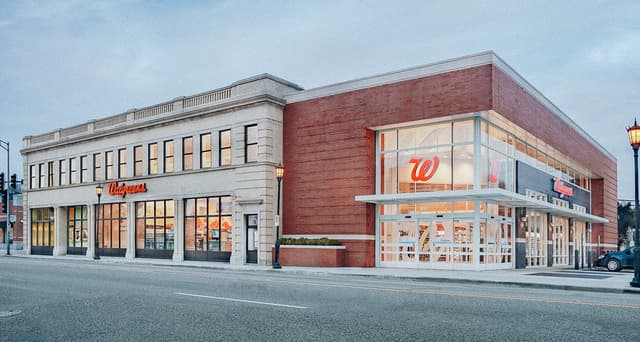
Walgreens has officially entered the Sycamore era. Sycamore Partners completed its acquisition of Walgreens Boots Alliance in late August 2025, taking the company private. The headline is familiar: a major retailer goes private, sheds public reporting requirements, and begins a period of “strategic” restructuring.   For real estate owners, however, the more important story is what happens next. Private equity does not treat leases as legacy obligations. It treats them as portfolio levers.   That shift is already showing up in extension behavior. Walgreens is still issuing traditional five-year, and in select cases ten-year, extensions. But two-year extension proposals are becoming increasingly common across a meaningful subset of locations. Not all stores, but enough that the pattern is clear.   If you see a two-year offer where you expected a five-year reset, it is easy to assume the worst. A more accurate framing is this: a two-year extension is often not a judgment on a specific store, but a portfolio-level strategy. Locations are being grouped into buckets.   This report is intended to help owners interpret what is happening by connecting three things: how private equity thinks about real estate, what Sycamore has already done since acquiring Walgreens, and what today’s lease signals are designed to enable next.   How Private Equity Actually Thinks About Real Estate   Public companies live and die by quarterly reporting, ratings agencies, and predictability. Private equity lives and dies by timing, optionality, and exits. In simple terms, a sponsor’s job is to stabilize operations, improve margins, create flexibility, and position the business, or pieces of it, for recapitalization, monetization, or exit within a finite window, typically three to seven years.   Real estate becomes a critical lever in that process. Leases are not viewed as routine renewals renewals; they are long-term commitments. And commitments reduce flexibility.   That matters at Walgreens because the footprint is enormous, uneven by market, and already in motion. Walgreens has publicly discussed closing roughly 1,200 stores over several years. Under private ownership, the pace, sequencing, and strategy of those decisions can become more deliberate, in part because they are no longer constrained by public-market optics.   What The “Tiered Extension” Pattern Is Telling Us   The most important nuance in today’s market is that Walgreens is no longer applying a single extension strategy across its entire portfolio. Instead, we are seeing a tiered approach: longer-term extensions on locations that appear to fit the long-term operating plan, and short-term extensions where flexibility is being preserved.   At the store level, short extensions are inefficient for Walgreens. They create more administrative work and less operational certainty. At the portfolio level, however, short leases buy time. They allow Walgreens and Sycamore to evaluate consolidation opportunities, relocation options, capital priorities, clinic strategy, and broader capital allocation decisions before locking in long-term obligations.   The Sycamore Move Owners Are Not Talking About Enough: Monetizing Corporate Real Estate   One of the clearest signals of how Sycamore is thinking about Walgreens real estate came quietly in late 2025, when Sycamore affiliates completed a roughly $490 million mortgage loan refinancing backed by a portfolio of 207 Walgreens-leased properties across more than 40 states. The transaction was structured as a single-asset, single-borrower CMBS deal.   This matters because it shows that Walgreens real estate is already being treated as a capital markets tool, not just operating infrastructure. Corporate-controlled stores can be pooled, financed, and used to support broader balance sheet strategy.   This is classic private equity behavior: identify financeable pools of hard assets and use them to improve flexibility at the platform level. Early post–take-private moves are often both operational and financial, even when they are not highly visible.   Corporate Motivation: The Question Owners Ask, and Brokers Rarely Answer   Every owner is asking the same question right now: What is Walgreens doing with my lease? To answer it, you have to think like the sponsor.   Sycamore’s incentives center on preserving refinancing flexibility, maintaining optionality, reducing footprint overlap, improving store-level productivity, simplifying operations across thousands of locations, and retaining the ability to monetize assets or business units when timing is favorable.   Since taking Walgreens private, Sycamore has reorganized the platform into five standalone businesses, installed new leadership, and begun simplifying overhead. The most visible move has been consolidating corporate staff out of downtown Chicago and back to the Deerfield headquarters campus, alongside reductions in corporate communications and public affairs functions.   On the healthcare side, Walgreens-backed VillageMD divested 32 Texas clinics to Harbor Health, signaling a willingness to unwind capital-intensive initiatives that do not fit the near-term plan. At the store level, Walgreens has continued modest pruning while implementing cost actions, including eliminating paid holidays for hourly workers.   Taken together, these moves point to measured simplification and operational tightening rather than wholesale disruption.   The Most Likely Real Estate Strategies Under Sycamore (Presented as scenarios, because sequencing matters)   What follows are not guarantees or predictions of individual store outcomes. They are scenario-based strategies grounded in how private equity typically operates at scale, Sycamore’s observable actions since the take-private, and the real-time patterns owners are experiencing across the portfolio.   The value is not in predicting what happens tomorrow, but in understanding what today’s behavior is designed to enable next.   Scenario 1: Short-Term Lease Paper As A Deliberate Pause Button   The rise of two-year extensions is best understood as a deferral mechanism. By issuing short-term extensions, Sycamore avoids hard-coding long-term footprint decisions while the Walgreens platform is still being segmented and stabilized.   Once Walgreens was split into five standalone business units, each inherited a different risk profile, capital need, and growth trajectory. Locking in long-term leases before that process settles would prematurely constrain strategic options.   At the store level, this creates friction. At the portfolio level, it preserves flexibility.   What This Sets Up Next: clearer differentiation between locations that receive longer-term commitments and those that remain candidates for consolidation, relocation, or exit.   Scenario 2: Concentrating Long-Term Commitments Into Fewer, Higher-Conviction Markets   The coexistence of two-year extensions alongside five- and ten-year paper is best explained by portfolio tiering, not inconsistency. Sycamore is likely compressing long-term lease exposure into a smaller, more defensible footprint, even if total store count declines modestly.   Private equity does not optimize store count. It optimizes for return on invested capital per location.   What This Sets Up Next: markets with multiple Walgreens locations may see selective consolidation, with remaining “last-store-standing” sites receiving longer extensions. Extension length reflects market importance and redundancy, not simply store performance.   Scenario 3: Selective Lease Restructuring To Improve Margins Where Leverage Exists   As operational targets are recalibrated, Sycamore is likely identifying cohorts of leases where modest economic changes can materially improve store-level and portfolio-level margins. This shows up in targeted requests tied to extensions, modified obligations, or localized economics.   This is a classic private equity tool: quietly improve EBITDA before pursuing more visible structural changes.   What This Sets Up Next: landlords in certain buckets may see extension proposals paired with economic resets, particularly where leases are short-dated, markets are redundant, or rents materially exceed productivity.   It is also important to recognize that private equity views rent differently than public retailers. Rent is no longer a reputational obligation; it is an operating cost evaluated alongside labor and overhead.   Scenario 4: Market-by-market Consolidation Driven By Overlap   Walgreens was already reducing its footprint before the take private. Under Sycamore, that process is likely to become more surgical and market-driven, with overlap playing a larger role than isolated store performance.   In over-stored trade areas, the question is no longer, “Which store is bad?” It becomes, “How many stores does this market actually need?” Even strong locations can be affected when redundancy exists.   What This Sets Up Next: consolidation decisions made at the market level, favoring the most strategically positioned sites and allowing secondary locations to roll off or relocate. This improves average store productivity while reducing long-term lease exposure.   Scenario 5: Real estate As An Option Set, Not A Binary “Own Versus Lease” Decision   Sycamore has already shown a willingness to view Walgreens real estate through a portfolio and capital allocation lens rather than purely as operating infrastructure. Asset-backed financings, portfolio encumbrances, and selective monetization allow the sponsor to improve liquidity and flexibility without disrupting store operations.   What This Sets Up Next: additional real estate–driven capital strategies as the operating businesses stabilize and longer-term decisions come into focus. By structuring assets into identifiable, controllable pools, Sycamore preserves multiple future paths rather than committing to a single outcome.   Why This Matters   Taken together, these strategies point to deliberate sequencing: deferring permanent decisions, concentrating long-term exposure, selectively improving margins, consolidating redundancy, and preserving real estate optionality. These are classic hallmarks of private equity execution.   Sycamore has followed this playbook in prior retail acquisitions, most notably Staples and Belk, where early ownership focused on shorter lease commitments, market-by-market rationalization, store consolidation, and portfolio pruning before longer-term positioning.   What Owners Should Be Doing Right Now   The biggest mistake owners can make during a private-equity transition is assuming they have a wide menu of attractive options. For many Walgreens owners, that simply is not true.   A large portion of the ownership base acquired properties within the last decade, refinanced when interest rates were sub–five percent, and underwrote to cap rates that are now 200 to 300 basis points tighter than today’s market. Selling often means giving back significant value. Refinancing frequently means higher debt costs and reduced cash flow.   Compounding that reality is the fact that many Walgreens leases are above replaceable rent. In most markets, that rent cannot be replicated by a backfill tenant without a meaningful reset.   Given that backdrop, the goal is not to force a decision, but to avoid being cornered into one. Owners should define the least-bad outcome before Walgreens calls, pressure-test financing risk even if refinancing is not imminent and recognize how quickly lender posture can shift when extension certainty disappears.   A two-year extension does not create good options. But it does preserve time. And time matters when alternatives are value destructive.   Closing Thought   Walgreens under Sycamore is not simply a retail story. It is a private equity transition in which real estate is being used deliberately to manage timing, flexibility, and future decision-making across a massive portfolio.   The coexistence of short-term extensions alongside longer-term paper reflects segmentation, not inconsistency. The use of hundreds of Walgreens properties in a $490 million CMBS financing reinforces that this real estate is already being evaluated through a portfolio and capital markets lens.   For owners, the objective is not to predict every outcome or react to each headline. It is to understand the incentives driving the sponsor’s behavior so you can position yourself ahead of the decision window, not behind it. In a market where replacement rents are scarce, financing is tighter, and exit values have reset, that position remains the most durable advantage available.

Image of Christian Becker Author

Christian Becker

Senior Associate

Image of The Matthews™ Podcast — Bo Kemp Success Story

The Matthews™ Podcast — Bo Kemp

Bo Kemp on the Strategic Advantage in Regional Development In this episode of the Matthews™ Podcast, host Matthew Wallace is joined by Bo Kemp, CEO of the Southland Development Authority, to discuss how regions compete for transformative projects in an era where infrastructure, power, and coordination determine where capital can actually deploy.   With a focus on aligning municipalities, investors, and long-term infrastructure planning across Chicago’s Southland, Kemp shares why economic development today is less about incentives and more about execution at scale. The Rise of Powered Land as the New Competitive Edge For decades, location and labor drove site selection. Today, Kemp explains, the defining variable is power.   Data Center Demand: Next-generation industrial users, particularly data centers, require massive, reliable power loads that few regions can deliver immediately. Infrastructure Readiness: It’s not just acreage that matters, but contiguous, develpment ready land with utilities, water access, grid connectivity, and workforce support. Grid Access Advantage: Chicago’s Southlands benefits from access to two electrical grids, including PJM, creating flexibility and capacity that many competing markets cnanot offer. Long Horizon Development in a Short-Term World Kemp emphasizes that the hardest part of large-scale development isn’t attracting interest but aligning stakeholders around projects that require 50- to 100-year thinking.   Public-Private Alignment: Successful projects demand trust between municipalities, utilities, developers, and capital partners. Political and Community Buy-In: Without local-level cohesion, even well-capitalized projects can stall. Strategic Patience: Regions that plan infrastructure ahead of demand are the ones positioned to capture generational investment. Capital Meets Infrastructure Looking ahead, Kemp discusses new initiatives designed to bridge real estate investment with energy and infrastructure strategy. Horizon South Realty Group: A platform focused on unlocking development opportunities across the Southland. The $100M Monarch Fund: A vehicle designed to pair equity with infrastructure and energy initiatives to accelerate large-scale projects. Key Takeaways for CRE Professionals Think Beyond the Dirt: Land value increasingly depends on power and access to infrastructure, not just location. Follow the Utilities: Grid capacity and energy strategy are becoming primary drivers of capital allocation. Alignment is the Asset: Regions that can coordinate across public and private sectors will win the next cycle of industrial growth.  

Image of Central Will, IL Industrial Market Report Q4 2025 Success Story

Central Will, IL Industrial Market Report Q4 2025

Central Will’s industrial market closed 2025 with strong fundamentals, supported by limited vacancy, steady rent growth, and stable investment activity. Vacancy rose modestly to just over 1% following recent deliveries and slight negative absorption, but remains well below long-term historical averages, underscoring the submarket’s supply-constrained environment. Asking rents continued to upward through the year, reflecting sustained tenant demand and positioning the submarket for continued, moderate growth. Development activity has picked up, with new space underway above historical norms, which may gradually ease conditions. Meanwhile, sales activity remained consistent with long-term averages, indicating steady investor interest. Overall, Central Will enters 2026 on stable footing, with balanced fundamentals and measured growth expected.   Key Highlights Vacancy rose to 1.24% in Q4 2025 following recent deliveries, but remains well below the 10-year average of 5.7%, underscoring the submarket’s long-term supply constraints. Asking rents reached $7.62/SF in Q4 2025, reflecting steady annual growth, while small to mid-size industrial buildings are achieving $8–$15/SF, with newer and higher-quality properties reaching the top of that range. Thirteen properties traded over the past year totaling $26.5 million, with pricing near $88/SF and cap rates averaging 7.9%, signaling stable investor demand in a disciplined capital markets environment. Rents Central Will’s industrial rents closed 2025 on a strong note, with asking rents reaching $7.62/SF in Q4. This marks a steady climb from $7.30/SF in Q4 2024 and a notable increase from $6.44/SF at the end of 2022, highlighting consistent long-term growth. While rents fluctuated throughout 2025, the overall annual trend remained upward, supported by limited new supply and tight market conditions. Looking ahead, rent growth is expected to continue at a measured pace, with annual increases projected to remain above the broader Chicago average through 2026.   Market Asking Rent Per SF Source: CoStar Group, Inc.   Vacancy The vacancy rate across Central Will rose to 1.24% in Q4 2025, marking an increase from 0.45% in Q4 2024 and signaling a modest easing after several years of extremely tight conditions. The late-2025 uptick reflects recent deliveries and slight negative absorption, though overall availability remains limited by long-term standards. Despite this recent rise, vacancy is expected to remain low relative to historical averages. Projections indicate a gradual increase through 2026, potentially reaching the mid-1% range as new space delivers and leasing activity stabilizes.   Vacancy Rate Source: CoStar Group, Inc.   Construction New construction activity across the broader market moderated in 2025 but remains elevated relative to pre-2023 levels. As of Q4 2025, 5.6 million SF is under construction, up from 4.7 million SF one year earlier but significantly below the peak pipeline of more than 13 million SF recorded in early 2022. While the pipeline has normalized from its historic highs, ongoing deliveries will continue to shape vacancy and rent growth trends as new supply is absorbed across the market.   SF Under Construction Source: CoStar Group, Inc.   Sales Will County’s industrial investment market demonstrated stability in 2025, with 13 transactions totaling $26.5 million and approximately 360,000 SF in inventory turnover over the past year. Annual sales volume remains in line with historical norms, compared to the five-year average of $27.8 million, signaling consistent investor engagement despite broader capital market shifts. Q4 2025 recorded $13.5 million in sales, with pricing reaching $87/SF, reflecting continued appreciation from the mid-$70/SF range seen in prior years. Overall market pricing is estimated at $88/SF, below the broader market average of $98/SF, while cap rates average 7.9%, slightly tighter than the regional benchmark.   Sales Volume & Market Sale Price Per SF Source: CoStar Group, Inc. | 10k – 15K SF   By the Numbers Source: CoStar Group, Inc.   Sales Volume: $13.5M Cap Rate: 7.9% Price Per SF: $87 Vacancy Rate: 1.2% Rent Growth (YoY): 4.3% Asking Rent Per SF: $7.62 Under Construction (SF): 5.6M Delivered (SF): 34K Absorbed (SF): 4.5M  

Image of Q&A Joshua Bluestein | Chicago Market Leader Success Story

Q&A Joshua Bluestein | Chicago Market Leader

Discipline, Development, and Deal Flow Q: You transitioned from a high-volume investment sales role in Manhattan to a leadership position in Chicago in 2023. What was it about Matthews™ that made you want to join the company? A: It felt like I was seeing Matthews™ everywhere I looked, online and in conversations with people in the business. I’ve always aspired to be a Market Leader, and when the chance to step into that role at the firm came up, it felt like the logical next step. I was really inspired by the Matthews™ growth mindset, it aligned perfectly with where I wanted to take my career.   Q: You are known for being in the office by 6:30 a.m. to set the daily tone. Beyond just the early start, what are the daily habits you believe are essential for anyone looking to reach the next level in this business? A: As Market Leader of the Chicago office, leading by example is crucial. It sounds cliché, but it’s the truth. If I’m in early, prepared, and consistent, it sets the tone for the day and reinforces expectations across the office.   For a young agent, success is built on a consistent, non-negotiable routine. That starts at 6:30 AM, ensuring you’ve done the necessary prep work to win before you even pick up the phone.   From there, it’s about mastering the daily habits that move the needle: hitting your conversation targets, prepping your call lists, and over-preparing for every meeting and pitch. There is no shortcut—it’s about being the most prepared person in the room.   Q: In a competitive industry like commercial real estate, why is it important for you to maintain an open-door policy and stay accessible to both new and senior agents? A: As a new agent, following a proven game plan is everything. At Matthews™, we’ve cultivated a culture that reinforces that roadmap at every level, ensuring that no one is just handed a manual and left to figure it out alone.   Both new and veteran agents know that my door is always open, but I tailor my leadership to meet them where they are.   As a new agent, you must really follow the gameplan, which we absolutely have at Matthews, and it is proven to work. Both new and veteran agents know that my door is always open. However, managing new vs. Veteran agents is different. With a new agent, they do not know much, if anything, so you really have to spend tons of time with them to show them the correct way to do the business. With an older or veteran agent, it’s all about how I can best support their business.   Q: What are the top things you look for in a recruit that can’t be taught in a training manual? A: Grit, coachability, accountability, and sacrifice. If a new agent does not have these things, it will be an uphill battle to make it in this ultra-competitive business.   Q: What advice do you give your mentees about staying resilient when the market gets unpredictable? A: Unpredictability is a part of every business. Commercial real estate brokerage is a cyclical business and always will be. It’s all about how you handle both the ups and downs of the market. How you respond is the biggest indicator of whether someone will be successful.   Q: The Chicago office has become a major hub for Matthews™ under your leadership. What is your primary focus for the office as we move through 2026? A: There are a lot of focuses for 2026. As always, growth is at the forefront of what we are doing as a company right now, continuing to recruit at a high level and fill seats in my office remains the top priority.   But the real work starts once they’re in those seats. I’m focused on cultivating a culture for new agents taking the next step in theri careers and helping them develop the tabits of top-producers. My goal is to “home grow” as many new agents into senior agents as quickly and productively as possible.   Q: What types of sellers are coming to market in Chicago right now, strategic exits, maturities/refis, partnerships unwinding, and how is that shaping deal flow? A: Multifamily is still the leader of transactional volume, but across multifamily and industrial, refinancing activity often dictates whether owners list or hold, thus creating periodic waves of inventory. Industrial provides a steady baseline of deal flow, often with sellers recycling to newer cores. Refinancing pressures and loan maturities are key drivers of current listings, sometimes more so than distress itself.   Office is different. Maturities without viable refinance options are pushing some assets into special servicing, note sales, or recap situations before you ever see a clean equity sale. As a result, office deal flow is still lagging and skewing toward opportunistic buyers and strategic sellers, rather than broad institutional accumulation.   Beyond maturity-driven sellers, we’re also seeing selective partnership unwind activity that is often handled off-market, so it doesn’t always show up as visible inventory.   Q: As more loan maturities hit, where do you expect distress or motivated selling to show up first in Chicago, it at all? A: Office will likely be the first place where distress or motivated selling shows up, particularly downtown towers and secondary assets facing near-term maturities. Hotel properties with weaker occupancy or rate growth are another area to watch, especially where debt was structured aggressively.   In multifamily and retail, distress is likely to be more selective. Assets where cash flow can’t support today’s higher refinancing costs may come to market, but it’s less immediate. Overall, a significant portion of loans are already matured or approaching maturity, which is putting pressure on owners to either sell, recapitalize, or renegotiate.   Q: Are you noticing a widening gap between best-in-class assets and non-core products? A: Yes—there’s a clear and widening gap between best-in-class core assets and non-core or undifferentiated products, and it’s showing up across most asset classes. The divergence is being driven by a combination of higher cost of capital, greater risk selectivity, and structurally slower growth.   We’ve moved from a ‘rising tide’ market to a ‘prove-it’ market. Best-in-class assets are being treated as safe havens, while non-core products are being repriced for complexity, capital intensity, and uncertainty.   Q: Who is driving the market right now? Are we seeing more ‘motivated’ sellers facing 2026 maturities, or strategic owners who finally feel the bid-ask gap has closed through to exit? A: In the CRE market right now, both motivated sellers (especially those facing 2026 maturities) and strategic, long-term owners who feel the bid/ask gap is closing are active. The balance between them depends on the asset class, financing profile, and investor type.   Sellers with looming maturities and refinancing stress are increasingly willing to negotiate on price and terms, narrowing the traditional bid–ask spread. At the same time, strategic, well-capitalized players are stepping in. This isn’t just forced sales—owners who see valuations reconverging toward fundamentals are also willing to transact, especially where growth prospects or repositioning opportunities exist.

Image of Joshua Bluestein Author

Joshua Bluestein

Market Leader

Image of Chicago, IL Multifamily Market Report Q4 2025 Success Story

Chicago, IL Multifamily Market Report Q4 2025

Chicago’s multifamily fundamentals strengthened through year-end 2025 as leasing demand continued to exceed the pace of new supply. Vacancy declined to 5.0%, materially below the national average, reflecting sustained absorption and limited inventory expansion. Net absorption remained positive across both urban and suburban geographies, with Downtown Chicago accounting for a disproportionate share of demand due to its role as the region’s primary employment and lifestyle hub. Asking rents averaged $1,900 per unit, with annual rent growth of 3.4%, exceeding long-term averages and significantly outperforming national benchmarks. Growth was strongest among Class A properties, though mid- and lower-tier assets also posted healthy gains, supported by constrained supply and limited trade-out options for renters. Concession levels remained subdued, signaling continued landlord pricing power and disciplined lease-up conditions.   Key Findings Chicago remains one of the most supply-constrained multifamily markets nationally, with demand continuing to outpace new deliveries and vacancies compressing further through 2025. Muted construction activity and a pipeline concentrated in high-end product are reinforcing tight fundamentals and supporting sustained rent growth across asset classes. Investment activity is stabilizing after recent declines, with improving liquidity supported by resilient operating performance and stable pricing for quality assets.   Chicago Multifamily Supply & Demand Dynamics Source: CoStar Group, Inc. Chicago Demographics Source: CoStar Group, Inc. Unemployment Rate: 5.0% Current Population: 9,577,092 Households: 3,791,492 Median Household Income: $92,999   Chicago benefits from a highly diversified and resilient economic base anchored by finance, healthcare, manufacturing, logistics, and professional services. The metro hosts a deep pool of office-using employment, supported by 24 Fortune 500 headquarters and a well-educated workforce, with 39% of adults holding a bachelor’s degree or higher. While broader population growth has been modest, higher-income households continue to concentrate in Downtown Chicago, the North Lakefront, and select suburban nodes. Relative affordability compared with peer coastal markets, combined with proximity to major employment centers and infrastructure advantages, continues to underpin multifamily demand.   Recent Office Expansions in Chicago Source: CoStar Group, Inc. Bain and Company PxC Medline Boston Consulting Group   Population, Labor Force, & Income Growth Source: CoStar Group, Inc.   Chicago Multifamily Construction Chicago’s development pipeline remains exceptionally limited relative to its size, reinforcing the market’s long-standing supply constraints. As of Q4 2025, approximately 8,600 units were under construction, representing just 1.5% of total inventory, well below the national average. This level of activity marks one of the lowest points in the city’s construction cycle in more than a decade. New deliveries totaled roughly 1,300 units during the year, while the majority of the active pipeline is concentrated in luxury assets, particularly in Downtown Chicago. Elevated construction costs, tighter financing conditions, and lengthy permitting processes continue to suppress new starts, suggesting that development will remain below historical norms. As a result, near-term supply pressure is expected to remain minimal, supporting further vacancy compression.   Units Construction Starts Source: CoStar Group, Inc.   Units Under Construction Source: CoStar Group, Inc.   Chicago Multifamily Sales Multifamily investment activity in Chicago showed signs of stabilization in 2025, with total sales volume reaching approximately $1.9 billion. While activity remains below the 2022 peak, transaction momentum improved relative to prior years, reflecting increased buyer confidence in the market’s long-term fundamentals. Average pricing reached $228,000 per unit, supported by stable cash flows and expectations for continued rent growth. Activity remained concentrated in core submarkets, particularly Downtown Chicago and the North Lakefront, which together captured the majority of transaction volume. Private capital dominated the buyer pool, while institutional participation remained measured amid ongoing macroeconomic and regulatory uncertainty. Cap rates have largely stabilized, indicating that pricing has found a near-term equilibrium as investors adjust underwriting assumptions to reflect higher financing costs and property tax considerations.   Chicago Multifamily Sales Volume Source: CoStar Group, Inc.   By the Numbers Q4 2025 | Source: CoStar Group, Inc. Sales Volume: $1.9B Price Per Unit: $228K Cap Rate: 6.7% Vacancy Rate: 5.0% Rent Growth: 3.4% Asking Rent Per Unit: $1.9K Units Under Construction: 8.6K Units Delivered: 1.3K Units Absorbed: 82

Image of Chicago, IL Industrial Market Report Q4 2025 Success Story

Chicago, IL Industrial Market Report Q4 2025

Chicago’s industrial market is moderating as slower population growth and softer trade activity temper demand, though fundamentals remain comparatively healthy. Over the past year, net absorption totaled nearly 3.8 million square feet, among the strongest totals nationally, but well below prior highs. Vacancy stands at approximately 5.5%, below both the long-term market average and the national rate, despite rising steadily since early 2025.   Rent growth remains positive at 4.0% year-over-year, outpacing the national average, but easing tenant demand and declining pre-leasing activity are expected to increase concessions. While Chicago’s 1.4-billion-square-foot industrial base benefits from unmatched intermodal infrastructure, its heavy concentration in logistics space leaves the outlook subdued through 2026.   Key Findings Chicago recorded roughly 3.8 million square feet of net absorption over the past 12 months, while vacancy remains low at about 5.5%, below the national level. There is 15.4 million square feet under construction, representing just 0.8% of total inventory and well below the national average, positioning the market for one of its slowest expansion periods. Industrial sales volume reached $4 billion over the past year, up 15% year-over-year, with logistics properties accounting for roughly $2.8 billion of total transactions.   Chicago Industrial Supply & Demand Dynamics Source: CoStar Group, Inc.   Chicago Demographics Source: CoStar Group, Inc. Unemployment Rate: 5.0% Current Population: 9,577,193 Households: 3,791,460 Median Household Income: $92,994   Chicago’s economy is driven by its top-performing transportation network, several corporate employers, and a diverse industrial base, making it one of the most resilient metros nationally. The metro stands out as an industrial hub for its two international airports, railroads, and highway convergence, and it is also home to 24 Fortune 500 companies that include United Airlines and Northern Trust. Growth in life sciences and advanced manufacturing, highlighted by the Illinois Quantum and Microelectronic Park, further strengthens Chicago’s long-term outlook.   Top Tenant Leases Elogistics Service Corp Peopleworks PepsiCo Hyundai Mobis   Population, Labor Force, & Income Growth Source: CoStar Group, Inc.   Chicago Industrial Construction After its recent development surge, Chicago’s industrial construction pipeline has normalized with 15.4 million square feet underway. While availability across recent deliveries remains elevated, leasing momentum has improved, particularly in large-format logistics facilities, where vacancy has declined meaningfully. Chicago’s central location and extensive transportation network continue to attract major tenants, supporting new development despite pullbacks from some third-party logistics users. With construction starts subdued and a growing share of future deliveries pre-leased or owner-occupied, the market is positioned for a prolonged period of limited industrial expansion.   SF Construction Starts Source: CoStar Group, Inc.   SF Under Construction Source: CoStar Group, Inc.   Chicago Industrial Sales Chicago deals gained momentum over the past year, with total annual sales volume reaching $4 billion, a 15% increase year-over-year. Logistics assets continue to dominate investor interest, accounting for $2.8 billion in trades, reflecting confidence in the market’s core distribution fundamentals. While activity remains below the prior cycle peak, Chicago’s extensive infrastructure, limited new supply, and stable tenant base continue to attract both institutional and private buyers, which together represent roughly three-quarters of transactions. Near-term loan maturities may generate additional sales activity despite broader market uncertainty.   Chicago Industrial Sales Volume Source: CoStar Group, Inc.   By the Numbers Q4 2025 | Source: CoStar Group, Inc. Sales Volume: $1.1B Price Per SF: $98 Cap Rate: 8.1% Vacancy Rate:5.5% Rent Growth: 4.0% Asking Rent Per SF: $9.92 SF Under Construction: 15.4M SF Delivered: 2.5M SF Absorbed: 4.9M

Image of Chicago, IL Retail Market Report Q4 2025 Success Story

Chicago, IL Retail Market Report Q4 2025

Chicago’s retail market softened in 2025 as elevated store closures and bankruptcies weighed on demand, pushing net absorption negative and lifting availability modestly. Big-box move-outs drove much of the increase, particularly within older inventory that lacks the modern layouts sought by today’s tenants. Despite rising availability, overall conditions remain historically tight, supported by limited new construction and a constrained development pipeline. Leasing activity slowed as retailers adopted a more cautious posture, with demand concentrated in smaller-format, service-oriented spaces. Submarket performance diverged, with the CBD facing higher vacancy while urban neighborhoods held steady and suburban corridors outperformed. Looking ahead, subdued near-term demand is expected to persist, but limited supply and steady backfilling should support gradual stabilization across the market.   Key Findings Chicago’s retail market rebounded in Q4 2025, recording over 1.2 million SF absorbed, reducing vacancy to 4.8% and signaling stabilization across core submarkets. Retail sales totaled $740 million, with average prices remaining near $187 per SF, reflecting steady demand for well-located, primarily suburban community and neighborhood centers. Construction remains constrained, with 1.2 million SF underway and 266,000 SF delivered. Low new supply, coupled with a rent growth of 2.4%, continues to sustain a balanced, resilient retail environment.   Chicago Retail Supply & Demand Dynamics Source: CoStar Group, Inc.   Chicago Demographics Source: CoStar Group, Inc. Unemployment Rate: 5.0% Current Population: 9,577,296 Households: 3,791,429 Median Household Income: $92,990   Chicago’s diverse, infrastructure-driven economy provided a stable foundation for the retail real estate market in Q4 2025, supporting consistent consumer activity despite broader macro uncertainty. As a national hub for logistics, corporate headquarters, finance, healthcare, and manufacturing, the metro benefits from steady employment and income generation that underpins retail demand. Population growth in higher-income Downtown and North Shore areas, along with relatively affordable housing, is helping concentrate consumer spending in dense, walkable retail districts. A highly educated workforce and expanding innovation sectors reinforce daytime population and service-oriented retail needs near employment centers. Together, these factors helped insulate Chicago’s retail market from volatility, favoring well-located assets tied to essential goods, services, and experiential uses.   Population, Labor, & Income Growth Source: CoStar Group, Inc.   Chicago Retail Construction Retail construction in Chicago remains limited, reinforcing balanced market conditions. Over the past year, roughly 750,000 SF of retail space was removed, while new deliveries stayed well below pre-pandemic averages. Recent completions have focused on build-to-suit projects, grocery-anchored centers, and mixed-use developments, most of which were pre-leased prior to delivery. Active construction totals just 1.2 million SF, with only a small share currently available, underscoring restrained speculative development. New supply represents a minimal portion of total inventory and trails the national average. Development has been concentrated in select suburban corridors with strong demographics and connectivity, while within the city, activity remains modest and targeted. Overall, the limited pipeline continues to support long-term stability in Chicago’s retail market.   SF Construction Starts Source: CoStar Group, Inc.   SF Under Construction Source: CoStar Group, Inc.   Chicago Retail Sales Chicago’s retail investment market recorded approximately $3.0 billion in sales over the past 12 months, down modestly from the prior period as investors remained selective. Private buyers continued to dominate activity, while institutional participation stayed below historical norms amid cautious capital deployment. Transaction volume skewed heavily toward smaller assets, with most deals closing below $5 million and limited activity among larger properties. Sales were concentrated in suburban community, neighborhood, and power centers, reflecting demand for necessity-based retail in established corridors. Pricing held steady near recent levels, supported by limited new development and consistent buyer interest in well-located assets.   Chicago Retail Sales Volume Source: CoStar Group, Inc.   By the Numbers Source: CoStar Group, Inc. Sales Volume: $740M Price Per SF: $187 Cap Rate: 8.1% Vacancy Rate: 4.8% Rent Growth: 2.4% Asking Rent Per SF: $22.30 Under Construction: 1.2M SF Delivered: 266K SF Absorbed: 1.2M SF

Image of Chicago, IL Industrial Market Report Q3 2025 Success Story

Chicago, IL Industrial Market Report Q3 2025

Chicago’s industrial market posted steady leasing momentum in Q3 2025, supported by solid demand and tightening conditions despite pockets of softness in older inventory. Vacancy held at 5.9%, well below the national average, reflecting continued absorption of modern logistics and build-to-suit space. The quarter saw 1.2 million SF of net absorption and 1.7 million SF of new deliveries, with an additional 14.1 million SF under construction. Leasing demand was strongest for newer facilities, while buildings constructed before 2010 continued to shed tenants, contributing to elevated churn in legacy stock.   Asking rents climbed to $9.67/SF, supported by 3.6% annual rent growth, as smaller and mid-size spaces leased more quickly than large big-box options. Overall, Q3 performance indicates a resilient yet bifurcated market. Modern logistics assets continue to outperform, supporting overall fundamentals despite rising vacancy and slower leasing velocity among older properties.   Key Findings Signs of deceleration emerge in the metro as slow population growth and reduced trade activity weigh on fundamentals. Demand has slowed significantly in 2025, with net absorbed SF posting 1.2M in Q3, in comparison to 3.9M the year prior. Despite a recent demand decrease, Chicago remains the U.S.’s largest industrial market with 1.4 billion SF of inventory, supported by extensive intermodal infrastructure and relatively affordable rents.   Chicago Industrial Supply & Demand Dynamics Source: CoStar Group, Inc.   Chicago Demographics Source: CoStar Group, Inc. Unemployment Rate: 3.9% Current Population: 9,580,814 Households: 658,614 Median Household Income: $92,760   Chicago’s economy is defined by its unparalleled connectivity, diverse industry base, and deep pool of talent. As North America’s primary freight interchange, with two international airports, six of the seven largest U.S. railroads, and ten interstate highways, the city is a major hub for logistics, distribution, and corporate headquarters activity. Its economic diversity, with no single industry representing more than 15% of the market, supports long-term stability and resilience across office, industrial, and mixed-use sectors. Strategic public initiatives, from LaSalle Street office-to-residential conversions to the pioneering Illinois Quantum and Microelectronic Park, further reinforce Chicago’s position as a forward-leaning economic powerhouse poised for sustained growth.   Top 5 Busiest U.S. Airports 2024 | Source: WorldAtlas   Chicago Industrial Construction Construction activity remained active but measured in Q3 2025, with 1.7 million SF delivered during the quarter and 14.1 million SF under construction, reflecting restrained but steady development consistent with pre-pandemic norms. Large modern logistics facilities continue to dominate new supply, supported by major commitments from operators such as Uline, RJW Logistics, and Expeditors International. Despite elevated availability among recently delivered projects, absorption has kept pace: of the space completed since early 2024, more than 9.5 million SF has been leased, helping stabilize vacancy even as oversized facilities face longer lease-up timelines. With construction starts staying muted and over 6 million SF of fully leased or owner-occupied projects slated for 2026–27, Chicago is on track for one of its slowest periods of industrial inventory growth in more than a decade.   SF Construction Starts Source: CoStar Group, Inc.   SF Under Construction Source: CoStar Group, Inc.   Chicago Industrial Sales Sales activity strengthened with quarterly activity contributing to an annual sales volume of roughly $1 billion and pricing averaging $97/SF. Cap rates held near 8.0%, reflecting investor preference for stability amid a moderating capital markets environment. Demand was driven largely by logistics facilities, which continue to attract both institutional and private buyers thanks to the metro’s strategic distribution infrastructure, tight vacancy, and consistent rent growth. While overall deal flow remains below peak 2021 levels, investors are gravitating toward well-leased, modern assets with durable cash flows, as evidenced by strong interest in large distribution centers and specialized facilities such as data centers. With maturing debt expected to bring additional product to market later in the year, Q3 signaled a steady but disciplined investment climate supported by Chicago’s resilient industrial fundamentals.   Chicago Industrial Sales Volume Source: CoStar Group, Inc.   By the Numbers Q3 2025 | Source: CoStar Group, Inc. Sales Volume: $1B Price Per SF: $97 Cap Rate: 8.0% Vacancy Rate: 5.9% Rent Growth: 3.6% Asking Rent Per SF: $9.67 Under Construction: 14.1M SF Delivered: 1.7M SF Absorbed: 1.2M SF

Image of Chicago, IL Multifamily Market Report Q3 2025 Success Story

Chicago, IL Multifamily Market Report Q3 2025

Chicago’s multifamily market was one of the nation’s strongest in Q3 2025, driven by steady demand and limited new construction. Vacancy tightened to 4.7%, well below the 8.4% U.S. average, as the region absorbed 7,400 units over the past year against just 4,800 deliveries. Downtown Chicago and the North Lakefront led urban absorption, while suburban areas such as McHenry and Kendall County posted impressive gains. Annual rent growth reached 3.4%, far outperforming the national rate, with every submarket recording above-average increases and top performers like Northwest Lake County and Downtown exceeding 5%. With less than 11,000 units underway and development trending below historical norms, Chicago is positioned to maintain tight vacancies and strong rent growth through year-end.   Key Findings Chicago’s multifamily fundamentals remain exceptionally tight, with 4.7% vacancy, 1.5K units absorbed, and rents rising 3.8%, supported by limited deliveries and strong demand across core submarkets. Investment momentum strengthened with $1.1B in sales volume and a 6.7% cap rate, offering attractive yield spreads as pricing stabilizes amid improving rent growth and supply constraints. Development activity remains muted, with 10,527 units under construction and just 1.2K delivered, reinforcing long-term undersupply as asking rents reach $1,885 and pricing averages $221K per unit.   Chicago Multifamily Supply & Demand Dynamics Source: CoStar Group, Inc.   Chicago Demographics Source: CoStar Group, Inc. Unemployment Rate: 5.0% Current Population: 9,581,827 Households: 3,790,679 Median Household Income: $92,683   Chicago’s strong infrastructure, diverse economy, and highly educated workforce underpin a resilient multifamily market in Q3 2025. Even as the broader metro sees population decline, growth in Downtown and Northshore neighborhoods, driven by higher-income renters, continues to support demand for Class A units. The city’s relative affordability, with incomes above the national average but home prices below it, keeps many households in the rental pool. Expanding sectors such as life sciences, professional services, and advanced manufacturing are drawing talent to key employment hubs, reinforcing apartment demand nearby. Additionally, major public and private investments, including LaSalle Street’s office-to-residential conversions and the new Illinois Quantum and Microelectronic Park, are set to revitalize the urban core and strengthen long-term multifamily fundamentals.   Population, Labor Force, & Income Growth Source: CoStar Group, Inc.   Chicago Multifamily Construction As of Q3 2025, Chicago’s market-rate apartment development has slowed significantly, with only about 11,000 units, 1.9% of total inventory, currently under construction, marking the lowest activity level since 2012. After elevated deliveries in 2023 and 2024, the pipeline has shifted into a clear moderation phase, with just 4,800 units projected for 2025 and 6,400 for 2026. Luxury developments dominate, representing roughly 70% of units underway and expanding the premium segment by 5.4%. Development remains concentrated in Downtown Chicago and key suburban areas. However, elevated interest rates and rising construction costs have pushed new starts down about 40% from 2024, underscoring tightening supply conditions.   Units Construction Starts Source: CoStar Group, Inc.   Units Under Construction Source: CoStar Group, Inc.   Chicago Multifamily Sales Chicago’s multifamily investment market remained comparatively resilient in Q3 2025, with transaction activity gaining momentum after two slower years. Year-to-date sales reached $3 billion, up 10% from the same period in 2024, pushing the trailing 12-month volume to $4.6 billion, a 43% annual jump that signals renewed investor confidence. Private buyers continue to dominate, accounting for 65% of transactions, while institutional groups remain selective but active. North Lakefront and Downtown led investment activity, capturing roughly 70% of total volume. Cap rates averaged 6.7%, above the national level, offering potential upside as tight supply and accelerating rent growth support pricing despite ongoing concerns over interest rates and property taxes.   Chicago Multifamily Sales Volume Source: CoStar Group, Inc.   By the Numbers Q3 2025 | Source: CoStar Group, Inc. Sales Volume: $1.1B Price Per Unit: $221K Cap Rate: 6.7% Vacancy Rate: 4.7% Rent Growth: 3.8% Asking Rent Per Unit: $1,885 Under Construction: 10.5K units Delivered: 1.2K units Absorbed: 1.5K units

Image of Chicago, IL Retail Market Report Q3 2025 Success Story

Chicago, IL Retail Market Report Q3 2025

Chicago’s retail market in Q3 2025 is adjusting to slower leasing activity and modest rent growth amid rising availability. Total leasing reached 6.8 million square feet over the past year, down 17% year-over-year, as economic uncertainty and store closures drove move-outs to outpace move-ins by 1.2 million square feet. The market’s availability rate climbed to 5.6%, exceeding the national average of 4.8%, with larger vacancies concentrated in the Central Business District. Despite this, smaller-format retailers, fitness operators, and value-oriented chains like Burlington and TJ Maxx continue to backfill space. Average asking rents rose 1.7% year-over-year to $21.94 per square foot, supported by tight supply, limited construction, and steady suburban demand, particularly in North DuPage and Schaumburg.   Key Findings Leasing volume totaled 6.8 million SF, down 17% year-over-year, as tenant caution and big-box closures drove a rise in availability to 5.6%, above the national average. Market-wide asking rents rose 1.7% to $21.94 per SF, trailing national gains, as soft demand and elevated vacancies tempered landlords’ pricing power despite limited new supply. Areas like North DuPage and Schaumburg outperformed with 2% annual rent growth, supported by tight supply, strong consumer traffic, and virtually no new retail construction underway.   Chicago Retail Supply & Demand Dynamics Source: CoStar Group, Inc.   Chicago Demographics Source: CoStar Group, Inc. Unemployment Rate: 5.0% Current Population: 9.58M Households: 3,709,529 Median Household Income: $92,573   Chicago’s retail and commercial market in Q3 2025 remains resilient, supported by a diverse economy, world-class infrastructure, and a highly educated workforce. As North America’s primary logistics and distribution hub, with two major airports, six Class I railroads, and ten interstates, Chicago attracts major corporate tenants and investment across sectors. The metro’s balanced industry base, with no sector exceeding 15% of output, provides economic stability and steady demand for office, industrial, and mixed-use space. Affluent growth in Downtown and Northshore neighborhoods, combined with median household incomes 12% above the national average and relatively affordable housing, underpins strong consumer spending.   Population, Labor, & Income Growth Source: CoStar Group, Inc.   Chicago Retail Construction Chicago’s retail construction pipeline remains limited, helping maintain balanced market fundamentals. Over the past year, retail inventory declined by 8,000 square feet, compared to an annual average of 1.5 million square feet in 2015–2019. Most new development consists of build-to-suit, grocery-anchored, and mixed-use projects, with 1.1 million square feet under construction, only 15% available. Deliveries remain concentrated in outer suburbs such as Northwest Indiana, South Route 45, and the Western East/West Corridor, which lead the region in activity. Urban development is modest, led by South Chicago and Fulton Market. Overall, construction represents just 0.2% of total inventory, well below the national average of 0.4%.   SF Construction Starts Source: CoStar Group, Inc.   SF Under Construction Source: CoStar Group, Inc.   Chicago Retail Sales Chicago’s retail investment market totaled $3.1 billion in sales over the past year, ranking among the top five U.S. metros despite an 8% year-over-year decline and a 20% dip from the 10-year average. Private investors led activity, accounting for 57% of transaction volume, while institutional investors scaled back participation. Most deals involved assets under $5 million, with only 14 trading above $20 million, reflecting a shift toward smaller suburban properties. The average sale price held steady at $188 per SF, supported by strong demand in submarkets like Schaumburg and Northbrook. Limited new development and constrained supply are expected to stabilize pricing and support gradual recovery ahead.   Retail Sales Volume Source: CoStar Group, Inc.   By the Numbers Source: CoStar Group, Inc. Sales Volume: $847M Price Per SF: $187 Cap Rate: 8.0% Vacancy Rate: 4.9% Rent Growth: 1.7% Asking Rent Per SF: $21.94 Under Construction: 1.1M SF Delivered: (249K) SF Absorbed: (143K) SF

Image of No Anchor, No Problem: Unanchored Strip Center Report Success Story

No Anchor, No Problem: Unanchored Strip Center Report

Unanchored strip centers—those smaller, convenience-driven retail properties ranging from 10,000 to 50,000 square feet—are stealing the spotlight in 2025. They might not have a big-name grocery chain or anchor tenant, but they’re more than holding their own. With tight retail supply and resilient consumer spending, these centers are commanding high occupancy, steady rent growth, and increased investor interest. Once seen as a secondary retail type, their adaptability, neighborhood-focused tenant mix, and ability to handle turnover with ease have redefined them as dynamic, core retail assets. This report breaks down the numbers behind this transformation, analyzing performance from coast to coast.   Performance Overview Consumer Spending Fuels Growth   The overall outlook for retail in 2025 is positive, supported by resilient consumer spending, easing financial pressures, and productivity gains. With job growth and rising wages continuing to put money in shoppers’ pockets, consumer spending, the lifeblood of retail, is strong despite uncertainties in the market.   The Metrics: Occupancy and Rent Growth Proving that you don’t need a heavyweight tenant to be a heavyweight contender.   Retail space is hard to come by in 2025, with national vacancy at historically low levels, around 4% to 5%. Unanchored strip centers, while slightly trailing their grocery-anchored counterparts, average a 4.5% vacancy rate. Occupancy at unanchored strip centers is holding steady and likely contributing to the overall tightness in the market. Power centers see a vacancy rate of 4.3% and enclosed malls 8.7%.   Unanchored strip retail resilience stems from a few key strengths:   • Demand for high-quality retail space that far exceeds supply • Resilience of service-oriented and local businesses • Flexibility to accommodate a diverse tenant mix   In today’s constrained development environment, where limited new retail construction is coming online, existing unanchored strip centers are well-positioned to capture demand and maintain high occupancy.   These same fundamentals are fueling steady rent growth. The average asking rent for strip centers rose from $17.10 in Q1 2019, to $20.85 in Q2 2025, a clear signal of the value tenants place on visibility, convenience, and accessibility. With landlords in a strong position amid elevated occupancy and limited competition, unanchored centers are expected to meet or slightly exceed the projected 2% national retail rent growth rate for 2025.   Taking Center Stage Investment Momentum Builds   Investor interest in unanchored strip centers has reached new heights. At the heart of their appeal is the relatively low acquisition cost, steady cash flow, and flexibility to adapt leasing strategies to local demand. While private investors have long dominated this space, institutional capital is increasingly entering the fold. Large funds and institutions are drawn to the sector’s straightforward investment and potential for scale, particularly in today’s yield-constrained environment.   A growing focus on value-add opportunities is further fueling momentum, as investors seek to unlock upside through improved management, strategic leasing, and targeted renovations. Many of these assets, historically held by private owners, offer room to reposition rents, optimize tenant mixes, and enhance operational efficiency, better positioning them for revenue growth and broader investor appeal.   Data shows that cap rates for unanchored strip centers in Q2 2025 average:   • Class A: 6.9% • Class B: 7.2%   By contrast, grocery-anchored retail centers show slightly lower cap rates in Q2 2025:   • Class A: 6.1% • Class B: 5.4%   This shift is supported by cap rate trends that suggest healthy return expectations. As of H2 2025, cap rates for unanchored strip centers average 7.0%. These yields remain generally higher than those for grocery-anchored centers, which average 5.7%, reflecting both the slightly higher perceived risk and the value-add potential unanchored centers offer. Many investors are capitalizing on this spread by pursuing active management strategies to boost NOI through improved leasing and repositioning efforts. These assets are increasingly viewed as stable alternatives to other asset classes such as office and multifamily, where returns may be compressing in many markets.   However, the segment is not without nuance. Some unanchored centers, particularly those overlapping with categories like freestanding retail or housing vulnerable tenants such as pharmacies and discount retailers, may face short-term challenges. Closures and consolidation in these categories could temporarily raise vacancy rates, primarily in centers with concentrated exposure. Yet, landlords able to backfill with more resilient, service-oriented tenants often see limited disruption.   Retail’s Quiet Climbers Trends in the Unanchored Space   Resilience of Local Businesses   Small, entrepreneurial “mom-and-pop” tenants continue to be a stabilizing force in unanchored strip centers. Their strong personal investment, adaptability, and long-term commitment make them reliable and valuable tenants.   Rise of Experimental and Service-Oriented Retail   Fitness studios, salons, medical clinics, and diverse restaurants are increasingly occupying space, reflecting consumer demand for convenience and in-person services less vulnerable to e-commerce disruption.   Omnichannel Integration   Retailers are leveraging unanchored centers as key touchpoints for e-commerce fulfillment—facilitating in-store pickups, returns, and last-mile logistics. These centers help bridge online and physical retail in a consumer-centric way.   Regional Deep Dive: Standout Markets of Unanchored Strip Retail  West Rebounding with strong, urban core demand in H1 2025   • Los Angeles: $239M • San Diego: $235M • Seattle: $110M • Vegas: $100M   Southwest Stable growth with high pricing resilience in H1 2025   • Dallas: $324M • Houston: $175M • Phoenix: $120M • Denver: $113M   Midwest Stabilizing, but still in early recovery   • Chicago: $334M in 2024, $93M in H1 2025   Northeast Pricing in strength returns amid cautious optimism   • NYC: $336M in 2024, $70M in H1 2025 • Boston: $155M in 2024, $48M in H1 2025   Mid-Atlantic Reacceleration led by D.C. and institutional capital   • D.C.: $212M in 2024 (3x 2023), $100M in H1 2025   Southeast Consistently leads in volume and momentum throughout H1 2025   • Nashville: $111M • Lexington: $137M • Jacksonville: $113M • South Florida: $100M • Atlanta: $157M • Tampa $131M   Regional Deep Dive: Mid-Atlantic   The Mid-Atlantic unanchored strip center market entered a transitional phase in 2024, showing signs of recovery after a volatile few years. Total transaction volume reached $494 million for the year—a 6% increase over 2023—fueled by a dramatic 925% surge in portfolio sales, even as individual deal volume declined 11.5% year-overyear. Despite a soft pricing environment in late 2024, with the average price per square foot dropping to $139 and cap rates rising to 9%, the market gained traction heading into 2025. In the first half of 2025, volume reached $243 million and pricing rebounded sharply to $219 per square foot, indicating a flight to higher-quality assets.   According to Ed Laycox, EVP of Single & MultiTenant Retail at Matthews™, the Mid-Atlantic remains “a premier investment geography for any investor type,” owing largely to strong demographic trends. “The robust population growth in Virginia and the Carolinas has only fueled the investment appetite more,” he explains, noting that REITs, private equity firms, and family offices have all been especially active.   The D.C. Metro and Secondary Market Dynamics   In 2024, performance was led by the D.C. metro, which posted $211.8 million in volume–more than tripling its 2023 total and making it the clear focal point for regional investor interest. Laycox attributed the sharp pricing rebound in D.C. largely to replacement cost dynamics. “The cost to construct a new space for a tenant is very prohibitive in today’s market–the D.C. market in particular,” he says. “When you can buy a center 50-60% below replacement cost and still get a market cap rate, your future downside is limited.” This affordability relative to new construction is also helping drive retail vacancy rates in unanchored strip centers to all-time lows.   Richmond also emerged as a bright spot, matching its prior peak with $52 million in volume. Meanwhile, markets like Philadelphia and Baltimore saw pullbacks, and Pittsburgh, Harrisburg, and Norfolk remained relatively muted.   Small investors are moving to secondary markets of the Mid-Atlantic, chasing yield and lower price per square foot.   Early 2025 data shows the D.C. metro leading the region with over $100M in transactions year-to-date, while Philadelphia is growing with $65M already transacted in H1 2025, already above 2024 volume.   Shifting Capital Composition and Tenant Demand   The capital composition of the market also began to shift. Institutional investors, after net selling nearly $97 million in 2024, returned in force in early 2025 with $55.7 million in net acquisitions— signaling renewed confidence in Mid-Atlantic retail opportunities. REITs were also active buyers in 2024, posting their largest net inflow in over a decade at $65.2 million. However, they have yet to record any deal activity in early 2025, suggesting a strategic pause or wait-and-see approach. As Laycox puts it, “the REIT and institutional investors are focused on the growth markets as they view these areas as opportunities for rent growth.”    Laycox also notes a significant shift in tenant mix and demand patterns across the region. Big and medium-box spaces are increasingly being filled by experiential retailers and medical users such as “kids’ play concepts, bounce zones, urgent cares, and outpatient surgery centers.”   Asset Performance: Urban Infill, Suburban, and Value-Add   Urban infill and suburban strip centers are performing well across the region, buoyed by the replacement cost advantages and tenant demand trends Laycox highlights. However, he points out that value-add opportunities are rare.   Because retail vacancy is low just about everywhere in the Mid-Atlantic, finding a value-add investment is VERY difficult. The ones that are out there generally have some challenging issues or are priced too high—or both.   Altogether, these trends point to a market in the early stages of reacceleration, with institutional and private capital leading the way and investor sentiment steadily improving.   Regional Deep Dive: Midwest   The Midwest unanchored strip center market began showing signs of stabilization and recovery in the second half of 2024, following a two-year slump from the post-pandemic peak. After substantial yearover-year declines through 2023 and early 2024, quarterly sales volumes rebounded sharply–up 50.4% YOY in Q3 and 82.9% in Q4. The year ended with $986 million in total sales, primarily driven by individual asset trades, which comprised more than $950 million of the total. As of H1 2025, $517 million in deals have traded. According to Patrick Forkin, SVP at Matthews™, this surge is “a strong signal that buyer confidence is returning,” underscoring a shift in market sentiment.   While transaction activity is on the mend, the market remains well below its 2022 peak of $1.75 billion. Still, pricing trends are encouraging. The average price per square foot is $145 as of H1 2025, and Class A assets record $310/SF, reflecting a clear flight-to-quality. Cap rates rose to 8.2% in Q4 but decreased to 8% as of Q2 2025. Forkin explains that while these elevated cap rates “reflect continued risk pricing, they’re also driving interest from yield-focused private buyers who dominate the region.” He notes that bid-ask spreads are narrowing and that “high-quality deals are moving,” especially in core cities like Chicago, Milwaukee, Indianapolis, and St. Louis. While the cap rate spread between premium and value assets has widened, the volume and pricing data suggest growing buyer appetite, particularly for well-located or stabilized properties.   Supply Constraints and Owner Behavior   The region’s inventory remains tight, largely due to the ownership profile. “The majority of these properties are privately owned by long-term holders who aren’t under pressure to sell,” Forkin explains. “When sellers believe they’re in a strong pricing window, they’re realistic and ready to transact. Otherwise, they’re comfortable holding for longer.” This dynamic has kept competition strong for quality assets and limited the flow of new listings to the market.   Leasing Momentum Driven by Services and Restaurants   On the leasing front, service-oriented users have taken the lead. Forkin highlights tenants like medical, dental, urgent care, pet services, salons, and fitness centers as the primary drivers of demand. “These tenants are prioritizing visibility and accessibility over co-tenancy with a traditional anchor,” he notes. Additionally, restaurant demand has increased, with fast casual and local operators expanding in suburban locations offering patio space and drive-thru capabilities.   National credit tenants are still active, but the real change has been the rise of experiential and neighborhood-serving users over traditional soft goods.   Private Capital Leads, Institutions More Selective   ate investors have carried the momentum through the downturn and into the early stages of recovery, accounting for nearly 90% of volume in 2023 and 2024. Institutional and REIT buyers, while still present, have become more selective. “Capital hasn’t disappeared—it’s just more selective,” Forkin says, pointing to continued interest in large metros like Chicago and Minneapolis. He emphasizes that institutional capital is still drawn to the Midwest’s value proposition: “Cap rates here are often 100 to 150 basis points higher than in the Sunbelt or on the coasts.”   However, he also notes that many assets in the region are smaller and individually traded, which “doesn’t always match the acquisition strategies of larger institutional players.” Cross-border capital, once a small but steady contributor, has almost entirely exited the market since 2020. If private capital continuous to lead and macro conditions stabilize, the Midwest strip center market is well-positioned for a more sustained recovery in the second half of the year.   Suburban Strength and Urban Challenges   Suburban strip centers are currently outperforming. “Suburban centers with strong demographics and daily-needs tenants are leading in terms of performance and liquidity,” Forkin affirms. These assets typically offer features like ample parking, high visibility, and flexible layouts—ideal for today’s tenant base.   Urban infill assets, while still appealing for their long-term potential, face more immediate headwinds. Forkin cites reduced office occupancy, rising taxes, and population outflows in some cities as contributing factors to softened demand. “Several headwinds have impacted performance in recent years,” he notes, even as these assets maintain strategic value in dense, high-barrier markets.   Focus on Stabilized and Light Value-Add Plays   New construction remains limited, keeping investor focus on stabilized or lightly value-add assets. “Most investor activity is focused on centers where there’s upside through lease-up, renewal, or modest cosmetic improvements,” Forkin observes. The common thread? “The ability to support modern tenancy needs is key.”   Regional Deep Dive: Northeast   In 2024, the unanchored strip center market in the Northeast began a clean and measurable recovery after a turbulent 2023. Total transaction volume for the year reached $576.7 million, up 12.9% year-over-year, with a particularly strong Q4 showing $171.2 million, a 43.2% YOY increase.   This rebound was driven largely by individual property sales, which totaled $526 million for the year–up 15.5% YOYwhile portfolio activity remained limited, accounting for just $50.7 million. In 2025, pricing strength returned. approximately $206.3 million in deals traded in the first half. While the average price per square foot increased to $201 in Q2, up 4.5% YOY and 16.4% above year-ago levels.   Confidence among Northeast buyers remains strong despite modest growth, as investors pay premiums for high-quality, well-located centers. Joanna Manfro, Vice President at Matthews™ explains,   Confidence stems from the Northeast’s historical resilience in all economic climates, often acting as a ‘flight to safety’ during turbulent markets.   She notes that market downturns in the region tend to be less severe, often followed by quicker recoveries compared to trend-driven areas. This consistent historical performance continues to support buyer optimism, even amid broader economic uncertainty.   Strength in Leasing and Pricing   Following a strong finish in 2024, investor activity remained measured but focused in the first half of 2025. While overall transaction volume moderated, particularly in Q2, the market continued to reflect a selective but steady flow of capital targeting high-conviction opportunities. A total of 34 properties traded in H1 2025, with the majority occurring in Q1, underscoring a continued appetite for quality assets despite macro uncertainty. Cap rates held firm at 7.3%, unchanged from the prior year, suggesting sustained competition and disciplined pricing.   Leasing fundamentals across the Northeast continue to support firm pricing. “The Northeast’s high barriers to entry and consistent demand generally support higher PPSF,” Manfro notes.   She points out that while rent growth may be steady rather than rapid, the region’s lower risk profile and historical stability “justify the pricing for many investors,” helping to sustain elevated values.   Early 2025 Momentum and Buyer Trends   Looking into early 2025, momentum has continued, though at a more tempered pace. Investor appetite remains active, with private capital continuing to drive most activity. However, Manfro states that the buyer pool is broadening. “There’s increasing cross-regional interest, notably from California investors seeking stability amidst their market dynamics,” she says. “Some Southeast investors are also evaluating the Northeast for slightly better yields,” viewing the region as less competitive, but still fundamentally Sales Volume Source: RCA $1B strong, an alternative to their home markets. Institutional buyers also remain engaged, drawn by the Northeast’s long-term reputation for stability.   Market Hotspots and Evolving Demand   Certain submarkets within the Northeast are drawing heightened investor attention. “Suburban urban cores near major cities are attracting significant investor interest,” Manfro explains, highlighting areas such as Westchester, NY and Fairfield, CT, Northern New Jersey, NASA and Suffolk County, NY and Boston’s MetroWest region inside the 495 Corridor. These locations have “not only weathered the post-COVID landscape but have sustained growth and investor interest due to their appealing live-work-play lifestyle and accessibility to urban hubs.”   Necessity-based retail remains the cornerstone of demand across the region. Manfro emphasizes that essential services—food, health, and fitness— continue to underpin stable occupancy, but she also sees emerging shifts. “The resilience of these core sectors suggests continued strong occupancy alongside potential growth in experiential retail and services catering to evolving suburban lifestyles,” she notes, pointing to a gradual diversification in tenant mixes as suburban consumer preferences evolve.   Regional Deep Dive: Southeast   The Southeast unanchored strip center market surged in 2024, emerging as one of the most active regions nationwide. Total transaction volume reached $2.14 billion–a 33.2% year-over-year increase–driven by robust growth in both individual and portfolio-level trades. Pricing metrics also strengthened, with the average price per square foot climbing to $230 and cap rates compressing to 7.1%, reflecting strong demand for neighborhood retail across the Sunbelt.   That momentum has carried into 2025, with $1.5B closing as of Q2. Pricing rose further to $264 per square foot, though cap rates have ticked up to 7.3% amid recalibrated risk premiums and tighter financing conditions.   According to Jeff Enck, Senior Vice President at Matthews™, the sustained surge in activity is no surprise. “Historically, the Southeast has imported a lot of capital from the West Coast and Northeast due to higher yields,” Enck explains. “That gap is narrowing, but the Southeast remains relatively attractive in terms of cap rates and price per square foot. Migration to metros like Miami, Atlanta, and Charlotte continues to rise–driven by job growth, business-friendly policies, and no or low income taxes. These factors are translating into persistent demand for essential-service retail.”   Market Leaders and Regional Hotspots   Miami/South Florida led all Southeast metros in 2025 with $283 million in sales, followed by Atlanta at $160 million, underscoring investor confidence in major gateway markets.   Vacancy rates across the Southern U.S. remained exceptionally low, averaging under 4%, with standout markets like Nashville, Miami, and Raleigh/ Durham posting vacancies below 3%. The Carolinas, in particular, have emerged as a national hotspot for retail, supported by high occupancy (around 97%) and population growth across both urban and suburban corridors. Tourism-driven demand, especially in Florida’s coastal cities, further enhances the region’s appeal.   Nearly every major MSA in the Southeast is in high demand. We’re seeing the most heat in high-income suburbs and dense, urban infill locations–particularly South Florida. That’s where some speculative pricing has emerged, but it’s really limited to those rare, high-end corridors.   Shifting Capital Stack and Competitive Dynamics   Private investors remained the dominant force in 2025, accounting for 79.4% of acquisitions, but the tide is beginning to shift. Private investors have become net sellers, prompted by refinancing pressures, maturing debt, and capital market headwinds. REITs, by contrast, stepped in aggressively, acquiring $141 million in 2024 and $136 million in H1 2025. Their share of acquisitions now hovers near 20%, signaling a growing appetite for high-quality, yield-generating strip retail. Enck says,   There are still very few true institutions acquiring unanchored retail centers. Curbline is a rare exception–they’re replacing their entire portfolio of grocery and power centers with strip centers. Meanwhile, quasi-institutional groups and funds are focusing on well-located strips that trade below replacement cost and offer long-term upside. The challenge? There just aren’t enough quality properties to go around.   Buyer demand continues to outpace quality supply, particularly for centers offering stable tenancy, belowmarket rents, or redevelopment potential. Enck notes that while public and private interest is rising, buyers are struggling to compete–especially in a landscape where top-tier assets are increasingly scarce.   Interest Rate Pressure and Financing Trends   High interest rates have reshaped the market’s financing dynamics. “Treasury yields have remained fairly flat in recent quarters, with some short-term dips,” Enck observes. “Savvy buyers have been able to lock in opportunistic rates, but in general, we’re seeing fewer deals close unless the asset is high quality and offers long-term stability.”   Most financing is now coming from credit unions and life insurance companies. CMBS lending, once a staple of strip center financing, has all but dried up for these smaller assets. “Buyers are largely steering clear of short-term; high-leverage capital. Instead they’re targeting Class A or well-located Class B properties that pencil out under positive leverage. Class B and C assets are still trading, but only when they deliver yields above borrowing costs,” he adds.   Tenant Mix and Leasing Fundamentals   Tenant fundamentals remain strong in the Southeast, with unanchored strip centers attracting a growing mix of convenience, dining, and medical uses. “Coffee is still in growth mode,” Enck says, “Along with both franchise and local restaurants, urgent care clinics, dental offices, and veterinary users.”    This evolving tenant-mix has helped keep demand high for available space, driving steady rent growth and keeping vacancy tight. In many cases, these newer tenants are backfilling older vacancies and stabilizing income streams, particularly in fastgrowing suburban trade areas.   Outlook: Stability and Strategic Positioning   The Southeast remains one of the most liquid and competitive regions for unanchored strip center investment in mid-2025. Private capital continues to drive the market, but institutional and REIT activity is rising. The investor profile is shifting toward buyers with long-term hold horizon and value-add strategies centered around demographic tailwinds and essential-service tenancy.   “Southeast retail continues to offer compelling fundamentals,” Enck concludes. “You’ve got population growth, tax advantages, a strong tenant base, and pricing that still looks attractive relative to other regions. That’s a powerful combination–and one that keeps buyers coming back.”   Regional Deep Dive: Southwest   The Southwest unanchored strip center market demonstrated clear signs of stabilization in 2024 following the sharp downturn in 2023. Total transaction volume for the year reached $1.91 billion, up 12.9% year-over-year, driven by consistent individual property trades, which totaled nearly $1.77 billion.   While Q4 volume declined 19.2% yearover-year–likely due to macroeconomic caution or closing delays–the full-year uptick and a 286% year-over-year surge in portfolio sales pointed to a reemerging wave of institutional interest. Early 2025 activity confirms renewed momentum, with $1.1B in transaction volume and 142 properties closed or pending as of Q2 2025. According to Grayson Duyck, Vice President and Associate Director at Matthews™, 2025 has been off to a roaring start, “we’ve been the busiest we’ve ever been, in Dallas specifically.”   Pricing dynamics in 2025 are particularly strong. The average pricing rose 11.2% year-over-year to $214 per square foot. This pricing strength was accompanied by a 11.2% year-over-year increase in total square footage traded. Cap rates have decreased 20 basis points over the last year to 7%, reflecting broader repricing trends. Yet in 2025, cap rates dipped to 7% by Q2, indicating increased bidding activity for stabilized products.   Duyck noted that investor psychology has shifted compared to a year ago. “People have gotten to the point where they’ve accepted market conditions and want to get deals done,” he explains. “Last year, buyers and sellers were far apart. Now, expectations have met the market.”   Capital Flows and Investor Profiles   The composition of capital in the Southwest continues to evolve. Institutional investors returned in force in 2024 with $84.7 million in net acquisitions but have reversed course in early 2025, registering $95.3 million in net dispositions–likely signaling profit-taking amid shifting macro conditions. REITs remained more cautious, contributing modest net acquisitions of $29.4 million in 2024 and $19.7 million in net dispositions in 2025 as they selectively reposition their portfolios.   Private capital remains the most active and agile investor group, ending 2024 with a moderate $56.2 million in net outflows before returning to net buyer status in early the first half of 2025 at $110.2 million. Duyck says,   Private owners are more willing to play ball. They don’t need to hit exact return metrics like institutions do. They can move faster and make decisions quicker, which gives them an edge in competitive environments.   Tenant Trends and Leasing Fundamentals   Southwest tenant demand remains robust, specifically in major Texas metros. Dallas, in particular, is seeing outsized activity from food and service users. “Restaurants are the most active in the market right now–especially franchise concepts and freestanding quick-service formats like Cava,” Duyck notes. “We’re also seeing a lot of boutique f itness–class-based models like pilates, yoga, barre, are outperforming the big-box gyms.” Many of these tenants are adapting to high rents by shrinking their footprints. “To combat higher costs, tenants are taking less space. They’re still doing strong business, but they’re being smarter with layouts,” Duyck adds.   Strong regional brands continue to show a preference for well-located, unanchored centers–even over grocery-anchored formats in some cases. “These centers on busy streets are still pulling in great traffic,” he says. “Tenants are seeing the same performance they would in larger centers, without the institutional lease structure.”    Drive-thru configurations also remain in high demand, although Duyck sees caution on the horizon. “Drive-thru space is red-hot,” he says. “But long-term, we’re going to see questions emerge around whether tenants can generate enough volume to justify the rent. It’ll be interesting to see how it plays out.”   Construction, Constraints, and Regional Growth   Despite strong leasing, development activity remains restrained. “Construction costs are still high, and vacancy rates are extremely low, especially in Dallas, where retail vacancy is under 4%,” Duyck explains. “Because there isn’t much new construction, rents have gone up. It’s getting very competitive.” This imbalance between supply and demand is driving renewed suburban expansion. “Collin County, Frisco, Prosper, Forney–those northern suburbs are booming,” Duyck says. “High-net-worth families are moving out of the city. Places like Kaufman County and Walsh Ranch–these thousand-acre master-planned communities–are drawing big interest.” Kaufman County has been recognized as the fastest-growing county in Texas and one of the fastest-growing counties in the nation.   Austin also remains a bright spot for growth, thanks to its booming tech sector and rapid population gains. Along with Phoenix and DFW, Austin continues to be a top market for tenant absorption and new development, particularly for flexible, service-oriented retail formats that cater to growing suburban populations.   Sales Strategy and Market Caution   While pricing remains strong, Duyck advises that buyers need to approach new construction deals with caution. “Some of these centers have inflated NOI because of generous tenant improvement packages. The rents being paid now aren’t always replaceable,” he notes. “Exchange buyers, in particular, don’t always account for that. If you’re buying a deal, make sure the rent is sustainable in the long run.”   Outlook: Normalization and Competitive Position   The Southwest market appears poised for steady growth in 2025. Institutional participation may remain selective, but private capital is showing clear signs of renewed conviction. With pricing stabilizing and buyer expectations realigning, deal velocity is expected to improve–especially for well-located, Class A assets.   “There’s so much growth and population expansion across the region,” Duyck concludes. “Investors have adjusted to the new normal, and we’re finally seeing that translate into real transaction volume. Everyone’s back at the table.”   Regional Deep Dive: West    The year 2025 is proving to be a pivotal recovery year for the Western U.S. unanchored strip center market. Total quarterly transaction volume reached $588M in Q1 2025 and $363M in Q2 2025, together the first half of the year represents close to a 40% year-over-year increase.   Pricing trends further underscore renewed confidence: the average price per square foot reached $301, while cap rates compressed to 6%, marking a significant shift from the wider spreads seen in 2023. These metrics suggest growing competition for limited quality assets and optimism around income durability and long-term upside.   According to Conrad Sarreal, First Vice President and Director at Matthews™, several structural and economic tailwinds are fueling the region’s momentum.   West coast multi-tenant retail continues to experience aggressive bidding and cap rate compression–often 50-100 basis points tighter than similar assets elsewhere. California metros benefit from a deep pool of both private and institutional capital, particularly high-net-worth individuals and family offices. In cities like Los Angeles and San Francisco, cap rates can dip as low as 4.5% to 5.5% for prime locations.   Metro Performance and Investor Focus   Performance across key Western metros reinforces this recovery narrative. Los Angeles led the region with $625 million in 2024 transaction volume and posted a strong $249 million start in the first half of 2025, highlighting its central role as a gateway for both domestic and international capital. San Diego, Las Vegas, and Seattle also posted year-over-year gains in 2024 and 2025, underscoring investor interest in metros with strong demographic and economic fundamentals.   Urban core strip centers in these cities continue to attract significant capital thanks to tight vacancy (96%+), rising rents, and an evolving tenant mix that reflects modern consumer preferences. “These centers are poised in dense, high-traffic areas near affluent neighborhoods and transit hubs,” Sarreal says. “West Coast multi-tenant centers increasingly feature experiential tenants–boutique fitness, craft breweries, and specialty services–now making up 1530% of new leases in 2025, especially in places like Los Angeles and Seattle.”   Meanwhile, performance in San Francisco and Sacramento remained relatively muted. San Francisco has seen transaction volume fall sharply from its 2022 peak, with just $46 million recorded year-to-date, as investors remain wary of broader economic headwinds and a sluggish return-to-office trend.   Urban Core Resilience and Market Fundamentals   The structural strength of urban strip centers continues to set the western region apart. Development in dense urban cores remains constrained by sky-high costs and regulatory complexity. In cities like Los Angeles and San Francisco, urban retail development can cost $450$650 per square foot, while California’s CEQA regulations further slow the pipeline. As a result, new supply remained limited in 2024, adding just 0.2%0.5% of inventory in primary markets–boosting pricing power and tightening already low vacancies.   “Despite population shifts, West Coast metros still benefit from high-income consumers and strong retail demand,” Sarreal notes. “With average occupancy rates between 95%-96%, tenant stability and consumer spending reinforce premium pricing.” He points to the concentration of wealth in cities such as San Francisco ($160,000 median household income), San Jose ($150,000), and Seattle ($120,000) as key drivers of tenant performance and rent growth.   Capital Composition, Institutions Return, REITs Retreat   Institutional investors have reemerged as key buyers, accounting for 11.9% of acquisitions in 2025 after remaining largely on the sidelines in 2023. This renewed activity signals rising confidence in the sector’s income durability and long-term upside.   REITs, by contrast, have become net sellers, representing over 20% of dispositions so far this year. Private investors still dominate overall, but the buyer mix is shifting. “Secondary markets like Sacramento and Fresno are seeing growing interest from family offices and 1031 buyers,” notes Sarreal. “These investors are pursuing value-add players like lease-up or repositioning and are drawn by higher yields and lower pricing relative to urban cores.”    Secondary and Tertiary Market Divergence   While primary urban markets continue to anchor investment volume and pricing stability, secondary and tertiary markets are carving out their own roles.   Sales Volume Source: RCA $4B Secondary markets such as Sacramento, Tacoma, and Fresno are gaining momentum with 10-12% investment growth, fueled by private capital and affordability-driven migration. Tertiary markets, including Bakersfield and Spokane, showed 7-8% growth, attracting smaller private investors willing to accept higher yield and risk exposure.   Cap rate spreads illustrate the divergence: primary markets trade in the 4%-5% range, while secondary markets offer yields of 5.5%-6.5%, and tertiary markets reach 6.5%-8%.   Outlook: A Repricing Moment with Strategic Opportunity   Urban cores remain the benchmark for stability and institutional capital, while smart money increasingly targets secondary markets offering favorable yield spreads relative to borrowing costs. Tertiary markets remain opportunistic, but speculative bets.   “Urban hubs provide long-term stability, but the real growth story may be in the secondary markets,” Sarreal concluded. “They balance risk and reward more effectively and offer a yield premium that looks increasingly attractive given where debt costs are.”   As pricing stabilizes and buyer composition diversified, Western unanchored strip centers are once again positioned as a competitive asset class–both for core investors and value-driven players seeking durable income in a constrained supply environment.  

Image of CRE Trends You Won’t See in the Data Success Story

CRE Trends You Won’t See in the Data

The retail landscape is in constant flux, shaped by evolving consumer behaviors, rapid technological advancements, and shifting economic tides. In this dynamic environment, staying ahead requires more than just reacting to trends—it demands a deep understanding of the market’s inner workings. At Matthews™, our market leaders are at the forefront of this transformation, navigating complex challenges and capitalizing on emerging opportunities. In this article, they share their invaluable insights, offering an inside perspective on the retail segment’s current state in their markets and the latest innovations driving the future of retail.   Dallas, Texas The Dallas retail market benefits from a rare combination of strong population growth, corporate relocations, and business-friendly policies—but what often gets overlooked is how underserved certain suburban trade areas still are. While the headlines focus on legacy corridors like Uptown or Preston Hollow, pockets in areas like Prosper, Forney, Celina, and Midlothian offer compelling returns with significantly less competition. As such, leasing momentum has begun to pick up in suburban submarkets—especially in areas with new rooftops and school developments.   The eastern end of Henderson Avenue is set for a major revitalization.    Trend Tracker: Upcoming Buildouts Acadia Realty Trust and Ignite-Rebees have broken ground on a 161,000-square-foot mixed-use development spanning a quarter-mile between Glencoe Street and McMillan Avenue. “Designed by Dallas-based GFF, the project will feature 10 architecturally distinct buildings housing 75,000 square feet of retail space, 12,000 square feet of chef-driven restaurant space, and 74,000 square feet of office space,” Gross said.   Top Retail Spot Katy Trail Ice House: It’s become a go-to for brokers, clients, & locals alike. It captures the essence of Dallas: casual, energetic, & relationship-driven. – Andrew Gross, Managing Director   Houston, Texas Houston has enjoyed a low cost of living, in large part thanks to the metro area not having traditional zoning, Market Leader Patrick Graham stated. “Voters have rejected zoning ordinances multiple times,” Graham said. “Instead of zoning, we have private deed restrictions and municipal development regulations. That has massive implications on commercial real estate investments in this market.”   “An investor should not buy or sell a commercial property without local representation to offer a guiding hand,” Graham said, “as implications from zoning can include uncertainty, risk, and planning challenges. This may be different from what an investor from a different market is accustomed to when their prior markets had strictly controlled local zoning ordinances,” Graham stated.   Yet, without zoning, the market can react more quickly to supply and demand factors, he added. “If a shopping center or multifamily complex in Houston is charging above market rents because of high demand, the market will adapt,” Graham said. The lack of zoning represents a lower barrier to entry than more restrictive markets.   Trend Tracker: Coffee Shop Moves “Payton Torres and Luke Armetta in the Houston office are representing a new concept coming to market called Black Sheep Coffee,” Graham said. “They’ll be adding locations in 2025 and 2026 throughout Houston. Any shopping center will be enhanced with Black Sheep Coffee as a tenant in an end cap with a drive-thru.” With 14 specialty coffee projects permitted through Q3 2025, Houston’s caffeine infrastructure continues outpacing national growth averages.   Favorite Retail Spots Sitting out on the patio at Mendocino Farms for lunch in Uptown Park on a pretty day is hard to beat. True Food Kitchen in BLVD Place and Local Foods on Post Oak are across the street from our office and making me convert to a healthier diet. I do, however, still enjoy a smash burger-double with fries and a cookies and cream shake from Burger Bodega on Washington.    Cleveland, Ohio Retail in Cleveland remains historically tight and recorded a 4.5% vacancy rate as of Q2 2025. There has been ongoing positive absorption for the past two quarters, with spaces being quickly leased up. Due to consistently high absorption levels, about 40% of available space is Class C, creating limitations for the already tight retail sector. According to Market Leader Matthew Wallace, the lack of space is a function of the lack of development over the last decade. The construction decline pushed the Cleveland retail sector to focus on experiential retail opportunities.   Trend Tracker: Experiential Retail Due to shifting consumer preferences, experiential retail is the name of the game. “Experiential retail has come about in response to increased online competition and a refocusing of retailers on what the customer wants,” Wallace said. “Since those retailers are successful, space has become limited.   You have to draw people in with great service, convenience, or unique value play.   As experiential retail drives demand in Cleveland, Wallace added Crocker Park as a notable property that continues to lean into consumer experiences. Located in the Westlake submarket, the open-air mall boasts experiences from tenants like Color Me Mine, Urban Air Adventure Park, and The Escape Game. With its vast opportunities for consumers, Crocker Park recorded nine million visits in the last 12 months, and an average dwell time of 68 minutes.   Retailers to Watch Dining: Local restaurants near me are where I splurge. Thyme Table, Boss Chick & Beer, & Taki’s Greek. Can’t get enough. Shopping: “Ticknors Men’s Clothiers at Beachwood Place Mall. Gotta look sharp!   Denver, Colorado Supply is historically tight in Denver with approximately 381,000 square feet under construction, down 21.8% from 2024. “This scarcity of supply has created a landlord-friendly market and led to availability rates around 4.7%, which is among the lowest in a decade,” stated Brayden Conner, Associate Market Leader.   As supply remains tight, Conner added that he expects leasing velocity in high foot traffic areas to remain high. “As we see Denver continue to grow, we are seeing tenants put more emphasis on being near areas with heavy foot traffic counts like Sloan’s Lake, Lower Highlands & RINO,” Conner said. “There is also increased demand in suburban submarkets like Parker, Lone Tree, and Thornton.”   Trend Tracker: Development Spotlight “While Denver is known for its abundance of outdoor activities, including skiing, biking, golf, and hiking, its retail trends are casting a similar picture,” Conner stated.   Conner also highlighted the ongoing movement for new developments across the metro. “Single-tenant development continues to be an arms race, with national tenants being the most aggressive on core locations,” he said. “New concepts are having to settle on locations outside the city. Regional brands like Swig, Good Times Burgers, and Mad Green continue to expand their footprints locally and are ramping up growth throughout the region.”   As people continue to move to the area and prioritize experiences, entertainment venues and interactive retail concepts are driving demand.   Standout Retail Location The Sloan’s Lake/Edgewater neighborhood, located west of downtown, is a market I would continue to keep a close eye on. Tennyson Street in that area has seen an uptick of luxury brands revitalizing the area.   San Diego, California With expenses increasing across the county, investors need to be cognizant as to how this trend can impact their tenants, according to Market Leader, Keegan Mulcahy. “Expenses have been climbing substantially over the past two to three years, and owners who have gross leases have felt the pain as it eats into their NOI,” Mulcahy said.   “However, even for owners with NNN leases, the trend still impacts their assets as tenants who are responsible for these expenses may be struggling to remain profitable.”   This activity has led to a decreased number of tenants that can afford to pay the current market rents, in conjunction with the increased expenses. “Ideally, landlords can negotiate sales reporting clauses in their leases,” Mulcahy emphasized.   For landlords, understanding their tenant’s store sales and profit margins is critical.    Trend Tracker: Latest Retail Movement “Investment sales velocity is starting to see an uptick,” Mulcahy said. “Particularly, the uptick has been seen with lower price point assets that purchasers can acquire all cash or are utilizing very low LTV, which helps deals to still pencil with today’s interest rates.”   Additionally, there are high volumes of opportunities with tenants who are backfilling vacant drugstores and bank branches. “With the amount of vacancy in both sectors, tenants and landlords are starting to get creative in ways to repurpose these buildings,” Mulcahy said.   Favorite Retail Spots One Paseo – A ±23.6 acre mixed-use site boasting Class A office space, 40+ shops, & luxury apartments. Valley Farm Market – A grocer with top-quality groceries & ready-made food.   Los Angeles, California Los Angeles retail is defying national trends. According to Market Leader Erik Vogelzang, infill locations are resilient, propped up by limited new supply and near-impossible entitlements. “This creates a supply-demand imbalance that keeps quality retail assets in demand,” Vogelzang said.   He added that a shift is occurring in the retail market. “The focus is moving away from traditional shopping toward experiential retail—restaurants, bars, coffee concepts, boutique fitness, and wellness,” Vogelzang stated.   People want to gather, not just transact.    Trend Tracker: Expansion Movement “Stormburger is one to watch. Growing fast, brand-forward, and picking smart markets with precision. They’re building real brand equity early and it’s translating into smart expansion.”   Top Retail Destinations “The Point in El Segundo hits every note. Lifestyle-driven, hyper-local, & constantly buzzing. Chapman Plaza in K-Town is another standout with heritage architecture & booming foot traffic. Culver Steps is carving out its own cool factor with creative energy, a great tenant mix, & a perfect fit for that Westside tech-meets-culture vibe.”   Abbot Kinney in Venice is still a must-hit for brand exposure, walkability, & consistent consumer draw. Downtown Manhattan Beach is a strong mix of daytime & nighttime traffic. We just placed Bread Head there in a fantastic deal. The South Bay as a whole is having a real moment.”   Phoenix, Arizona Following the low retail vacancy rate trend across the country, Associate Market Leader Milton Braasch stated that Phoenix recorded a record-low vacancy rate of 4.6% during 2024. “In a broad national market that is facing headwinds, the investment and continued population growth of the Phoenix metro can somewhat insulate the market to see continued strong performance,” Braasch said.   Braasch added that Maricopa County, which encompasses the Phoenix metro, is one of the fastest-growing counties by population growth nationally. “I am continuing to watch this trend as we move through 2025 as it will drive where our market is headed,” Braasch said. “I foresee this growth continuing in all parts of the Valley, which will continue to push our CRE market forward as a pacesetter in the United States.”   More people = more demand  More demand = economic growth Economic growth = CRE prosperity   Trend Tracker: Transaction Movement “The biggest challenge we face in the transaction market continues to be navigating the cost of debt and managing the bid-ask spread as brokers,” Braasch said. “The more realistic we can be with clients on current market conditions, the more often we can bring out deals that are priced to sell, versus pricing six months in the past with deals that do not pencil for buyers.”   Thriving Restaurant Scene “The Phoenix restaurant market is one that is always evolving. With the revitalization of Downtown Phoenix & the continued growth of Scottsdale, new restaurant concepts are always coming into the Valley & looking to expand their footprint.”   “I am a food-forward person, so my favorite thing to do is find new great restaurants. Though it is hard to keep up with trying them all since so many new concepts are popping up all the time.”   Nashville, Tennessee The ongoing population increase in Nashville led to a rise in retail demand, pushing the vacancy rate to 3.3% as of Q2 2025. This is a continuing trend for the metro as vacancy has been below 3.5% since 2022. “It feels like all of Nashville is increasing significantly,” stated Managing Director Hutt Cooke. “There has been consistent demand in Nashville for nearly a decade.”   Cooke stated that a prominent factor for Nashville is its investment community. “The largest landlords in this market did not just get lucky by being in Nashville,” he expressed. “They saw the growth and opportunity and took advantage of it.” The metro’s strong investment environment is also aided by the variety of investors coming to Nashville. “In recent years, we have had a lot of coastal capital come into the city and pay extremely high prices,” Cooke added. “Local folks have a low cost basis, keep up with market rent, and cash flow. Different business models and they both can work.”   Tenants and investors see the long-term growth of Nashville and want to be a part of it.    Trend Tracker: QSR Competition According to Cooke, investors should keep an eye out for new QSRs coming to Nashville. “QSR operators are exploding the Nashville market,” he said. “We are seeing new corporations make a big splash in Nashville to keep up with their competitors.”   New QSR tenants are taking over projects under 10,000 square feet, with tenants like Dutch Bros Coffee and Whataburger actively expanding in Nashville. Dutch Bros Coffee recently made a move in its growth plans by leasing a space in Murfreesboro that will be its 13th store in the metro.   Newcomers and Local Favorites “I am very excited about the new Italian sandwich shop, All’Antico Vinaio. They recently opened two new locations in Nashville.”   “Being located in Broadwest, I go to Halls at least once a week. It is hard to beat a Halls Chophouse Steak.”   Chicago, Illinois While investors may target areas like The Loop or Magnificent Mile, other locations are important to track for their strong performance, according to Market Leader Joshua Bluestein.   Bluestein added that performance levels are varied across Chicago. “The areas with the most increase in sales and leasing velocity are in single-tenant and high-traffic corridors, as well as Chicago suburbs,” he said. “In the suburbs, vacancy rates have dropped to a near 20-year low, mainly due to quite a bit of new development.”   Meanwhile, core areas are noting a slowdown in performance. “Leasing and sales are slowing down in Downtown Chicago, such as The Loop and River North,” Bluestein added. “Vacancy rates in The Loop are about 30% with concerns over high rent costs, staffing, and safety issues.”   The south and west sides of Chicago are showing great promise and growth, driven by strong local demand and limited e-commerce penetration.    Trend Tracker: Value and Luxury Retailers “The most active retailers in the Chicago MSA right now are value-oriented retailers like GAP and Uniqlo who are making a splash with new locations in core, high traffic areas, such as Michigan Avenue,” Bluestein said. “Premium and boutique brands, like Hotel Chocolat and Marine Layer, are also adding new locations. These higher-end brands are targeting areas like Lincoln Park for their stores.”   Areas to Monitor “Chicago is full of neighborhoods with great retail like Gold Coast and Lincoln Park. There is retail for everyone in Chicago!”   “The Gold Coast is especially popular as the area consists of high-end retailers, such as YSL, Peter Millar, among many others. The area also boasts quite a few high-end restaurants and upscale hotels, like the Waldorf Astoria.”   Northern New Jersey, New Jersey Associate Market Leader Jermaine Pugh stated that while Hudson County may be overlooked for nearby New York City, it offers a variety of retail opportunities. “Hudson County’s Gold Coast shares many of the same development fundamentals as Brooklyn, with strong rent growth, prime lots, and ideal conditions for transit-oriented, mixed-use projects,” Pugh said. “Unlike New York City, the area benefits from pro-growth local governments, streamlined approvals, and more landlord-friendly rent laws.”   Pugh added that cities like Jersey City, Hoboken, and Weehawken offer a more efficient and profitable development path without the regulatory burdens faced in New York City. Yet, Pugh said that the bid-ask gap is necessary to watch as it is occurring on most active listings. “Buyers can’t raise their offers, due to current high interest rate pressures, while sellers are reluctant to lower prices since they can’t clear their debt at reduced price points,” he emphasized. “This disconnect will likely come to a head as loans mature, forcing owners to either sell or inject additional equity to meet loan-to-value requirements.”   These tenants drive demand in mixed-use and grocery-anchored centers, especially in suburban and transit-oriented areas.    Trend Tracker: New Tenant Arrivals According to Pugh, the most active retail tenants are food and beverage operators, boutique fitness and wellness brands, and healthcare or daily-needs service providers.   Some particular tenants adding new locations in the area are CAVA and Sweetgreen as Pugh said they are targeting New Jersey suburbs with high-income demographics for their growth. CAVA is adding new locations in East Brunswick, Union, and Marlton; meanwhile, Sweetgreen is delivering properties in Morristown and Westfield, with the Westfield location recently opened.   Top Retail Destinations “The best retail spots are in Northern New Jersey’s Gold Coast. Hoboken’s Mile Square is an eclectic mix of national retailers, trendy boutiques, & authentic global cuisines.”   “A go-to spot is Downtown Montclair. This affluent suburb is known for its vibrant arts, culture, & dining scene. Its main retail strip—Bloomfield Avenue—thrives on high-end shops, boutique fitness, bookshops, indie cafés, & experiential concepts that align with the community’s creative energy.”   New York, New York As Manhattan multifamily, mixed-use, and retail-driven property values have remained relatively stagnant since Q2 2023, a once-in-a-decade opportunity is presenting itself for investors to purchase at 10-year highs for yield and 10- to 20-year lows on a price per square foot basis, depending on property location and degree of rent regulation. The market is currently experiencing the longest sustained duration of offering properties for sale in downtown Manhattan with above 6% yields since 2010-2011, as well as multifamily buildings selling for below $500 per square foot, which has also not occurred in prime downtown markets since 2010-2011.   Trend Tracker: Transaction Movement The Matthews™ New York specialists are currently marketing properties in Chelsea at pricing that is 25-30% lower than where comparable properties sold for on a price per square foot basis in 2015, showing that upside in both yield and basis is available.   The current interest rate environment will create opportunities for future recapitalization, appreciation, and outsized returns in a market that has historically had the highest barrier of entry. Transaction volume will likely remain low, while first-time Manhattan buyers continue to find attractive yields. Both pricing and volume will increase when the Federal Reserve begins a consistent campaign to target lower interest rates.   Why New York? We look for people who have spent time here, are enthusiastic about what the city offers, and recognize its uniqueness is not something you can find anywhere else. “The energy you feel in the city reverberates off the density of the buildings around you and what goes on within their walls. If a candidate’s eyes light up when they talk about the possibility of working on that as a product of their profession, then they’re probably for us,” Cory Rosenthal, Executive Managing Director & National Director, Multifamily

Image of Andrew Gross Author

Andrew Gross

Senior Managing Director

Image of 7-Eleven and Circle K Merger Fallout Success Story

7-Eleven and Circle K Merger Fallout

The termination of merger negotiations between Alimentation Couche-Tard, the Canadian operator of Circle K, and Japan’s Seven & i Holdings, the parent company of 7-Eleven, represents one of the most significant developments in the global convenience retail sector in 2025. The proposed acquisition, valued at approximately $46–47 billion, would have created a combined network exceeding 100,000 stores worldwide, reshaping market concentration in North America and abroad. For CRE stakeholders, the collapse eliminates near-term disruption from consolidation, but also signals heightened volatility in corporate strategy.   Why the Merger Fell Through At the heart of the breakdown was a lack of alignment between the two companies. Couche-Tard publicly stated that Seven & i withheld key information and failed to engage in meaningful discussions around integration, prompting the Canadian operator to walk away. Seven & i countered that it had acted in good faith but ultimately decided to pursue its own independent growth strategy. This divergence illustrates that even highly capitalized, multinational tenants are subject to abrupt strategic pivots.     Regulatory hurdles further complicated the potential merger. Internal analyses identified more than 2,000 overlapping U.S. store locations that would have required divestiture to gain antitrust approval. Industry mapping data suggests the overlap may have been higher, with approximately 3,300 7-Eleven stores located within a five-minute drive of a Circle K. Markets such as Southern California, South Florida, Chicago, Atlanta, and Phoenix represented the greatest concentration of redundancy. If the transaction had proceeded, widespread asset sales, lease terminations, and operator transitions would have likely followed, impacting valuations and cap rates in multiple metros.   Outcomes of the Fallout With merger negotiations now terminated, Seven & i Holdings and Alimentation Couche-Tard are pursuing divergent strategic paths. For Seven & i, which derives approximately half of its operating profit from North America, the priority is strengthening its U.S. operations as a standalone business. Analysts report that the company is actively exploring a U.S. initial public offering (IPO) of 7-Eleven’s domestic operations, a move designed to raise capital to support ambitious expansion plans, including the construction of 1,300 new stores over the next five years. In addition to funding growth, an IPO would provide investors and landlords with enhanced transparency into 7-Eleven’s North American financial performance, while supporting shareholder-focused initiatives like share buybacks.   For Couche-Tard, the fallout offers an opportunity to recalibrate its growth strategy. Rather than pursuing large-scale global consolidation, the Canadian operator will likely emphasize smaller, targeted acquisitions in markets with fewer regulatory hurdles. Notably, owners of brands and store networks acquired by Circle K can expect a significant credit boost, as these acquisitions are typically financed with favorable terms and integrated into Circle K’s established operational and loyalty systems. This approach allows Couche-Tard to expand selectively while mitigating regulatory and financial risk.   Expansion vs. Contraction: 7-Eleven’s Shifting Footprint Despite ambitious expansion announcements, 7-Eleven’s North American store count has been contracting in recent years. In October 2024, the company disclosed plans to shutter 444 underperforming stores, and in each of the past three fiscal years, closures have exceeded new openings. The company reported a net loss of 46 stores in FY2023, 45 in FY2024, and 159 in FY2025. Current projections indicate 125 planned openings against 345 closures in the coming fiscal year. The last period of meaningful net growth occurred in 2022, coinciding with the acquisition of nearly 4,000 Speedway locations.   This reflects a shift in strategy: moving away from smaller, underperforming sites toward larger-format stores with enhanced foodservice offerings. Stores equipped with proprietary QSR brands—such as Laredo Taco Company, Raise the Roost, and Speedy Eats—deliver incremental attachment sales of $0.81 for every $1 spent in the restaurant component, according to CEO Stephen Dacus. With approximately 1,100 QSR-enabled stores currently in operation, 7-Eleven plans to nearly double that number to over 2,000 by 2030.   Implications for CRE Owners From a CRE perspective, these strategies carry direct implications. Seven & i’s expansion and IPO activity signal both capital infusion and accelerated store rollout, potentially increasing lease demand in high-growth markets. Meanwhile, Circle K’s smaller acquisitions may create opportunities for property owners of acquired brands, as integration into Circle K’s network often brings enhanced creditworthiness and stronger tenant stability. Both companies’ focus on capital allocation, operational efficiency, and measured expansion underscores the importance for landlords to monitor corporate strategy, financial disclosures, and market announcements closely.   At the same time, 7-Eleven’s ongoing closures highlight the need for landlords to evaluate individual store performance and competitive proximity. Locations with weaker sales volumes or declining foot traffic are more vulnerable to consolidation, particularly in markets where multiple 7-Eleven sites operate within close range. For owners, these are early indicators that a lease could be at risk. Conversely, well-positioned properties with strong traffic counts and room for larger-format conversions stand to benefit from the retailer’s pivot toward more profitable formats.   Ultimately, while the failed merger removed one large-scale consolidation scenario, transformation in the convenience store sector continues to reshape lease dynamics, tenant credit profiles, and property valuations across North America. For CRE owners, active engagement and careful monitoring of corporate strategy, local store performance, and the overall macroeconomic environment remain essential to protecting and maximizing asset value.   Top-Visited 7-Eleven Locations Nationwide Source: Placer.ai | Year to Date   7-Eleven Nationwide Metrics Source: Placer.ai | Year to Date Visits: 1.1B Average Visits/Location: 128.8K Locations Showing Visits: 8,637 Average Monthly Visits/Location: 15.3K   Top-Visited Circle K Locations Nationwide Source: Placer.ai | Year to Date   Circle K Nationwide Metrics Source: Placer.ai | Year to Date Visits: 1.5B Average Visits/Location: 230.2K Locations Showing Visits: 6,442 Average Monthly Visits/Location: 27.3K

Image of Anthony Karimian Author

Anthony Karimian

Associate

Image of Top National Hospitality Markets Success Story

Top National Hospitality Markets

The Southeast’s Shining Hospitality Activity Events and new deliveries make the Southeast a standout region nationally. In just the first quarter, the Southeast added over 6,000 rooms, a large jump compared to the 3,600 rooms that opened in Q1 2024. Of these new additions, more than half opened in Florida, with around a quarter opening in Georgia. Combined, both states are looking forward to hosting a variety of events.   Florida Boasts Full Event Slate Although Florida led the region in new deliveries for the first quarter, it recorded a decline in sales. Associate Vice President Mabelle Perez stated transactions in Florida have fluctuated for the past few years. “Sales activity went parabolic in Florida from 2021 through 2023,” Perez stated. “In 2024, concerns around interest rates, insurance, and the presidential election all created a perfect storm to decrease sales activity coming into Q1 2025.”   The state recorded a total $9.7 billion in transactions for the first quarter, led by the Full Service segment, but this volume is still a decrease from the $13.5 billion achieved in Q1 2024. Despite this slowdown, Florida added 3,226 rooms that opened in the first quarter of this year. About two-thirds of the new additions are in the Full Service segment, with two 750-room hotels delivering in Orlando.   Florida’s Hotspots As the state adjusts to the deliveries, it is also preparing for new events that will drive room bookings. One of the most notable events on the way is the 2026 FIFA World Cup, which will feature Miami as a host city next year. The events will begin in June and July, but Miami officials are already preparing for visitations. The city is expected to see hundreds of thousands of visitors arrive for the events, and is forecast to have a total $1.3 billion economic impact on Miami-Dade County.   Hard Rock Stadium will welcome visitors, and nearby areas like Wynwood, Downtown, and Miami Beach will also become hotspots. Spillover benefits are also expected to aid Fort Lauderdale and West Palm Beach, thanks to the Brightline high-speed rail system. With service connecting to these metros, as well as Orlando, hoteliers can capitalize on increased visitations for the World Cup.   Other metros across the state are recording increased activity, according to Perez. “Places like Tampa, Sarasota, and Fort Myers are heating up,” Perez said. “People are drawn to better cap rates, infrastructure growth, and population migration in these areas.”   Tampa, specifically, is notable for its job growth, cruise traffic, and airport expansion, which are all enticing factors for investors.   “Florida as a whole will remain a top target,” Perez emphasized. “We’ve got population growth, no state income tax, and a tourism economy that keeps evolving. I don’t see that slowing down anytime soon.”   Demand Gains in the Southeast Similar to Florida, Georgia also noted ongoing hotel construction in the first quarter with the addition of 1,463 rooms. Atlanta consistently benefits from an influx of travelers, due to the presence of Hartsfield-Jackson International Airport. In 2024, the airport served 58.8 million passengers, which is a 10% increase over the previous year. Corporate travelers greatly contribute to the airport’s activity, with corporate demand rising in the second half of 2024.   Atlanta is also set to host World Cup events next year with eight matches, as well as one semifinal. The matches are expected to total an economic impact of $1 billion, and the metro estimates more than 300,000 visitors arriving for the tournament. There is a $120 million initiative in the works to prepare the city for its guests, and hoteliers are already preparing to accommodate the visitor influx.   The Carolinas Charlotte North and South Carolina are noting increased visitations, due to their strength as popular destinations for both corporate and leisure travel. In Charlotte, the metro’s prominence as a financial center allowed for an increase in group travel, with group business accounting for about a quarter of its performance in 2024. This comes as the metro hosted about 45 events at the Charlotte Convention Center. Now, Charlotte is expected to note RevPAR growth of more than 5% for the rest of 2025.   Charlotte’s construction pipeline will continue increasing to meet demand, according to Associate Lane McCool. “Though particularly for business and convention-related travel, Charlotte is seeing steady demand growth,” McCool said. As more visitors arrive in the metro, there are about 1,800 rooms underway, and more than 3,600 rooms are planned with openings in 2026 and after.   McCool added that Raleigh-Durham is another key metro that benefits from constant business travel. “Raleigh-Durham stands out due to its thriving technology, life sciences, and academic sectors,” McCool stated. “With proximity to major universities and 29 hotels planned or under construction in Wake County, this indicates strong developer confidence in long-term demand.”   The Research Triangle in the metro is a prominent area to watch, due to its economic strength and business travel. Its successful performance led Raleigh-Durham to record an occupancy rate of 66.9% at the end of Q1 2025.   Charleston While Charlotte and Raleigh-Durham are frequently visited as corporate travel destinations, Charleston is a standout market for leisure travel. The metro is home to several historical sites, and is also appealing for its beaches and golf courses. Despite its enticing location and variety of leisure opportunities, Charleston has a high barrier to entry, due to limited developable land and zoning regulations.   This difficulty led to only 72 rooms opening in 2024, but now there are more than 3,000 rooms in the planning phase, with the upscale segment accounting for 56% of the inventory. Vice President Mitchell Glasson stated that strategic timing is key when it comes to Charleston’s construction pipeline.   “Investors should focus on upscale and upper midscale properties, which maintain strong occupancy at 72% and offer stable returns,” Glasson emphasized.   One new development that leisure travelers can look forward to is The Cooper, which will open on the eastern side of Charleston in June 2025. The upper upscale hotel consists of 209 rooms, five dining locations, a meeting center, a rooftop pool, and more. The Cooper will deliver in the Charleston/West Ashley submarket, which Glasson noted as a high-performing area in the metro. “Despite flat RevPAR growth in 2024 at $120.27, Charleston/West Ashley’s dominance with a $183.52 RevPAR highlights its premium positioning,” Glasson said.   California Begins Hospitality Recovery Across the state, California recorded struggles in visitations since COVID-19. The Bay Area was one of the hardest-hit markets, noting decreases in international and domestic travelers. This slowdown is one factor that led to one of the metro’s most difficult periods in transaction volume, according to Associate Ryan Sanchez. “In the two years leading up to 2025, we saw a significant downturn in overall transaction volume, with 2024 being the fourth-lowest year in the last 15 years,” Sanchez said.   Now, the Bay Area is forecast to slowly start noting a recuperation in its hospitality sector as higher-end hotels are outperforming lower-tier hotels. “Room rate increases for non-luxury hotels are lagging behind inflation, compressing profit margins as operational costs continue to climb,” Sanchez stated.   “In essence, luxury hotels are regaining the ability to command higher prices, whereas budget hotels struggle to achieve meaningful rate increases in real terms,” Sanchez explained.   Several events are on the way in the Bay Area, which will increase both international and domestic visitations. Expectations for convention room night bookings are forecast to be greater than 600,000 this year, which will be approximately 40% above 2024 levels. San Francisco will continue to see an uptick in visits moving forward as it is hosting the 2026 Super Bowl and is a host city for the World Cup.   Midwest Demand Shifts New opportunities in the technology industry increased performance in Midwest markets. Specifically, Columbus is gaining attention for its Intel semiconductor investment, according to Associate Luke Whittaker. “The market is evolving into a tech-centric, innovation-driven place, which is creating a ripple effect on corporate travel and extended-stay demand,” Whittaker stated. Across the region, Whittaker noted that Indianapolis is benefiting from its strong calendar of conventions and sports tourism, while suburban areas in Chicago are seeing renewed interest because of industrial growth and regional business travel.   As the Midwest records an uptick in visitors, it is also noting a change in activity within its hospitality segments. Visitors are now most attracted to select-service and extended-stay hotels, which led to these sectors outperforming in the Midwest.   “These properties tend to be more cost-efficient to operate and cater to a mix of transient, corporate, and long-term guests—especially construction crews, healthcare travelers, and government-related stays,” Whittaker said.   The increase in demand for these hotels will also benefit smaller Midwest cities. “Affordability, infrastructure investment, and population shifts to lower-cost regions will continue to attract both institutional and private capital,” Whittaker stated. These trends are expected to stay moving forward, which will aid the entire region.   National Trends and Forward Expectations Extended-stay hotels are not only recording increased demand in the Midwest, but also across the country.   “Extended-stay is leading the pack in terms of developer and investor demand,” Perez expressed. “They’re operationally efficient, have stable occupancy, and appeal to workforce and long-term guests.”   Due to their popularity, the extended-stay sector recorded stable performance in the first quarter of 2025. Occupancy averaged 70% in this timeframe, with March noting the greatest occupancy rate at 75%. New rooms in this segment are also expected to rise, with 42,000 rooms under construction expected for delivery this year and in 2026.   Other trends that will benefit the hospitality sector include the addition of technology efficiency in business models. “Automation is picking up with mobile check-in, AI-enhanced operations, and leaner teams,” Perez stated. “Cap rates will stay tight in core markets, but value-add and conversion opportunities will offer great upside in less saturated areas.” New activity also includes how rising insurance premiums are pushing buyers to look at newer builds or inland assets that are better prepared for storms. “Buyers are asking deeper questions about flood zones, roofs, and insurance, which will matter more in underwriting,” Perez said. Overall, these new changes in the hospitality industry will set the stage for top performance in the years to come.

Image of Mitchell Glasson Author

Mitchell Glasson

First Vice President

Image of Your 2025 National Self-Storage Update Success Story

Your 2025 National Self-Storage Update

H1 2025 National Self-Storage Report The U.S. self-storage sector in mid-2025 finds itself in a tentative but notable transition. After two years of rate compression, demand volatility, and aggressive discounting, the market is beginning to stabilize, with some regional markets outperforming expectations. Despite macroeconomic headwinds, including high interest rates and suppressed housing turnover, street rates are flattening, development pipelines are easing, and occupancy is hovering above pre-pandemic levels.   Key Themes National advertised rents are flat year-over-year but showing positive sequential growth. Midwest markets, particularly Chicago and Minneapolis, are outperforming. Lease-up supply is cooling nationally, but oversupplied Sunbelt metros still face pressure. Boat & RV storage is showing signs of a mild rebound with rent growth and a slowdown in new deliveries. Investment volume has slowed, particularly for portfolio sales, but individual asset sales remain active.   Rent and Occupancy Trends According to Yardi Matrix and RentCafe, the national average street rate for self-storage reached $16.90/SF in June 2025 (a 0.1% decrease YOY, but a 0.7% increase month-over-month, indicating a shift toward stabilization.   Climate-Controlled (CC) Units: +0.4 YOY Non-Climate-Controlled (NCC) Units: -0.4% YOY REIT Rents: +1.3% YOY in June (up 0.7% from May)   Occupancy is down slightly from pandemic highs but remains stable. Delinquency concerns are rising, particularly in more price-sensitive markets.   Market Performance Chicago (+2.9% YOY) and Minneapolis (+1.3% YOY) continue to outperform, benefiting from limited new supply and steady housing market support. Minneapolis saw its trailing three-year lease-up supply drop from 20.3% (2022) to just 4.1% in June 2025.   Weak Spots: Charlotte, Denver, and Tampa Face Pressure   Charlotte: Rates down -1.4% YOY amid heavy new supply (15.3% Inventory added over 3 years) Denver: Despite lower new supply, demand has waned due to housing affordability issues. Tampa: Monthly rent dropped -0.3% in June, short-term demand from prior hurricane activity is fading.   Top 10 Markets by MOM Rent Growth | June 2025 Source: Yardi Matrix, data as of July 8, 2025   Consumer Behavior & Operational Strategy From Storable’s 2025 Industry Pulse Report:   “Storage Near Me” hits 5-Year Low Occupancy is soft, but above pre-2020 levels Delinquencies are rising Rates down from pandemic highs ($120 vs $80)   Construction & Development Outlook Nationwide, 53.4 million NRSF of storage space is under construction, 2.7% of existing stock, a decline from previous months. However, the development focus is returning to the Sunbelt, with 17 of the top 30 metros above the national average.   Notable Activity: San Antonio: +0.8% MOM increase in construction Las Vegas: Highest share under construction at 6.6% (down from 7.2% due to completions). Frisco, TX & Fayetteville, NC: Overbuilding has led to steep rent declines (-17.4% YOY in Fayetteville)   Top 10 Markets Under Construction Supply by Percent of Existing Inventory Source: Yardi Matrix, Data as of July 8, 2025   Sales Volume & Investment Market Per CoStar and RCA, the self-storage investment market has cooled in 2025 amid economic uncertainty and persistently high interest rates. In Q2 2025, the sector recorded $751.8 million in sales volume across 400 transactions, down from $1.27 billion in Q1 and marking the lowest quarterly total in over a year. The average cap rate increased to 7.4%, while the average price per square foot fell to $109.31, reflecting investor caution and softening fundamentals.   Q2 2025 By the Numbers: Sales Volume: $751.8M Average Cap Rate: 7.4% Price Per SF: $109.31   Boat & RV Storage Despite falling from 2021’s boom, the RV and boat storage sector is stabilizing in 2025. As of Q2, the market continues to rebalance, with rent recovery outpacing that of traditional self-storage particularly in Western and Midwestern markets. Notably, pricing has rebounded after a 024 correction, with 2025 sales averaging $505,000 per acre, up from $308,000 last year, signaling renewed investor interest in select high-performing locations. However, transaction volume remains subdued, and overbuilt suburban nodes, especially in Texas and Florida, continue to weigh on long-term rate performance.   Rent Growth: +1.1% YOY in March, led by small-unit types (10X20 to 10X30: +1.3%. Chicago: Top-performing market with +4.2% YOY parking rent growth. Construction Activity: 58 projects under construction, down 64 in late 2024. Trailing 36-Month Supply: Declined to 15.8% in March, easing competitive pressures.   Boat & RV Storage | National Average Annualized Street Rates (Per SF for Main Unit Types) Source: Yardi Matrix, Data as of April 10, 2025

Image of Q225 | Industrial Market Report | Chicago, IL Success Story

Q225 | Industrial Market Report | Chicago, IL

Q2 2025 Chicago Industrial Market Report Chicago ranks in 10th place for the top metros recording the highest absorption trends, noting under 1 million square feet absorbed over the past year. Despite decreased absorption levels compared to prior years, tenants still favor the metro’s industrial sector. Logistics space is the most sought after, accounting for 90% of absorption over the past 12 months. The metro also notes positivity with stable construction levels. There were 1.2 million square feet completed over the past year, which is around 1% of overall inventory and below the national construction level. Moving forward, Chicago’s fundamentals set the market up for stability and will allow landlords to find less supply-side pressure compared to other metros nationally.   Top Updates PsiQuantum is planning a $500 million investment for a new campus, adding 250 jobs to the metro. The current vacancy rate of 5.9% is stable and remains below the historical average of 7.5%. Around 4,000 logistics firms and 5,000 manufacturers filled 500 million square feet of space.   By the Numbers SF Under Construction: 13M SF Delivered: 2M Vacancy Rate: 5.9% Rent Growth: 4.3% Average Price Per SF: $98 Asking Rent Per SF: $9.88   Rents | Vacancy | Construction Chicago recorded a vacancy rate of 5.9% at the end of Q2 2025, which is below its historical level of 7.5%. New developments are attracting the most demand. For example, Expeditors International signed for full occupancy of the Bridge Point Melrose Park building, which was added to Chicago this year. The metro noted a 4.3% rent growth rate at the end of the second quarter, ahead of the national 1.7% level. Rents across Chicago are around $9.90 per square foot, with flex spaces noting the highest rents at $15.30 per square foot. With a stable vacancy rate, rent growth should continue to maintain its growth rate through the second half of 2025.   The metro added 12.1 million square feet of space over the past 12 months, with 13 million under construction at the end of Q2 2025. Chicago’s convenient location makes it a standout for expansions, with logistics companies looking to move or expand here. This includes additions from Uline, Expeditors International, and OnTrac. The largest property underway is a 1.2 million-square-foot distribution facility in the I-88 West submarket. It is set for delivery in March 2026, and will be a Class A property.   About 0.9% of industrial inventory is underway, about 50% the national average.    Vacancy Rate Source: CoStar Group, Inc.   Market Asking Rent per SF & Rent Growth Source: CoStar Group, Inc.   Sales Chicago recorded a total $4.8 billion in 12-month sales volume, with logistics properties accounting for $2.8 billion in deals. Transactions have been driven by institutional buyers, which came back to the market at the end of 2024 and stayed for the first half of 2025. The largest deal of the second quarter occurred in June for an 11-property portfolio in the North Kane/I-90 submarket. In total, the property sold for $270 million, with a price of $101.38 per square foot. As around $400 million in loans is set to mature moving forward, Chicago may see an influx of sellers motivated to offload their assets and use 1031 exchanges to their advantage.   Q2 2025 Sales Volume: $1.1B   Sales Volume & Market Sale Price per SF Source: CoStar Group, Inc.