Dallas-Fort Worth, TX Industrial Market Report Q3 2025
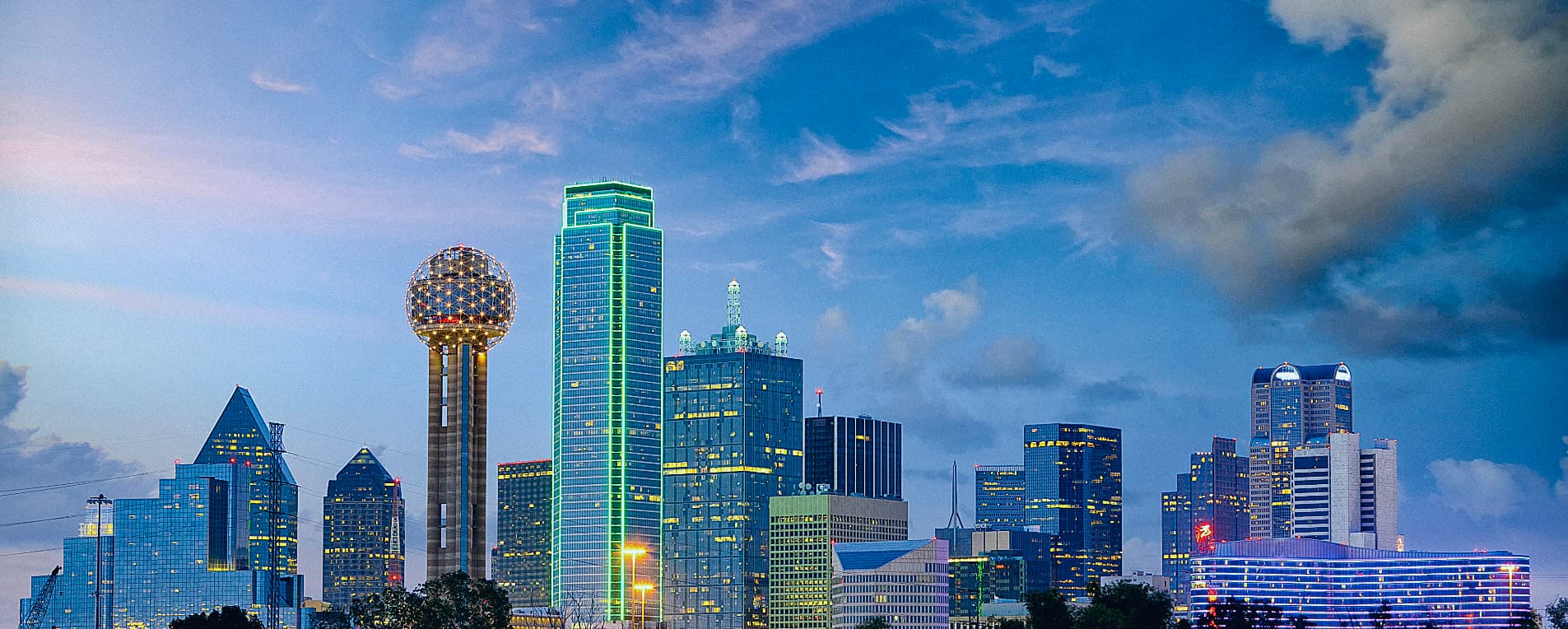
DFW’s economy is one of the most diverse across the U.S., aided by its expanding population and consistent employment growth. The metro’s population has grown by 27% since 2010, driven by rapid expansion in Collin and Denton counties. Residents are drawn to DFW for its variety of employers, including American Airlines, Toyota, and AT&T. DFW is also growing as a financial services hub with new campuses from Wells Fargo and Goldman Sachs. Moving ahead, DFW is set to remain a stable market due to its resilient employment market and the consistent influx of new residents.
DFW Demographics
Source: CoStar Group, Inc.
- Unemployment Rate: 3.9%
- Current Population: 8,534,670
- Households: 3,132,827
- Median Household Income: $89,752
Population, Labor, and Income Growth
Source: CoStar Group, Inc.
Key Findings
- Despite an increased vacancy rate, the metro recorded 4.1 million square feet of absorption in Q3 2025, fueled by tenant demand from logistics and electronics users.
- Blackstone emerged as one of the most prominent buyers, acquiring several infill properties and portfolio investments throughout the past year.
- Goldman Sachs is increasing its presence across DFW with a $500 million campus that will add more than 5,000 jobs to the metro upon completion in 2028.
Market Performance
Despite an elevated vacancy rate of 9.1% and ongoing moveouts, the Dallas–Fort Worth industrial market continues to demonstrate resilience. The metro recorded 4.1 million square feet of positive net absorption this quarter, underscoring strong tenant demand and the confidence of local users to expand. Developers are responding by breaking ground on more than 9 million square feet of new projects. This is the highest volume since 2023, even with half of the pipeline remaining speculative.
While industrial moveouts have exceeded 11 million square feet since late 2024, the market continues to fill about two square feet for every one vacated, aided by leasing activity from logistics and electronics firms like DHL. Steady rent growth, outpacing national averages by 150–200 basis points, further reinforces DFW’s industrial appeal.
DFW Industrial Supply & Demand Dynamics
Source: CoStar Group, Inc.
DFW Construction
Since 2020, the market has added 239 million square feet of new space, with nearly a quarter still vacant, keeping overall vacancy rates elevated. Of the 34.8 million square feet now underway, less than half is pre-leased. While earlier years saw a pivot toward smaller projects, the average project size has rebounded as bulk logistics buildings over 250,000 square feet take over, particularly near DFW Airport and in the Alliance submarket. More than 7 million square feet of new industrial construction has broken ground in the Alliance area, ensuring its place as a top submarket within DFW.
SF Construction Starts
Source: CoStar Group, Inc.
SF Under Construction
Source: CoStar Group, Inc.
Sales
Investor activity in DFW’s industrial market remains mixed in 2025, as trade uncertainties and elevated vacancies temper optimism. Still, the region’s resilience and long-term fundamentals continue to attract capital, with total quarterly sales reaching $757 million and annual sales totaling $2.1 billion. Investors have increasingly sought portfolio trades, which have driven a large portion of sales across DFW. Institutional players like Blackstone remain active, highlighted by a $718 million portfolio acquisition. Despite rising prices and wider bid-ask spreads, cap rates are expected to hold steady through year-end.
DFW Industrial Sales Volume
Source: CoStar Group, Inc.