
Dollar Store Dominance: Why Dollar General Is Taking Over Rural America
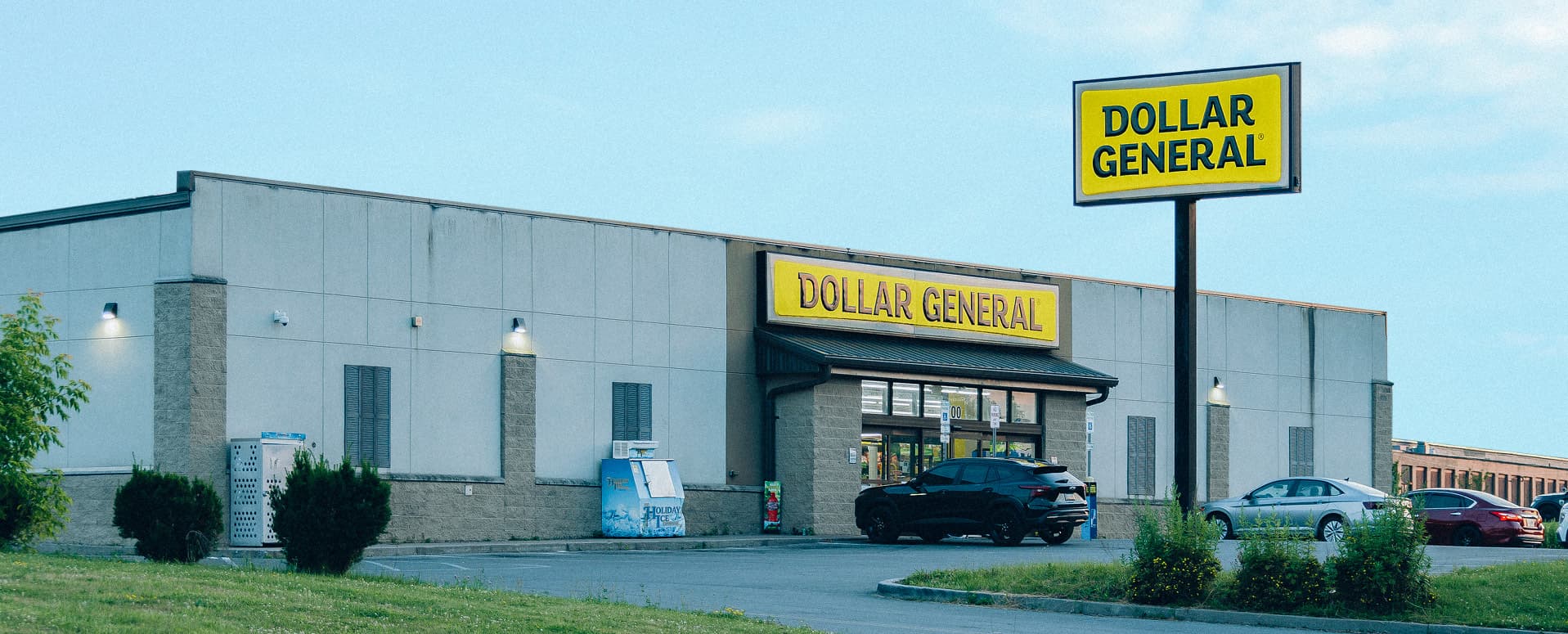
Dollar General’s market strategy has never been more focused, or more effective. The discount retailer is steadily eliminating competition by moving into spaces other national chains simply can’t serve: rural and underserved communities. By leaning into small-format stores and prioritizing everyday essentials, Dollar General has positioned itself as the dominant retailer across vast portions of the United States. That focus has allowed the company to scale efficiently while competitors remain structurally constrained.
This approach aligns with broader trends across discount retail. Price sensitivity remains elevated, particularly among lower- and middle-income households, and consumers continue to prioritize convenience and accessibility. In many rural markets, where median household incomes trail national averages and retail options are limited, value-oriented formats are not just preferred, they are essential.
A Nationwide Footprint with Global Ambitions
With nearly 21,000 locations nationwide, Dollar General has embedded itself into local markets in virtually every corner of the country. In many counties, the company now operates more locations than traditional grocers and big-box retailers combined, underscoring the effectiveness of its saturation-driven strategy.
That success has encouraged expansion beyond U.S. borders. Looking ahead, Dollar General plans to open up to 10 new stores in Mexico, building on the 15 locations launched during fiscal year 2025. While modest in scale, the move reflects confidence in a business model built on efficiency, proximity, and repeat demand.
Domestically, the company remains focused on reinforcing its existing footprint. In 2026, Dollar General plans to remodel approximately 4,250 stores, consistent with prior-year investment levels. New-store growth will slow slightly, with roughly 450 openings planned, down from 575 in 2025. Rather than signaling caution, this shift reflects a strategy centered on asset optimization, customer retention, and long-term market control.
Why Competitors Can’t Keep Up
Dollar General’s competitive advantage is rooted in capital efficiency. Most stores range from 7,500 to 10,000 square feet, with DG Market formats extending to approximately 16,000 square feet. These smaller footprints require significantly lower upfront investment, reduced staffing levels, and leaner inventory assortments compared to big-box peers.
By contrast, Target stores average well over 100,000 square feet, while Walmart Supercenters often exceed 180,000 square feet. Those formats depend on dense populations to support construction costs, labor requirements, and high-volume inventory turns. As a result, many small towns, particularly those with fewer than 1,000 residents within a three-mile radius, are economically unviable for large-format retailers.
Dollar General operates under no such constraints. Its stores can reach profitability in markets with limited population density, making rural America not a secondary opportunity, but a primary growth engine. Dollar General faces no such limitations. In fact, these small, rural markets are precisely where the company thrives.
Owning the Local Market
Dollar General doesn’t simply enter rural communities, it becomes embedded in them. An estimated 80% of its stores serve towns with populations of 20,000 or fewer, many of which lack full-service grocery stores or national retail alternatives. In areas classified as low-access or food-insecure, Dollar General frequently serves as the closest source of everyday necessities.
For residents, the value proposition is clear. Instead of traveling long distances for basic household goods, consumers gain access to affordable staples within minutes of home. This proximity drives frequent, convenience-based shopping trips and fosters brand loyalty that competitors struggle to replicate.
Concerns around market saturation have also proven largely unfounded. In rural settings, store density often enhances convenience rather than cannibalizing demand, reinforcing Dollar General’s role as the default retailer for everyday needs.
The Dollar Store Dominator
While small-format retail is often viewed as a limitation, Dollar General has turned scale and simplicity into a strategic moat. Its footprint allows flexibility, rapid deployment, and sustained relevance in markets that larger retailers continue to overlook, or actively exit.
As rural grocery stores close and big-box chains concentrate on urban and suburban density, Dollar General continues to fill the void. By refining its store base, investing in existing locations, and expanding selectively, the company has positioned itself for durable, long-term dominance.
Dollar General doesn’t just sell essentials, it supports communities where retail access is increasingly scarce. By meeting customers where they are, and where few others can operate profitably, the company has secured its role as the leading provider of everyday goods in rural America.