AuthorDavid Ferber, CPA
Senior Vice President & DirectorNorthern New Jersey, NJ

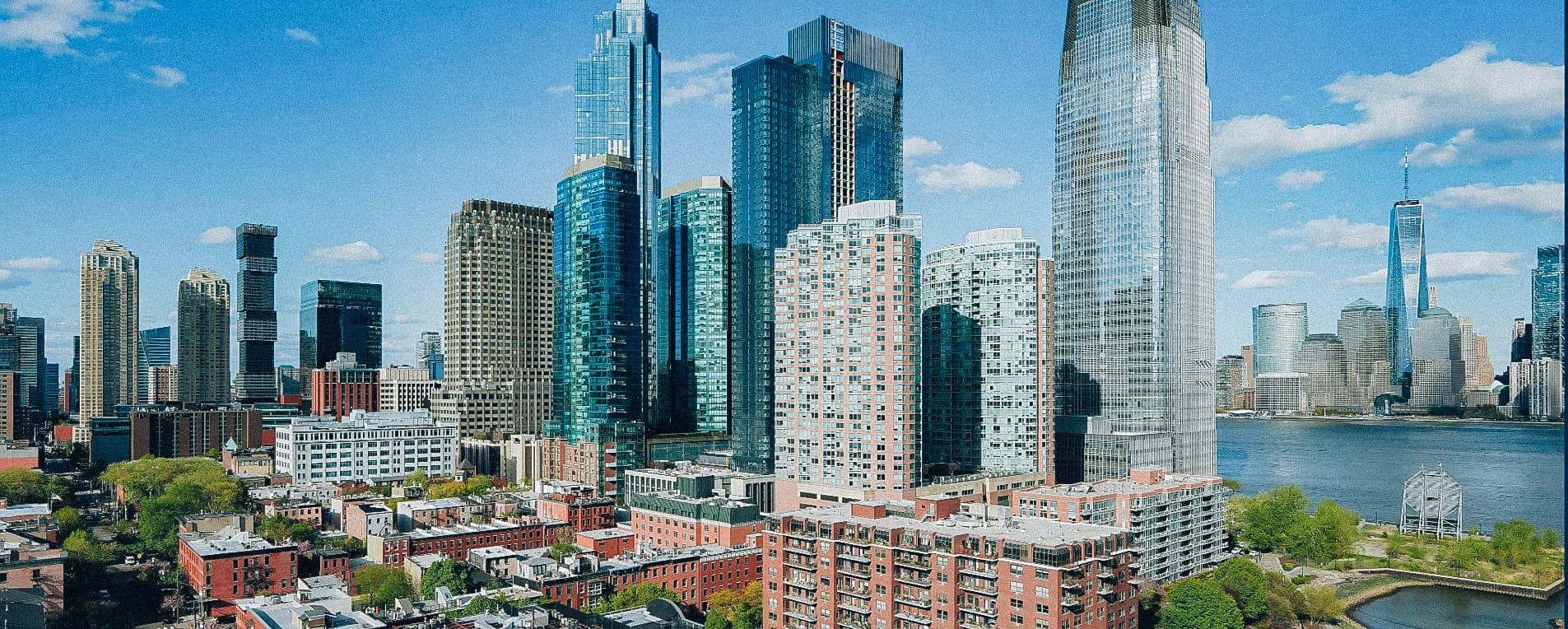
Journal Square has spent more than a decade transforming from an overlooked transit hub into one of the New York metropolitan area’s most active redevelopment districts. While the neighborhood has long benefited from direct PATH access to Manhattan and comparatively attainable housing costs, sustained public and private investment has fundamentally changed how investors view the market.
The planned development of Singh Tower represents another milestone in that evolution. The mixed-use project will introduce 209 residential units, approximately 16,000 square feet of office space, ground-floor retail, rooftop amenities, and resident-focused lifestyle spaces. Its distinctive architectural design, highlighted by rotating cantilevered balconies, will add another recognizable element to the rapidly changing Journal Square skyline. Positioned adjacent to the future Bergen Arches linear park, the project also reflects the growing relationship between private development and public infrastructure improvements throughout the neighborhood.
While Singh Tower is noteworthy on its own, the larger story is what it says about the continued maturation of Journal Square as an investment market.
For many years, Journal Square was viewed as one of Northern New Jersey’s emerging investment markets. Investors recognized its strategic location, direct PATH access to Manhattan, and redevelopment potential, but many questioned whether demand would support the scale of new construction being proposed.
Today, that question has largely been answered. Journal Square has become one of Hudson County’s most active development districts, supported by thousands of planned and under-construction residential units, including major projects such as One Journal Square. Matthews’ Hudson County Rent Guide identifies Journal Square as one of the county’s leading multifamily submarkets, with rental rates that rank among the strongest in Hudson County, reflecting sustained tenant demand and continued investor interest.
Current market fundamentals reinforce that position. Journal Square’s multifamily inventory has grown to approximately 15,500 units, with 3,190 units currently under construction. Even as new supply continues to enter the market, the neighborhood absorbed approximately 2,230 units over the past 12 months, while average sale prices increased to $478,000 per unit. Together, these trends demonstrate that Journal Square has evolved from an emerging neighborhood into one of the New York metropolitan area’s established mixed-use investment markets.
Journal Square’s transformation is being fueled by one of the largest redevelopment efforts in the New York metropolitan area. While neighborhood boundaries vary, Journal Square is home to roughly 22,000 residents today, and Jersey City’s population has grown by more than 20% since 2010, with the neighborhood serving as a major focal point for that expansion. The Journal Square 2060 Redevelopment Plan continues to add thousands of new residential units through transit-oriented, high-rise development, further increasing the area’s residential density.
That population growth is creating a larger customer base for restaurants, grocery stores, healthcare providers, fitness operators, and other daily-needs retailers. Singh Tower’s combination of residential, office, and retail space reflects that same dynamic: new residents support new businesses, while an expanding mix of businesses makes the neighborhood more attractive to future residents. As additional mixed-use developments are completed, Journal Square continues to evolve beyond its traditional role as a commuter hub into a more complete, mixed-use urban neighborhood.
Direct PATH service provides convenient access to both Midtown and Lower Manhattan, allowing residents to maintain strong regional connectivity while living outside New York City. As housing affordability remains a challenge throughout much of the region, neighborhoods that combine transit access with comparatively attainable housing continue to attract new residents.
Developers have increasingly concentrated investment around transportation infrastructure because reliable transit supports long-term residential demand, reduces dependence on automobiles, and encourages additional commercial activity. Journal Square’s continued growth reflects the long-term value of these characteristics.
Public infrastructure improvements often influence neighborhood growth alongside private investment. Parks, streetscape enhancements, transportation improvements, and public gathering spaces can increase pedestrian activity, improve connectivity, and create a more attractive environment for residents and businesses.
The planned Bergen Arches linear park illustrates this relationship. By transforming an underutilized rail corridor into public open space, the project has the potential to enhance the surrounding neighborhood while supporting additional investment nearby. Similar projects in other major cities have demonstrated how high-quality public amenities can complement private development and strengthen long-term property values.
As Journal Square continues to expand, investments in public infrastructure are helping create a more complete urban environment that benefits residents, businesses, and property owners alike.
Journal Square’s continued evolution demonstrates that neighborhood transformation rarely occurs through a single project. Long-term growth is typically supported by the combination of transportation infrastructure, sustained residential demand, public investment, and ongoing private development.
Singh Tower represents another chapter in that progression rather than its conclusion. The project reinforces the broader trends that have reshaped Journal Square over the past decade and highlights the continued confidence developers have in the neighborhood’s long-term fundamentals.
For commercial real estate investors, the broader takeaway extends beyond a single development. Markets that combine strong transit connectivity, growing residential density, and continued public investment often experience sustained demand across multiple property sectors. Journal Square continues to demonstrate how those factors can reshape an urban district over time, creating opportunities for developers, investors, retailers, and property owners as redevelopment continues.