San Diego, CA Industrial Market Report Q3 2025
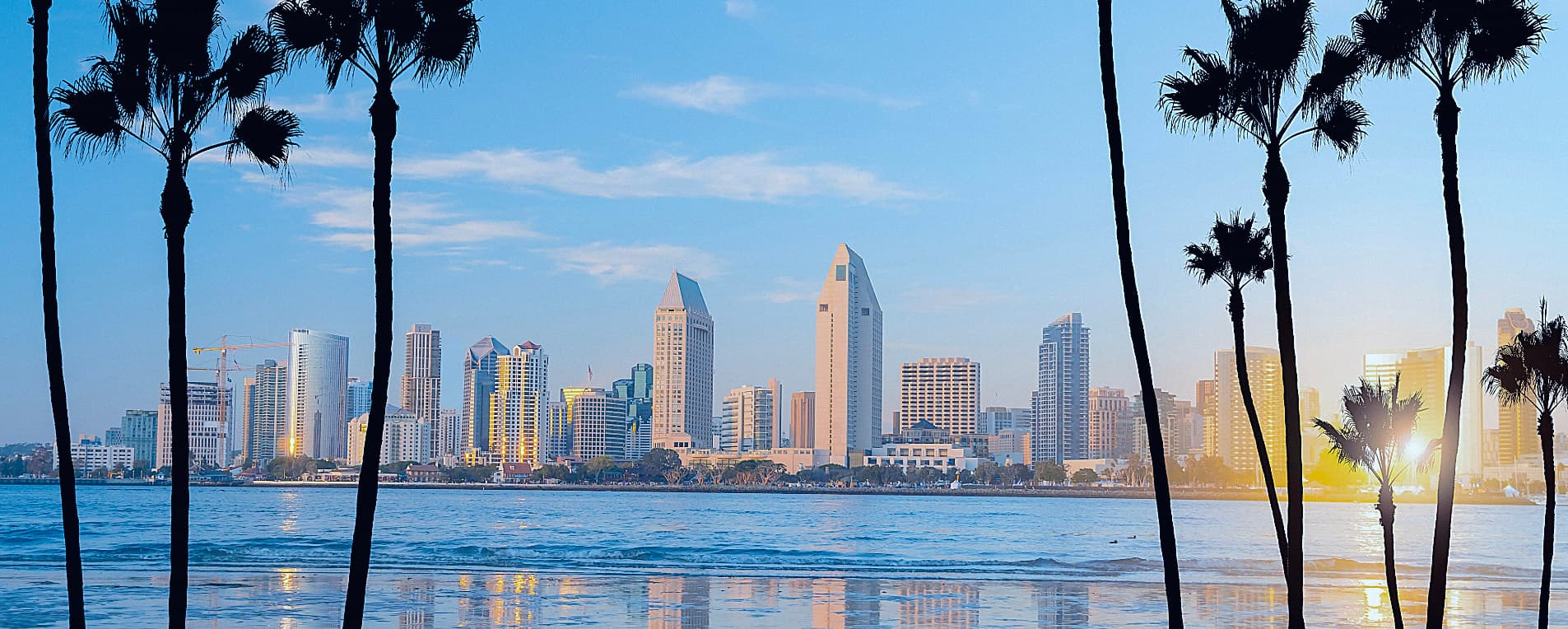
San Diego’s top-performing economy is driven by the military, innovation, and tourism. The defense sector remains essential for the metro as it includes over 140,000 active duty and civilian military employees, along with around 370,000 jobs tied to defense. Meanwhile, innovation is aided by the presence of employers like Scripps, the Salk Institute, Meta, and Apple. In 2024, tourism contributed around $22 billion to San Diego’s economy. Visitors are increasingly drawn to the metro for its beaches and attractions.
San Diego Demographics
Source: CoStar Group, Inc.
- Unemployment Rate: 4.3%
- Current Population: 3,317,126
- Households: 1,201,741
- Median Household Income: $110,272
Population, Labor, and Income Growth
Source: CoStar Group, Inc.
Key Findings
- Otay Mesa remains favorable for its proximity to the U.S.-Mexico border, and it accounts for one-third of the metro’s new supply with Amazon’s 1.1 million-square-foot project located here.
- The metro is noting an increase in concessions, which includes around five months of free rent and flexible lease terms
- A new airport redevelopment in Otay Mesa is expected to be ready by year-end, and its upgrades will aid international trade. The project is forecast to have a $1.5 billion economic impact on the metro.
Market Performance
San Diego’s industrial market has faced headwinds, with vacancy rising to 9.5% in the third quarter. This is the highest level since 2012, driven by biotech vacancies in North County and distributor pullbacks in South County. Despite a brief rebound in early 2025, leasing momentum has stalled amid tariff-related uncertainty, prompting occupiers to pause expansion plans, particularly near the border. Net absorption over the past year totaled -1.9 million square feet, with another -118,978 square feet in the third quarter, reflecting weakening demand.
Rent growth declined 0.9% year-over-year, as landlords offered more concessions to retain tenants. For example, logistics spaces have begun to offer five months of free rent with fixed annual increases of 3%. Landlords are also being more flexible on lease terms, with one- to three-year terms for large occupiers becoming more common
San Diego Industrial Supply & Demand Dynamics
Source: CoStar Group, Inc.
San Diego Construction
San Diego’s industrial construction activity has slowed after 7.9 million square feet of new space delivered over the past three years. Nearly one-third of upcoming completions stem from Amazon’s 1.1-million-square-foot built-to-suit logistics facility in Otay Mesa, which continues to anchor the region’s industrial growth. Availability remains highest in new logistics buildings between 100,000 and 250,000 square feet. Otay Mesa has seen inventory expand by more than 50% since 2020, with 1.6 million square feet still vacant. While select infill projects in Central County are leasing quickly, it may take time for recent completions to be fully absorbed.
SF Construction Starts
Source: CoStar Group, Inc.
SF Under Construction
Source: CoStar Group, Inc.
Sales
San Diego’s industrial investment market has slowed, with third quarter sales volume at $220 million and annual totals holding at $1.6 billion, roughly 40% below the pace seen between 2015 and 2019. Market participants estimate values have dropped around 30%, prompting lenders to adopt a more cautious stance. Institutional and fund-level buyers have pulled back, accounting for less than 20% of acquisitions, while REITs were largely inactive. Notable trades included CenterPoint’s $80 million purchase of 4400 Ruffin Road, EQT Exeter’s $23.5 million Otay Mesa acquisition, and BKM Capital’s $70.2 million deal in Kearny Mesa.
San Diego Industrial Sales Volume
Source: CoStar Group, Inc.