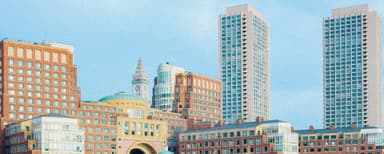
The Matthews Podcast — Dan Biederman of Bryant Park Corporation and Biederman Redevelopment Ventures

Dan Biederman on Reinventing Public Space
On this episode of The Matthews Podcast, Matt Wallace sits down with legendary urban redevelopment strategist Dan Biederman, President of the Bryant Park Corporation and Biederman Redevelopment Ventures.
Biederman discusses how he helped revive Bryant Park using a sustainable model now used in cities across 36 states. He explains how neglected parks can become vibrant, revenue-generating spaces that support real estate growth and improve community life.
The conversation highlights the connection between public programming, placemaking, and long-term commercial real estate performance.
A Career Between the Lines
Dan Biederman didn’t enter real estate through traditional channels. His early interest in politics, economics, and public service led him to business school during the recession of the 1970s, where he explored a hybrid concept that few others were thinking about at the time: managing public spaces with private-sector rigor.
Inspired by the Japanese concept of the “third sector,” Biederman sought to build a career that operated in the space between government and business. He interned with the National Park Service in Washington D.C. and later took a consulting job working with public entities like the U.S. Navy and city governments. But a unique opportunity in New York City would soon shape the next 40 years of his life.
“I wanted to run public assets, but from the private sector,” Biederman said. “At the time, there weren’t job listings for that—so I had to invent the path.”
The Bryant Park Revival
In the early 1980s, Bryant Park was a cautionary tale of urban decline. Just steps from the New York Public Library, the park had become a hub for drug activity and violent crime, averaging over 500 felonies a year. The tipping point came when philanthropist Brooke Astor was harassed while trying to enter the library. Her complaint to David Rockefeller set off a private-sector initiative to clean up the space.
Biederman was brought in to lead the effort—despite having no budget, no staff, and no clear precedent to follow. His approach blended tactical interventions (picking up trash, improving lighting, adding security) with something new: public programming as an activation tool. He introduced artist residencies, ticket booths, and events that invited people back into the space.
Over time, Bryant Park was fully rehabilitated, and the strategy evolved into a self-sustaining operation. The park now generates $30 million annually in earned revenue and hasn’t taken a dollar of city funding in over 29 years.
Turning Parks into Economic Engines
The transformation of Bryant Park wasn’t just a civic success—it was a commercial one. Property values around the park rose significantly, and office landlords began citing proximity to the park as a leasing advantage. Biederman’s work demonstrated that public space, when activated and maintained, could directly boost commercial real estate performance.
This success paved the way for larger-scale initiatives. He launched the Grand Central Partnership and later the 34th Street Partnership, each operating under business improvement district (BID) models. These entities functioned as what Biederman calls “mini-governments,” taking over responsibility for security, sanitation, signage, streetscaping, and even homeless services in areas where city resources were limited.
We fixed the parts of the city the actual city wasn’t touching,” Biederman said. “Most people forget how bad it was. But these interventions changed everything.”
Scaling the Model Nationwide
In 1999, Biederman founded Biederman Redevelopment Ventures to bring his public-private model to cities across the U.S. and beyond. Today, BRV has worked in 36 states and 7 countries, providing consulting and implementation services for parks, plazas, and other public spaces.
Among his most celebrated non-NYC projects is Klyde Warren Park in Dallas, a deck park built over a recessed freeway. BRV helped design its programming, earned-income strategy, and governance model. The result is a vibrant civic hub that links Uptown and Downtown Dallas, proving that placemaking and infrastructure investment can work hand in hand.
BRV has also advised on Union Square and Salesforce Park in San Francisco, helping local governments and developers turn overlooked or underperforming public areas into sources of both social and financial return.
Lessons for Urban Professionals
Biederman’s work spans several discipline, real estate, urban design, government relations, nonprofit management, and his advice to aspiring professionals reflects that complexity.
He advocates for what he calls “fourfold fluency”: a working understanding of business, government, design, and real estate. Early in his career, he had only two of those four, but acquired the rest through night classes, self-education, and hands-on trial and error.
He also urges professionals to travel, observe, and learn from other cities. He often sends young staffers to London to study its public management systems, which he describes as a model for what urban stewardship can look like.
“Read widely and don’t spend so much time texting to your friends and drinking in bars,” Biederman noted. “You’ve got to be a little bit of a self-improver and unapologetic about it.”
Looking Ahead: The Space Between Buildings
Dan Biederman leads BRV and focuses on improving public spaces that shape cities, while others pursue vertical development. He remains committed to reimagining the streetscapes, plazas, and parks that define the urban experience in the 21st century.
His legacy shows real estate value comes not just from buildings, but from the spaces and experiences that surround them. Parks, sidewalks, benches, lighting, and programming all contribute to the perception of place—and perception drives performance.
Listen to the full podcast on your preferred platform, and subscribe to The Matthews Podcast for more conversations with leaders redefining the future of real estate. To learn more about Dan Biederman’s work, visit Biederman Redevelopment Ventures and Bryant Park.