Pep Boys Just Sold to Mavis Tire. What Does This Mean for CRE?
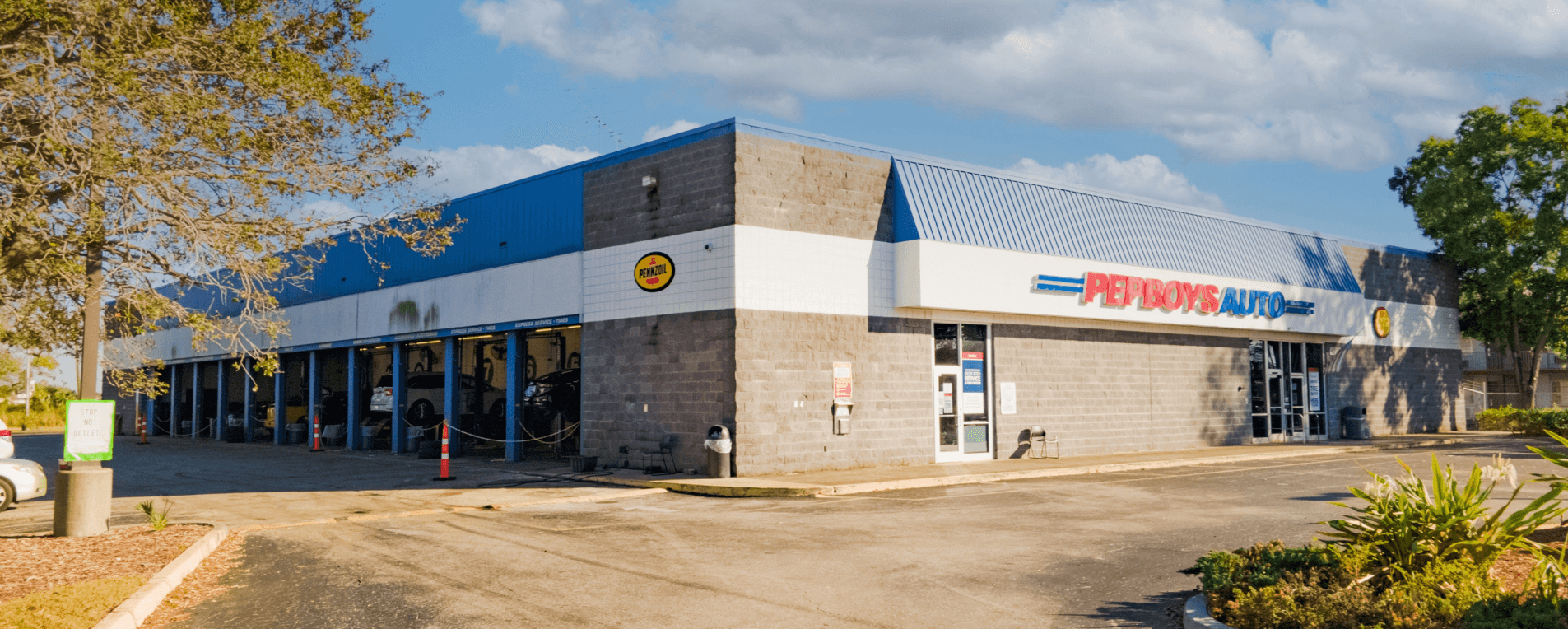
Carl Icahn’s Icahn Automotive is exiting Pep Boys, selling the business to Mavis Tire for roughly $700 million. Mavis picks up nearly 800 locations, bringing its footprint to more than 4,400 stores nationwide, less than a year after acquiring Midas.
At first glance, this looks like another major transaction in the automotive aftermarket.
For commercial real estate professionals, however, it’s another example of how corporate M&A often sets the stage for an entirely new wave of real estate activity.
Consolidation is Accelerating
The Pep Boys acquisition is part of a broader wave of platform transactions reshaping the automotive service industry. Rather than expanding one location at a time, major operators are acquiring entire businesses to quickly gain market share, operational scale, and established real estate footprints. Mavis completed its acquisition of Midas just last year, while Big Brand Tire recently agreed to acquire Belle Tire’s 185-store network. Several additional operators are also reportedly preparing to enter the market.
For commercial real estate professionals, this suggests deal activity is likely to remain elevated as strategic buyers and private equity firms continue seeking scalable platforms with strong real estate fundamentals.
Real Estate Holds Its Value
When Icahn acquired Pep Boys in 2016 for approximately $1.03 billion, the goal was to create a vertically integrated parts and service platform by pairing the company with Auto Plus. While that strategy never fully materialized, reports indicate Icahn will retain much of the underlying real estate despite selling the operating business.
That distinction reinforces an important point for CRE: high-quality operating real estate can remain a valuable long-term asset even when business strategies evolve. Well-located automotive service properties continue to benefit from strong visibility, infill locations, and necessity-based demand, characteristics that support long-term value regardless of changes in ownership.
What This Means for CRE
Beyond the automotive sector, the transaction reflects a broader trend across commercial real estate. As companies consolidate, real estate is increasingly viewed as a strategic asset that can facilitate mergers, acquisitions, sale-leasebacks, and broader corporate growth initiatives. Investors may find additional opportunities as larger operators seek to monetize owned properties, optimize portfolios, or expand through acquisitions of existing real estate rather than ground-up development.
The Pep Boys sale also reinforces that institutional capital continues to favor businesses backed by durable real estate and recurring consumer demand. For investors, developers, owners, and brokers, that could translate into increased transaction activity, continued demand for well-located automotive properties, and additional opportunities as consolidation continues across the sector.
While no single transaction defines a market, the recent pace of acquisitions suggests deal flow is only beginning to accelerate. For CRE, that could mean more portfolio sales, more corporate real estate transactions, and a growing emphasis on real estate as a driver of enterprise value, not just a place to operate.