AuthorDaniel Gonzalez
First Vice President & Associate DirectorTampa, FL

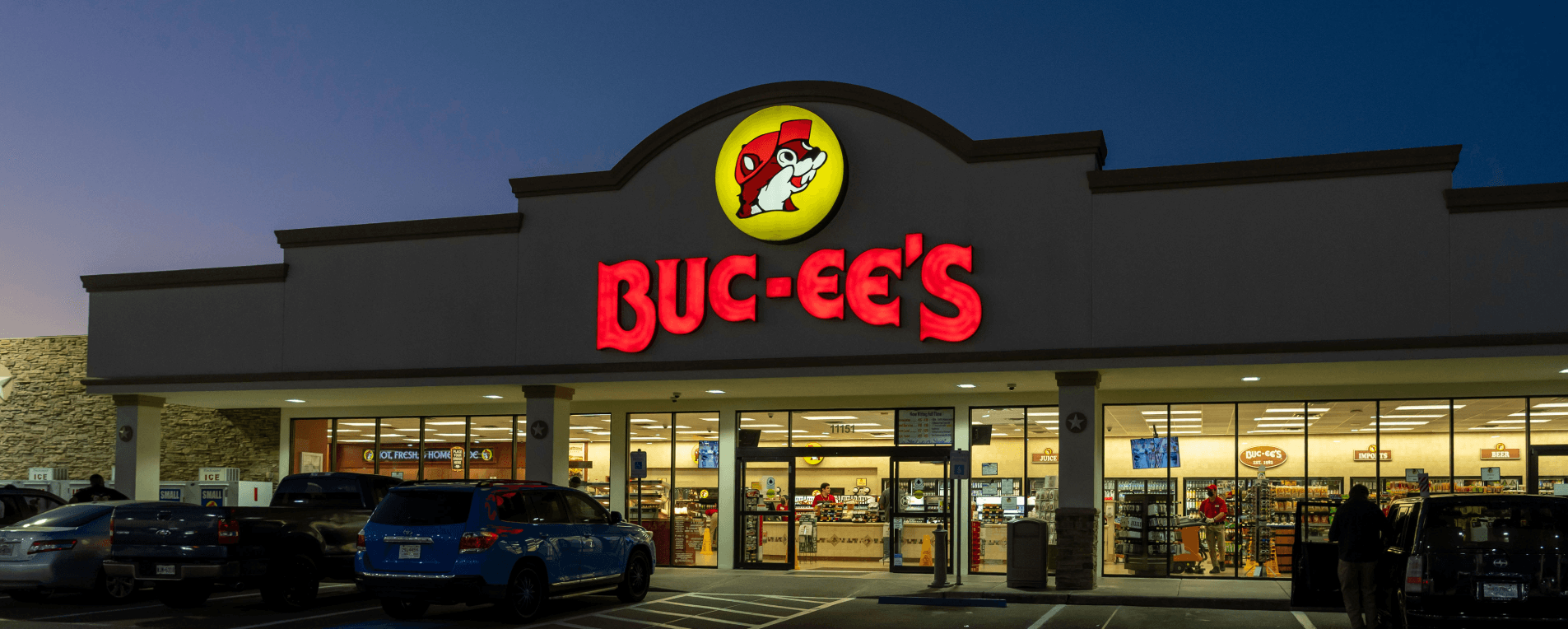
Buc-ee’s is expanding across the U.S., but its growth strategy remains focused on Southern markets rather than the Northeast. The Texas-based travel center operator is prioritizing locations with strong highway traffic, available land, and favorable development conditions that support its large-format stores.
With approximately 56 locations across 12 states, including 37 in Texas, Buc-ee’s has established a strong presence throughout the South. Its newer travel centers can span 73,000 square feet and feature up to 120 fuel pumps, requiring significantly more land than traditional convenience stores.
Southern markets offer access to major interstate corridors, more affordable development sites, and car-dependent populations that align with the company’s business model. Buc-ee’s also attracts travelers specifically seeking its food, merchandise, and other amenities, allowing locations to serve as destinations rather than conventional fuel stops.
The company has largely avoided dense Northeastern markets, where higher land costs, limited site availability, and development constraints can make its large-scale format more difficult to accommodate.
Buc-ee’s expansion highlights the importance of site selection in destination-oriented retail. For developers and investors, highway accessibility, traffic volume, parcel size, and local development requirements can significantly influence a property’s suitability for large-format operators.
New travel centers may also generate additional activity for surrounding retail, restaurants, and service businesses as travelers stop along established highway corridors.
As Buc-ee’s expands into additional states, its approach demonstrates how retailers can prioritize markets that support their operating models rather than pursuing geographic expansion alone.