13% Cap Rate or 8.9% Return on Cost? Valuing Distressed, Rent-Stabilized Buildings
Over the past 18 months, we have helped owners, lenders, and special servicers underwrite hundreds of distressed rent-stabilized buildings. The two questions I inevitably receive are:
- What are cap rates for this asset type?
- Is there even a buyer?
The second question is relatively straightforward. Yes, there is always a buyer when an opportunity is properly presented and priced accordingly. The cap rate question, however, is far more difficult to answer. In reality, I am not convinced we are in a cap rate market anymore.
Cap rates are typically applied to properties that are cash flowing at or near market levels, producing consistent, predictable income that can be measured at year one of an investment. The applied cap rate will adjust up or down depending on risk and upside potential. Most rent-stabilized buildings being marketed today do not meet this standard. So how do we establish value based on cash flow?
- Understand how these buildings truly operate. Know what operating expenses investors apply and what NOI the building will realistically produce once maximum rents have been established. No two buyers will arrive at the same NOI, but there are standard principles they will follow.
- Not every building will stabilize at a 3% vacancy and credit loss. Certain neighborhoods and building profiles will naturally experience higher turnover or collection challenges. Be accurate on operating expenses and realistic, not optimistic, on maximum collection rates.
- Know what it will cost a buyer to get there, and how long it will take. If a building is operating at 50% collections, it may take 12 to 18 months to reach stabilized occupancy. Buyers will price that lost rent as a capital expense, and it will come out of what they are willing to pay.
- Physical costs are real and will be underwritten. Violations, roof repairs, mechanical upgrades, compliance costs, and facade work are capital expenses a new buyer must absorb to maximize and stabilize NOI. A qualified expeditor can project these costs in advance. You may choose to resolve the lower-cost items before sale, but understand that any deferred expense will likely be reflected in the purchase price.
- Return on Cost is not the same as a cap rate. Navigating all of the above requires meaningful effort and carries considerably more risk than acquiring a stabilized asset. A reasonable cap rate for a clean, cash-flowing building might be 7%, but what return would an investor require to take on all of these challenges? Light execution risk might warrant 8%; a heavy value-add scenario could demand 10 to 12%. That return on total cost is what we calculate and apply following a thorough property audit.
Here is a recent example that illustrates this concept clearly:
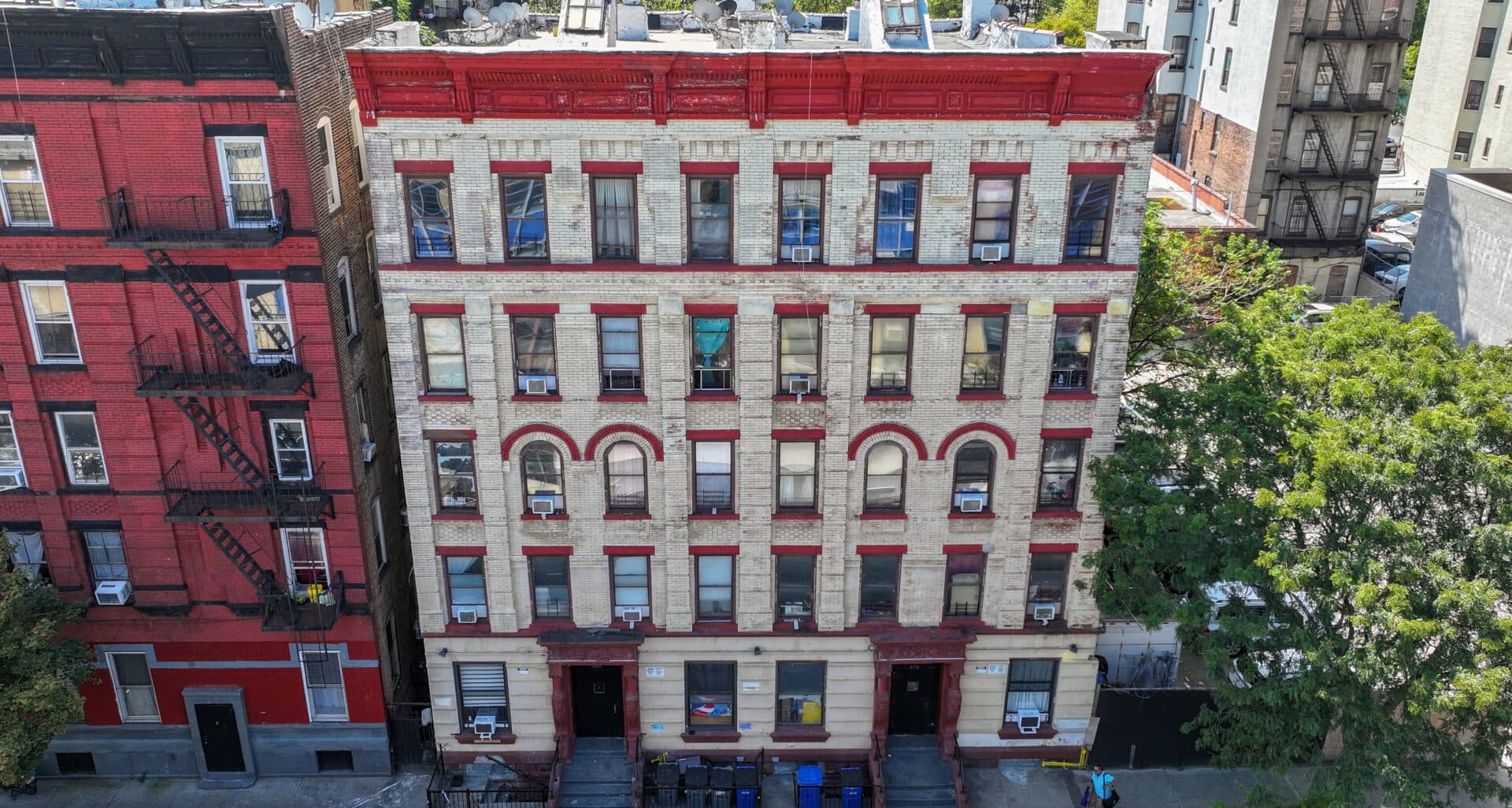
The optimistic stabilized NOI was projected at $190,000. This is how brokers may represent an NOI on a setup. Buyers, however, underwrote to $160,000 after applying their own assumptions for credit loss, management, and maintenance. Collections were at 50% at the time of sale, with an estimated 12 to 18 months required to stabilize, representing approximately $100,000 in lost rent during that period. Violations, roof work, and general unit repairs were projected at $300,000.
The property sold for $1,400,000, producing an all-in basis of $1,800,000 to achieve a stabilized NOI of $160,000 within 12 to 18 months. That equates to an 8.9% return on cost, which is exactly how the buyer underwrote it.
From the outside, this deal might appear to be a 13% cap rate (optimistic NOI divided by sale price) or even a 10.5% cap rate (optimistic NOI divided by total basis). But the buyer underwrote it as an 8.9% return on cost, because that is what it is.
How We Help You Prepare:
- Calculate a realistic NOI, not an optimistic one.
- Apply appropriate vacancy and credit loss for your submarket.
- Model the time required to maximize rents.
- Project the cost to remediate violations and complete necessary repairs.
- Understand what return on cost an investor will require.
We complete 500+ property audits annually for our clients. If you would like an accurate and transparent analysis of your asset, please do not hesitate to reach out.