Closed
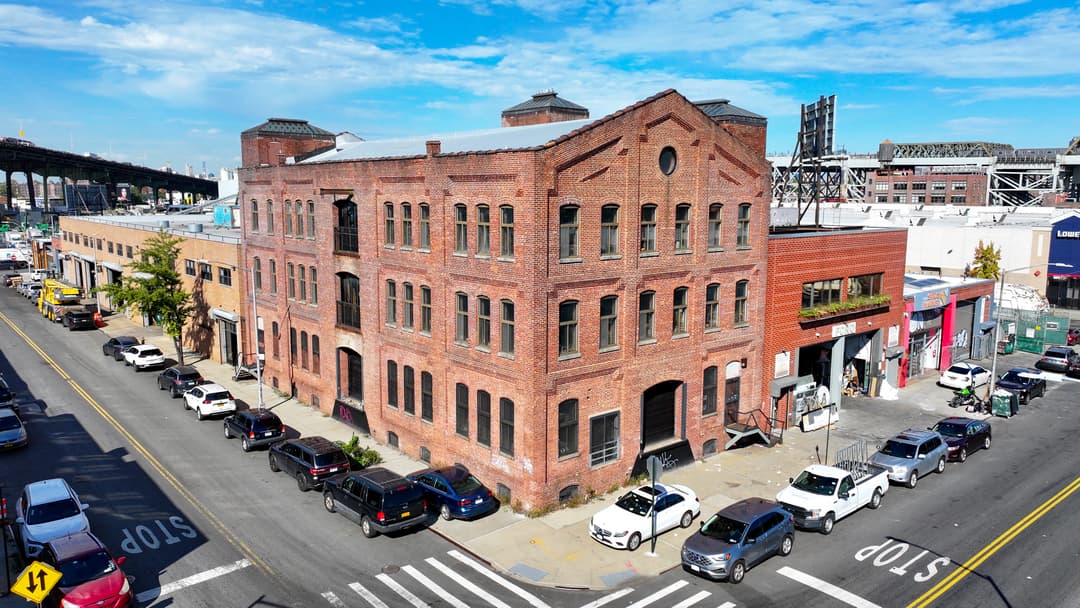
439 20th St
Greenwood Heights, Brooklyn, NY


Bobby (Robert) Lawrence is a Vice President at Matthews™, specializing in selling industrial land and warehouse properties across the New York City boroughs, with a focus on Brooklyn, NY. He has successfully closed over 40 transactions totaling more than $100 million, establishing himself as one of the most active brokers in Brooklyn’s industrial market. Bobby has also written for and been featured in leading industry publications, including Commercial Observer, GlobeSt.com, and the New York Real Estate Journal.
Bobby has built a strong track record advising multi-generational owners and estates who are considering selling their warehouse or industrial property. He provides straightforward guidance on maximizing sale price, ensuring a smooth process, and structuring transactions in the most tax-efficient way, including 1031 exchanges.
Before joining Matthews™, Bobby served as a director at B6 Real Estate Advisors under Paul Massey, where he oversaw a team covering the Brownstone and Southwest Brooklyn markets. He began his career at Marcus & Millichap, building a strong foundation in investment sales and client advisory.
Born and raised in Summit, NJ, Bobby earned his bachelor’s degree in History from Colgate University, where he captained the Division I Men’s Varsity Lacrosse team and was recognized as an NCAA All-American. He later competed professionally with the Florida Launch of Major League Lacrosse. Today, Bobby lives with his wife in Park Slope, and in his free time enjoys playing tennis, traveling, and volunteering at the local soup kitchen through CHiPS.
B.A., History
Colgate University
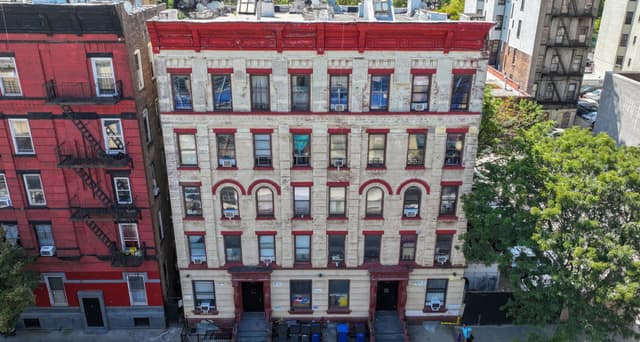
13% Cap Rate or 8.9% Return on Cost? Valuing Distressed, Rent-Stabilized Buildings Over the past 18 months, we have helped owners, lenders, and special servicers underwrite hundreds of distressed rent-stabilized buildings. The two questions I inevitably receive are: What are cap rates for this asset type? Is there even a buyer? The second question is relatively straightforward. Yes, there is always a buyer when an opportunity is properly presented and priced accordingly. The cap rate question, however, is far more difficult to answer. In reality, I am not convinced we are in a cap rate market anymore. Cap rates are typically applied to properties that are cash flowing at or near market levels, producing consistent, predictable income that can be measured at year one of an investment. The applied cap rate will adjust up or down depending on risk and upside potential. Most rent-stabilized buildings being marketed today do not meet this standard. So how do we establish value based on cash flow? Understand how these buildings truly operate. Know what operating expenses investors apply and what NOI the building will realistically produce once maximum rents have been established. No two buyers will arrive at the same NOI, but there are standard principles they will follow. Not every building will stabilize at a 3% vacancy and credit loss. Certain neighborhoods and building profiles will naturally experience higher turnover or collection challenges. Be accurate on operating expenses and realistic, not optimistic, on maximum collection rates. Know what it will cost a buyer to get there, and how long it will take. If a building is operating at 50% collections, it may take 12 to 18 months to reach stabilized occupancy. Buyers will price that lost rent as a capital expense, and it will come out of what they are willing to pay. Physical costs are real and will be underwritten. Violations, roof repairs, mechanical upgrades, compliance costs, and facade work are capital expenses a new buyer must absorb to maximize and stabilize NOI. A qualified expeditor can project these costs in advance. You may choose to resolve the lower-cost items before sale, but understand that any deferred expense will likely be reflected in the purchase price. Return on Cost is not the same as a cap rate. Navigating all of the above requires meaningful effort and carries considerably more risk than acquiring a stabilized asset. A reasonable cap rate for a clean, cash-flowing building might be 7%, but what return would an investor require to take on all of these challenges? Light execution risk might warrant 8%; a heavy value-add scenario could demand 10 to 12%. That return on total cost is what we calculate and apply following a thorough property audit. Here is a recent example that illustrates this concept clearly: The optimistic stabilized NOI was projected at $190,000. This is how brokers may represent an NOI on a setup. Buyers, however, underwrote to $160,000 after applying their own assumptions for credit loss, management, and maintenance. Collections were at 50% at the time of sale, with an estimated 12 to 18 months required to stabilize, representing approximately $100,000 in lost rent during that period. Violations, roof work, and general unit repairs were projected at $300,000. The property sold for $1,400,000, producing an all-in basis of $1,800,000 to achieve a stabilized NOI of $160,000 within 12 to 18 months. That equates to an 8.9% return on cost, which is exactly how the buyer underwrote it. From the outside, this deal might appear to be a 13% cap rate (optimistic NOI divided by sale price) or even a 10.5% cap rate (optimistic NOI divided by total basis). But the buyer underwrote it as an 8.9% return on cost, because that is what it is. How We Help You Prepare: Calculate a realistic NOI, not an optimistic one. Apply appropriate vacancy and credit loss for your submarket. Model the time required to maximize rents. Project the cost to remediate violations and complete necessary repairs. Understand what return on cost an investor will require. We complete 500+ property audits annually for our clients. If you would like an accurate and transparent analysis of your asset, please do not hesitate to reach out.

DJ Johnston
Executive Vice President
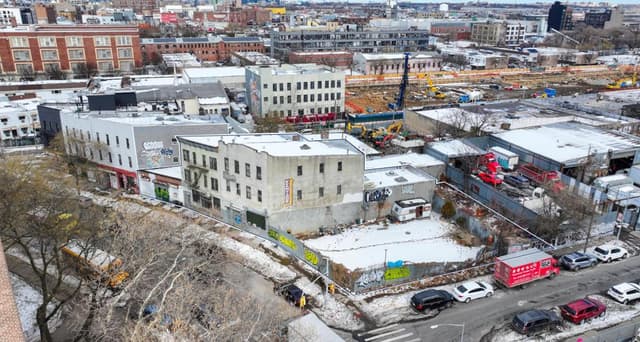
We are pleased to announce the execution of a ground lease for 401 Bushwick Avenue, a development site located in East Williamsburg, Brooklyn. The site consists of a 14,795-square-foot mixed-use assemblage in an R6 zoning district, offering a 3.0 FAR (wide avenue), or 44,400 buildable square feet “as of right.” The corner-lot features 240 feet of wraparound frontage on Bushwick Avenue and Varet Street. It is conveniently located between the Montrose and Morgan Avenue L trains and surrounding by significant public and commercial developments. The 99-year ground lease implies a land value of $12,000,000, or $270 per buildable square foot (BSF). The terms of the lease remain confidential. Seller Profile A generational Brooklyn family with experience in real estate investing but not structured for ground up development. Buyer Profile The developer is a Brooklyn-based, vertically integrated firm with 20 years of experience building mid-size residential projects. They have a proven track record of successful ground leases and specialize in this type of transaction. The Challenge The seller had considered selling in the past, but as a generational family, they were reluctant to pursue a 1031 exchange or pay capital gains taxes on a sale. While ground leases can create long-term cash f low, they carry inherent risks early in the development process, making it critical to select a dependable developer. The Solution We interviewed several developers with a strong track record of delivering residential projects in Brooklyn who also demonstrated the capability and willingness to negotiate a multigenerational lease agreement. These two factors, though distinct, are equally crucial to the success of this type of transaction. Key considerations for negotiating a ground lease include: Attorneys Hiring the right attorney is essential. This is not an average contract negotiation but a 100-year agreement that future generations will rely on for guidance. You need an attorney experienced specifically in ground leases and willing to prioritize negotiations. Base Rent This is the primary term to address and is typically perceived as 5-6% of the underlying land value. Sellers should compare this to the return they would achieve by selling and reinvesting through a 1031 exchange. Abatement Period This refers to a period of free rent while the developer prepares the site for construction. Typical periods range from 12-24 months, although this is negotiable. Sellers may offer a longer abatement period in exchange for higher base rent. Guarantees Developers often provide deposits and personal guarantees to ensure the project is completed on time. A ground lease gains significantly more value when the collateral is improved, making it imperative to work with a developer who can deliver a quality project on schedule. Escalations The difference between a 2% annual increase and a 10% increase every five years is significant over a 100-year term. Knowing how your increases compound over time is imperative. Market Resets The most controversial and critical component of a ground lease. These resets typically occur every 25 years and protect both parties from significant market fluctuations. Common approaches include tying resets to CPI while capping upside/downside or linking them to a percentage of the building’s gross income. Future Lender Requirements Much of the lease terms need to keep in mind the financing environment. When the developer looks to refinance under your ground lease, will the bank understand and be able to confidently underwrite against those terms. Credibility Ground leases are not Joint Ventures, nor are they outright sales. Like any lender / landlord / developer relationship, there is an element of a partnership and credibility that is paramount. You may occasionally call on the developer, and they may call on you. It is important to work with someone experienced and trustworthy, and who you can see eye to eye. Outcome We ultimately selected a developer we have executed with in the past. Their experience in both building these types of buildings and their understanding of the ground lease structure made them a clear candidate for this type of project. After several face-to-face interviews, the owner felt confident this was the developer they wanted building on their family’s land.
DJ Johnston
Executive Vice President