Leading AgentDJ Johnston
Executive Vice PresidentNew York, NY

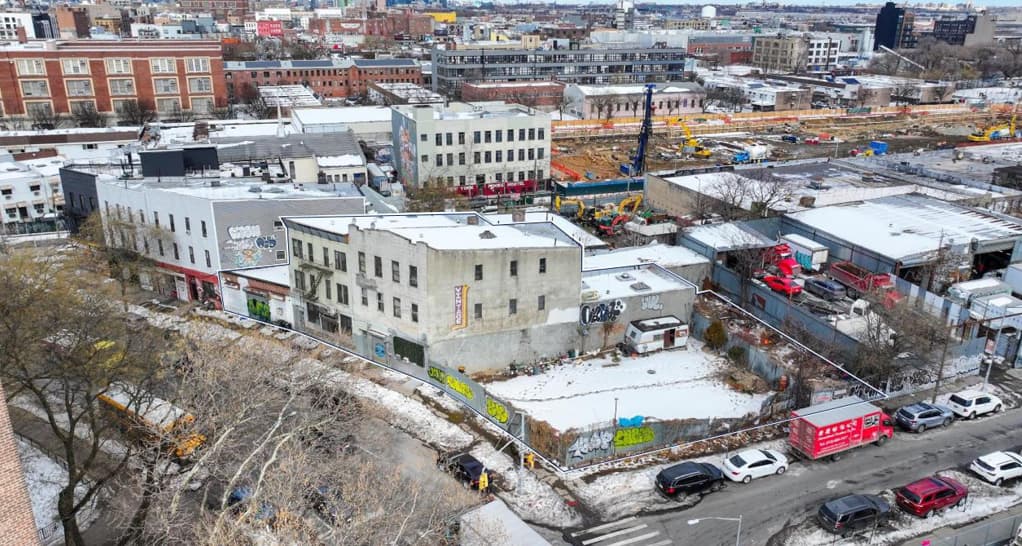
We are pleased to announce the execution of a ground lease for 401 Bushwick Avenue, a development site located in East Williamsburg, Brooklyn. The site consists of a 14,795-square-foot mixed-use assemblage in an R6 zoning district, offering a 3.0 FAR (wide avenue), or 44,400 buildable square feet “as of right.” The corner-lot features 240 feet of wraparound frontage on Bushwick Avenue and Varet Street. It is conveniently located between the Montrose and Morgan Avenue L trains and surrounding by significant public and commercial developments.
The 99-year ground lease implies a land value of $12,000,000, or $270 per buildable square foot (BSF). The terms of the lease remain confidential.
A generational Brooklyn family with experience in real estate investing but not structured for ground up development.
The developer is a Brooklyn-based, vertically integrated firm with 20 years of experience building mid-size residential projects. They have a proven track record of successful ground leases and specialize in this type of transaction.
The seller had considered selling in the past, but as a generational family, they were reluctant to pursue a 1031 exchange or pay capital gains taxes on a sale. While ground leases can create long-term cash f low, they carry inherent risks early in the development process, making it critical to select a dependable developer.
We interviewed several developers with a strong track record of delivering residential projects in Brooklyn who also demonstrated the capability and willingness to negotiate a multigenerational lease agreement. These two factors, though distinct, are equally crucial to the success of this type of transaction.
Hiring the right attorney is essential. This is not an average contract negotiation but a 100-year agreement that future generations will rely on for guidance. You need an attorney experienced specifically in ground leases and willing to prioritize negotiations.
This is the primary term to address and is typically perceived as 5-6% of the underlying land value. Sellers should compare this to the return they would achieve by selling and reinvesting through a 1031 exchange.
This refers to a period of free rent while the developer prepares the site for construction. Typical periods range from 12-24 months, although this is negotiable. Sellers may offer a longer abatement period in exchange for higher base rent.
Developers often provide deposits and personal guarantees to ensure the project is completed on time. A ground lease gains significantly more value when the collateral is improved, making it imperative to work with a developer who can deliver a quality project on schedule.
The difference between a 2% annual increase and a 10% increase every five years is significant over a 100-year term. Knowing how your increases compound over time is imperative.
The most controversial and critical component of a ground lease. These resets typically occur every 25 years and protect both parties from significant market fluctuations. Common approaches include tying resets to CPI while capping upside/downside or linking them to a percentage of the building’s gross income.
Much of the lease terms need to keep in mind the financing environment. When the developer looks to refinance under your ground lease, will the bank understand and be able to confidently underwrite against those terms.
Ground leases are not Joint Ventures, nor are they outright sales. Like any lender / landlord / developer relationship, there is an element of a partnership and credibility that is paramount. You may occasionally call on the developer, and they may call on you. It is important to work with someone experienced and trustworthy, and who you can see eye to eye.
We ultimately selected a developer we have executed with in the past. Their experience in both building these types of buildings and their understanding of the ground lease structure made them a clear candidate for this type of project. After several face-to-face interviews, the owner felt confident this was the developer they wanted building on their family’s land.