
Collision Repair Net Lease Report | H1 2026
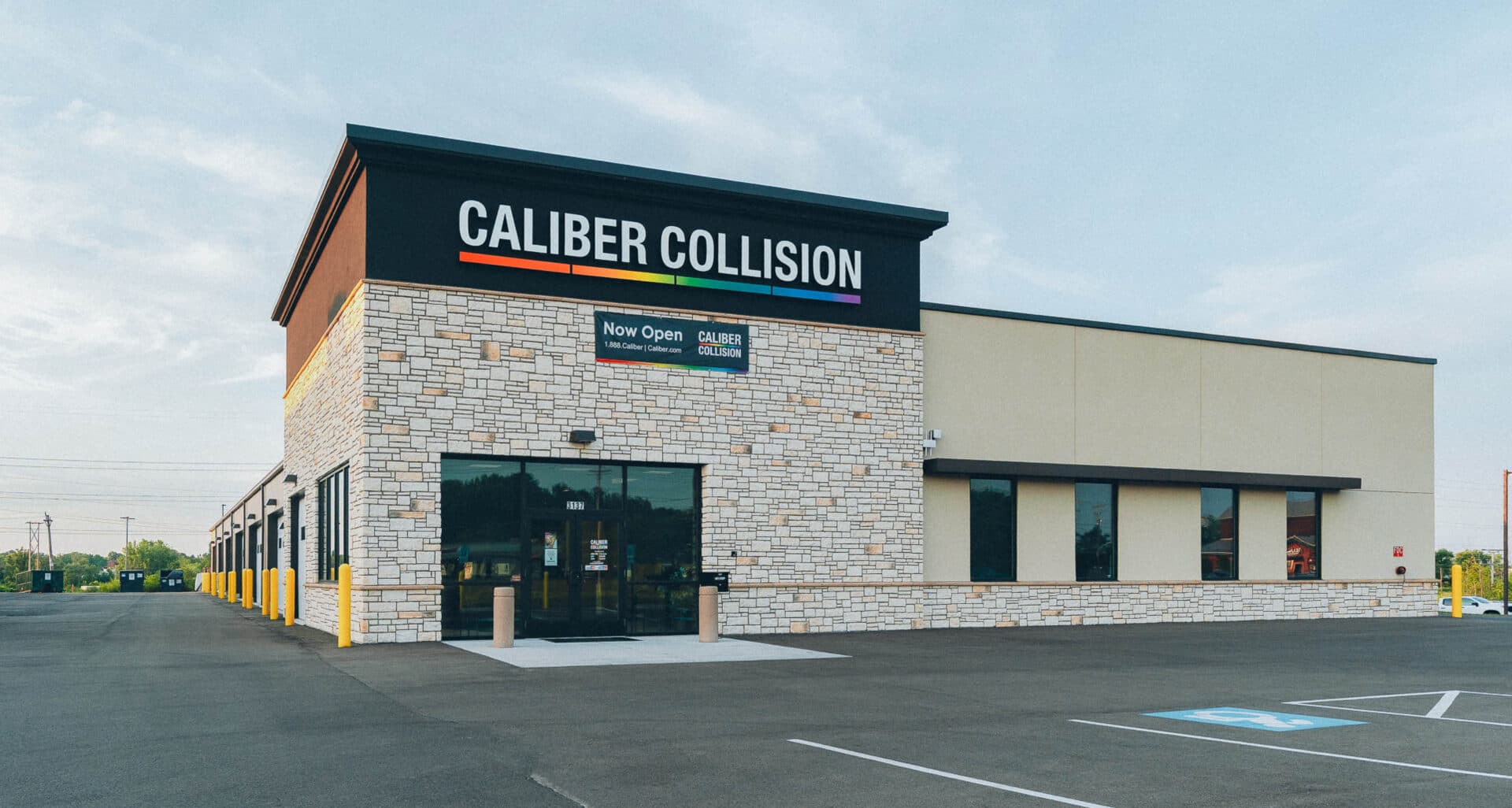
H1 2026 brought the first clear signs of stabilization to the collision repair sector after two years of declining repairable claims. Insurers resumed rate increases across most states, repair cycles normalized, and the industry’s largest transaction closed and integrated ahead of schedule. For collision repair landlords, tenant credit is becoming the key pricing issue. The four national consolidators now sit at meaningfully different points on the credit spectrum, and that gap is showing up in cap rates even among assets with similar real estate and lease terms.
- Boyd Group / Gerber Collision completed and fully integrated the $1.3 billion Joe Hudson’s acquisition, posted the first $1 billion revenue quarter in industry history, and reduced leverage to 2.8x.
- Caliber Collision’s confidential IPO filing remains pending more than a year after submission. If completed, the offering would create the sector’s first transparent public valuation benchmark.
- Crash Champions continues to perform well operationally, but its Caa1 rating and elevated leverage at the guarantor level remain important underwriting considerations for landlords.
- Classic Collision continues disciplined regional growth behind one of the strongest OEM certification strategies among the major consolidators.
- M&A activity is picking up again. Fourteen private equity-backed consolidators are actively acquiring, more than $9 billion of PE capital has entered the sector since 2023, and buyers are moving downstream to operators with as few as one to three locations.
Market Movement
Demand: Fewer Claims, Larger Repairs, Early Signs of Stabilization
Repairable claims declined 9.7% in 2025, according to CCC Intelligent Solutions, while total loss frequency reached a record 23.1% of all claims. The average vehicle on the road is now 12.8 years old. The mix is also shifting away from smaller repairs: appraisals below $2,000 account for roughly one-quarter of volume, down sharply from pre-pandemic levels. More than one in four drivers carry deductibles of $1,000 or more, and a larger share of work is moving to customer pay.
H1 2026 produced the first credible signs of a floor. Berkshire Hathaway reported Q2 increases in GEICO property damage and collision claim frequency, reversing two years of declines. Auto insurance rates increased in 27 states during the first half of the year. Enterprise Mobility reported collision-related length of rental at 15.1 days in Q2, flat YoY, suggesting repair cycle times have normalized. Boyd management said claims declines have moderated to 0% to 2%, back near the long-term trend. Insurer profitability has also improved: State Farm reported a $4.6 billion auto underwriting gain for 2025 and began issuing a record $5 billion policyholder dividend in August.
Repair Complexity: A Structural Tailwind
As claims volume declined, each repair became more technical and more valuable. Advanced driver assistance systems now require calibration on a meaningful share of repairs, with industry estimates ranging from roughly 28% of written estimates (CCC) to approximately 65% of all repairs (Protech and Revv data). For real estate owners, the implication is straightforward: facilities with calibration space, paint booth throughput, and sufficient power are better positioned to support modern repair operations and renewals. Undersized or under-improved buildings face greater functional obsolescence risk. Supplier consolidation adds another pressure point, highlighted by shareholder approval of the $25 billion Axalta and AkzoNobel merger.
Capital Markets and Cap Rates
Collision repair assets continue to price primarily off the credit behind the lease. The category generally trades wider than traditional retail net lease because of environmental considerations tied to frame and paint operations and the cost of converting collision facilities to other uses. Within collision, the key variables are guarantor credit, remaining term, and rent relative to market. Those spreads widened in H1 as the national consolidators moved in different credit directions. Demand for the best paper remains strong. Matthews™ has a collision asset in a major Texas metro under contract at a 5.20% cap rate in 2026, showing where well-located real estate, strong credit, and durable lease term can price. Assets backed by leveraged or unrated guarantors trade meaningfully wider. For owners, tenant credit should be the starting point of any valuation discussion.
The Top Four Consolidators
The table below summarizes the four national platforms as of August 2026.
| Operator | Footprint and Ownership | Credit Profile | Defining H1 2026 Development |
| Boyd Group / Gerber Collision | 1,312 locations; public on the TSX and NYSE | Morningstar DBRS BB (high), Stable; pro forma leverage 2.8x | Closed the $1.3 billion Joe Hudson’s acquisition in January and posted the first $1 billion revenue quarter in industry history in Q2 |
| Caliber Collision | 1,800+ centers in 41 states; Hellman & Friedman majority owner | S&P single-B tier; confidential IPO on file, not yet priced | Continued acquiring through the IPO window, most recently Barnett’s Body Shops in July, and appointed a permanent CFO in May |
| Crash Champions | Approximately 650 centers in 38 states; Clearlake Capital | Moody’s Caa1 at Champions Financing, Inc.; no near-term maturities | Rolled out nationwide consumer repair financing with Sunbit and launched a 300-technician hiring initiative |
| Classic Collision | 350+ locations nationally; TPG Capital | Private; no public rating | Continued regional expansion behind an OEM-certification-led model suited to rising calibration requirements |
Boyd Group / Gerber Collision: The Public Benchmark
Boyd Group Services (TSX: BYD, NYSE: BGSI) completed the largest transaction in industry history when it closed the approximately $1.3 billion acquisition of Joe Hudson’s Collision Center on January 9, 2026. The deal added 258 locations across the Southeast and increased Boyd’s footprint by 25% to more than 1,300 locations. Boyd financed the transaction with an $897 million U.S. equity offering, C$525 million of senior notes due 2030, and revolver capacity, while adding a New York Stock Exchange listing alongside its long-standing Toronto listing.
Integration has been strong. In Q2 2026, reported August 12, sales increased 29.9% to $1,013.7 million, the first quarter above $1 billion in company history. Adjusted EBITDA rose 44.9% to $135.9 million, with margin expanding to 13.4% from 12.0% a year earlier, reflecting Project 360 cost initiatives and faster synergy capture. All 258 Joe Hudson’s locations were converted to Boyd’s systems during the quarter, and management raised its 2026 synergy target to $35 million from $20 million. Pro forma leverage improved to 2.8x from 3.1x at year-end, and Boyd plans 13 new startup locations in the second half. Morningstar DBRS rates Boyd BB (high) with a Stable trend.
Landlord view: Among the four major consolidators, Boyd offers the strongest credit profile and is the only one with full audited public reporting. Its credit metrics are improving, which supports the tightest cap rates in the category. Landlords holding legacy Joe Hudson’s leases received a material credit upgrade when the transaction closed in January and should reassess current asset value accordingly.
Caliber Collision: The Pending Catalyst
Caliber remains the scale leader with more than 1,800 centers across 41 states and is majority owned by Hellman & Friedman, with Leonard Green & Partners and OMERS as minority holders. The company confidentially submitted a draft registration statement for an initial public offering on July 28, 2025, with Bank of America, Goldman Sachs, and JPMorgan leading the process. As of August 2026, the filing remains confidential and the offering has not priced. Caliber also completed a CFO transition, appointing Jason Monaco as permanent chief financial officer effective May 4, 2026, and continued acquiring, most recently closing on the five-location Barnett’s Body Shops in Mississippi on July 9, 2026. Caliber’s debt-issuing entity carries a single-B-tier rating from S&P.
Landlord view: Caliber is a large, leveraged private credit with a clear potential catalyst. A completed IPO would bring greater financial disclosure and could support deleveraging, strengthening the credit story behind Caliber leases. It would also establish the collision sector’s first public valuation benchmark. Owners of well-performing Caliber locations should be ready to reassess pricing when the registration becomes public.
Crash Champions: Strong Operator, Leveraged Guarantor
Crash Champions, backed by Clearlake Capital and led by founder Matt Ebert, operates approximately 650 centers across 38 states. Operationally, it remains one of the top national platforms, with major insurer relationships and a dedicated high-line and EV-certified brand. The company continued to invest in growth during the half, rolling out nationwide consumer repair financing with Sunbit in May and launching an initiative to hire 300 technicians in 60 days.
Credit is the issue landlords need to watch. Moody’s rates Champions Financing, Inc. at Caa1 following an August 2025 downgrade, citing lease-adjusted leverage of approximately 9.1x, interest coverage of 0.4x, and negative free cash flow. Moody’s also noted adequate liquidity, no near-term debt maturities, and the potential for metrics to improve in the back half of 2026 if claims volume recovers. The early demand stabilization signals discussed above support that case, but leverage remains elevated.
Landlord view: Crash operating performance and lease credit should be underwritten separately. Crash-backed assets generally price wider than assets backed by stronger consolidator credit, making lease structure, remaining term, and rent basis especially important. A rating improvement could tighten cap rates. For owners considering a sale, credit timing matters.
Classic Collision: The Certification Specialist
Classic Collision, acquired by TPG Capital in 2024 and led by chief executive Toan Nguyen, has grown to more than 350 locations nationally, up from 262 at the time of the TPG transaction. Its footprint is concentrated in the Southeast, Texas, Florida, and the West Coast. Classic’s strategy is built around OEM certification, with some of the deepest certification coverage per location among the major consolidators, plus expanding glass and calibration capabilities. That positioning fits the direction of repair complexity. As a private company with no public debt rating, Classic offers less financial transparency than its rated peers.
Landlord view: Classic is a well-sponsored tenant with an operating model aligned with rising repair complexity. Without a public rating, investors will lean more heavily on lease fundamentals, unit-level performance, and sponsor strength when pricing the real estate.
Owner-Operators and the Independent Landscape
The national consolidators get the headlines, but independents still operate most of the roughly 40,000 collision shops in the approximately $48 billion U.S. market. The largest consolidators account for about 13.3% of locations and 31.7% of revenue. That gap shows both the advantage of scale and the amount of consolidation runway that remains.
M&A is picking up again in 2026 after a slower 2025. Fourteen private equity-backed consolidators are actively buying, more than 130 PE firms track the sector, and more than $9 billion of institutional capital has been deployed since 2023. Valuations have held at roughly 3.5x to 6.0x EBITDA for quality multi-shop operators and 7.0x to 10.0x or more for platform-caliber businesses with strong insurer relationships and OEM certifications. Buyers are also moving down-market, pursuing operators with as few as one to three locations. That broadens the exit universe for owner-operators of nearly every size.
Regional platforms are driving much of that activity. Quality Collision Group continues to build a certification-first model and named PPG its sole coatings supplier in January. VIVE Collision operates more than 60 locations across nine Northeast states. Puget Collision reached 72 stores in the Pacific Northwest in May, while CollisionRight continues to expand across the Midwest and Mid-Atlantic. Roughly a dozen independent multi-shop operators with eight or more locations also added stores between late 2025 and spring 2026. Well-run independents are still growing, not simply waiting to sell.
The Real Estate Decision for Owner-Operators
For owner-operators who also own their real estate, business and property strategy should be evaluated together. Institutional capital has already validated collision real estate as a net lease asset class: a public REIT completed a VIVE Collision portfolio sale-leaseback in 2025 on roughly 20-year triple-net terms, and net lease investors expect more transactions as M&A picks up. An owner selling the operating business can often improve total proceeds by negotiating a market-rate lease with the buyer, then either retaining the property for income or selling it separately into the net lease market. Owners staying in the business can use a sale-leaseback to free equity for equipment, calibration capability, or acquisitions. In either case, rent, term, escalations, and the guaranty entity established at the operating sale will shape the real estate’s value for years.
What This Means for Landlords
- Underwrite the guarantor, not the logo. Two otherwise similar buildings can carry very different values depending on whether the lease is backed by a BB (high)-rated public guarantor or a leveraged private entity. Confirm the legal entity that signs and guarantees the lease.
- Track changes in tenant credit. Boyd’s deleveraging, a potential Caliber IPO, and any improvement in Crash Champions’ credit rating can move asset pricing. Owners considering a sale should understand where their tenant sits in that credit cycle before going to market.
- Get ahead of lease events. Option notice dates, fair market value resets, and renewal windows are negotiating leverage. Consolidators manage real estate at the portfolio level; landlords should be working those dates before the tenant does.
- Buyer demand remains active. Institutional net lease investors, exchange buyers, and private capital continue to pursue automotive service assets. Stabilizing demand fundamentals improve the sector story, but credit and lease quality still determine pricing.
If you own collision repair real estate, whether it is leased to a national consolidator, a regional platform, or your own operating company, we can provide a current, no-obligation opinion of value based on the tenant credit, lease structure, and market conditions outlined in this report.