Walgreens’ Debt Risk and What It Means for Real Estate
The Debt Burden That Changes Everything
The $22 billion buyout was financed with approximately 83% debt, one of the most highly leveraged retail take-private deals in recent memory. This translates to roughly $18.8 billion in new debt added to the balance sheets of all the companies that were WBA. This means Walgreens must route a substantial portion of its cash flow to interest payments rather than store operations, wages, or improvements.
For landlords, the financial pressure translates directly into lease strategy:
Rent rationalization is a priority – Sycamore has signaled it wants to align lease payments with current market rates. This is consistent with the private equity playbook of reducing operating costs wherever possible.
Short-term extensions preserve flexibility – Walgreens is increasingly issuing very short lease extensions rather than long-term commitments. This tiered approach allows the company to evaluate store performance, consolidation opportunities, and capital priorities before locking into long-term obligations.
Interest Rate Threat: How Rising Rates Could Worsen the Debt Burden
The Fed’s decisions on overnight rates directly threaten Walgreens’ financial viability. Here’s why:
New Fed Leadership Signals Risk of Rate Hikes
New Fed Chair Kevin Warsh has refrained from providing clear “forward guidance” on the path of rates, stating he doesn’t want to lock the committee into a specific course. While his personal view isn’t public, the committee’s hawkish tilt and the 9-3 vote to hold (rather than cut) signal that the risk is firmly tilted toward a rate increase. He has characterized the committee as being “evenly split” between those wanting a hold/cut and those wanting a hike.
Refinancing Risk is the Immediate Danger
While much of Walgreens’ existing debt is locked in at fixed rates, the company has billions of dollars coming due in the near term:
Maturity Window Amount Due
Fiscal 2026 $2.8 billion
Fiscal 2027 $1.8 billion
The practical impact: A 50-bp rate hike could add tens of millions of dollars in annual interest expenses when these bonds are rolled over. Every dollar spent on higher interest is a dollar not available for store operations, lease payments, or renovations.
Variable Rate Debt is Directly Exposed
The buyout financing structure includes significant variable rate components: Senior secured term loans priced at SOFR + 600 basis points for the Shields business segment; $ 4.5 billion in private loans with floating rates; revolving credit facilities with rates that reset with the market
A 50-bp rise in the base rate directly increases the interest on these floating-rate facilities.
The Asset Sale Trap: How Higher Rates Threaten the Turnaround Strategy
Selling non-core assets is not just a strategy; it’s a necessity. Sycamore’s plan to reduce debt and generate cash depends heavily on monetizing key assets, particularly the VillageMD business, which was central to the deal structure. Former Walgreens shareholders are entitled to 70% of the net proceeds from the sale of VillageMD, up to $3.00 per share. But rising interest rates could derail these plans.
Financing becomes more expensive – Potential buyers face higher borrowing costs, which reduces their ability to pay top dollar
Valuations are compressed – Higher discount rates lower the present value of future cash flows, putting downward pressure on asset prices
Exit windows narrow – Private equity firms are holding portfolio companies longer because buyers aren’t meeting their asking prices, creating a “gridlock” in the M&A market
The bottom line for landlords: If Sycamore can’t sell VillageMD, Boots, or other assets at attractive prices, the cash generated to service debt will fall short. That means more pressure to cut costs elsewhere, including lease payments.
What Sycamore Must Accomplish
Sycamore is targeting EBITDA of approximately $4 billion, roughly double Walgreens’ 2024 EBITDA of about $2 billion. This target is ambitious and depends on both operational improvements and successful asset sales. The company’s ability to execute these sales in a rising-rate environment will be a key test of the turnaround plan.
How Rising Rates Impact Walgreens Property Sales
The higher-rate environment that threatens Walgreens’ balance sheet is also reshaping the market for Walgreens-leased properties. If you are considering selling a Walgreens asset—or just want to understand its current value, these dynamics are critical.
Bond-Like Assets Are Most Vulnerable to Rate Increases. Net lease assets sit at the intersection of real estate and fixed income. When rates rise, assets that are priced primarily as “bonds wearing a building” take the hardest hit.
A-quality properties with genuine location merit, strong demographics, and alternate-use value have held their pricing and remain liquid
Walgreens assets are firmly in the commodity camp for most locations, their value is driven by the lease’s remaining term and the tenant’s solvency, not irreplaceable real estate.
Q3 2026 Action Checklist
Pull your lease – Confirm the primary term remaining, option periods, and the rent escalation schedule
Compare your rent to market – If your Walgreens is paying above-market rent, expect a renegotiation request
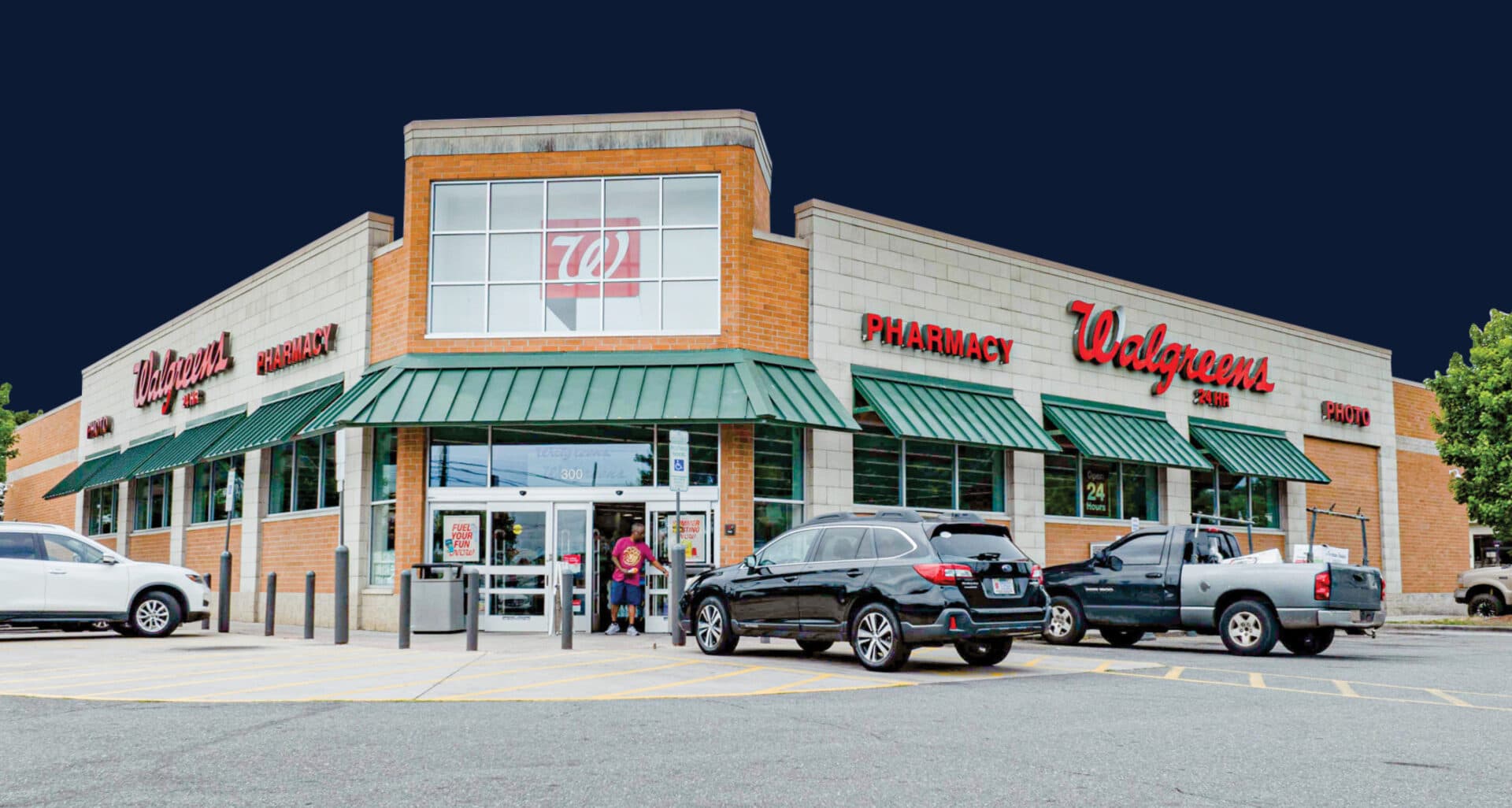
Plan for backfill – The Walgreens box (10,000–15,000 sq ft on a hard corner) is somewhat adaptable. Likely backfill scenarios: discount retail, healthcare clinics, QSR, fuel, fitness, or multi-tenant subdivisions- many of these tenants are unlikely to replace full rent, so buyers are seeking aggressive prices.
Review your financing – If your loan matures in the next 24 months, check with your lender or Chase Calderon at Matthews for refi options.
Monitor interest rate trends – Keep an eye on Fed policy. Each rate hike increases the pressure on Walgreens to cut costs elsewhere, including your rent.
Track asset sales – The success or failure of VillageMD and Boots sales will signal the company’s ability to manage its debt burden. Failure to execute these sales at attractive valuations could trigger deeper cost-cutting. As of now, Sycamore is courting two buyers for Boots, both of whom are looking to purchase at a 30% discount to its $10 billion asking price. No buyers have been publicly identified for VillageMD.
Assess your sale options – If you are considering selling, understand how remaining lease term and property location affect pricing. Call me for an in-depth property analysis and valuation.
Bottom Line
The Walgreens lease you purchased years ago is now owned by a private, heavily leveraged company with a well-documented history of aggressive cost-cutting and a debt load comparable to the ill-fated RJR Nabisco buyout. With $4.6 billion in debt maturing between 2026 and 2027 and rising interest rates threatening to increase refinancing costs, the pressure on Walgreens’ cash flow is only intensifying.
The asset sale strategy faces significant headwinds from higher rates. Potential buyers face expensive financing, compressed valuations, and a gridlocked M&A market.
Sycamore’s strategy points to rent rationalization, shorter lease terms, and selective exits, not a wholesale portfolio closure, but a more deliberate, market-by-market approach to optimizing the footprint. The company’s debt burden, interest rate exposure, and uncertainty around asset sales make accelerating this strategy all but inevitable.
Now is the time to review your specific lease, assess your property’s risk profile, and plan your strategy.