Matthews Logo

Navigation Menu

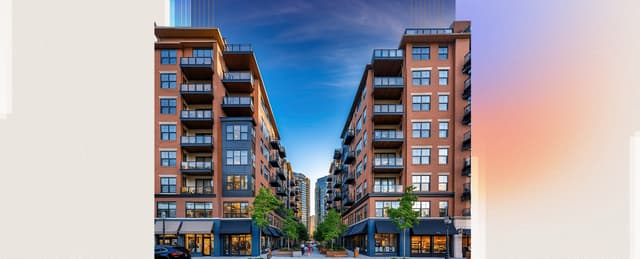
Image of The Revitalization of Urban Retail Success Story

The Revitalization of Urban Retail

Urban retail is entering a period of reinvention. Across major metropolitan markets, spaces that once struggled with vacancy or declining foot traffic are finding new life through creative repositioning and adaptive reuse. Shifts in consumer behavior, the growth of e-commerce, and evolving lifestyle preferences have reshaped how people interact with retail environments, particularly in dense urban cores.   For many properties, these changes initially presented challenges. Traditional retail formats built for an earlier era of shopping have had to compete with shifting demand and changing tenant requirements. Yet those same pressures are now driving a wave of innovation. Owners, developers, and city leaders are increasingly reimagining underperforming retail assets, transforming them into dynamic spaces that better reflect how people live, work, and gather today.   In many cities, this transformation represents urban retail’s “second act”, one defined not by traditional storefronts alone, but by mixed-use formats, experiential tenants, and community-oriented environments. The State of Urban Retail Urban retail markets today reflect a complex yet improving landscape. While some legacy retail corridors continue to work through elevated vacancy or outdated layouts, many are stabilizing as landlords adopt more flexible leasing strategies and rethink how space is utilized. Several structural shifts have contributed to this reset. The growth of online shopping has reduced reliance on traditional brick-and-mortar retail for routine purchases. At the same time, urban populations, particularly younger demographics, are demonstrating a renewed preference for physical retail in specific contexts. According to information from RetailDive, nearly three-quarters of Gen Z consumers shop in-store at least once a week, and a majority view in-person shopping as an experience rather than a purely transactional activity.   This shift is especially pronounced in categories such as beauty and luxury, where Gen Z shoppers show a strong preference for in-person purchasing, valuing immediacy, product interaction, and the overall shopping environment. At the same time, urban consumers are increasingly seeking experiences, dining, wellness, and social environments that cannot be replicated digitally. As a result, the role of physical retail is evolving. Rather than serving primarily as a transactional environment, urban retail is increasingly functioning as a place for engagement and community interaction. This shift is prompting landlords and developers to rethink how retail space can better align with modern consumer expectations, emphasizing experience, convenience, and seamless integration with digital behaviors. Repositioning and Adaptive Reuse Strategies Two strategies central to urban retail’s evolution have emerged: repositioning and adaptive reuse.   Repositioning typically involves updating an existing retail property to better align with current demand. This may include renovating storefronts, modernizing layouts, curating new tenant mixes, or incorporating amenities that attract experiential retailers and service-oriented tenants.   Adaptive reuse, by contrast, often entails a more fundamental transformation, repurposing retail space into an entirely different use or integrating it into a broader mixed-use environment. Common strategies include: Mixed-use integration: Retail spaces are increasingly being combined with residential, office, hospitality, or entertainment uses, creating built-in customer bases and activating properties throughout the day.   This approach creates consistent foot traffic and extends activity beyond traditional retail hours.   Experiential and service-oriented tenants: Fitness studios, specialty food concepts, medical and wellness services, and entertainment venues are helping redefine how retail environments function.   The result is a shift from transactional retail to destination-based experiences that increase dwell time and repeat visits.   Flexible and short-term concepts: Pop-up shops, temporary activations, and short-term leases allow landlords to test new concepts while keeping spaces active and engaging.   Reduces leasing risk while enabling rapid adaptation to changing consumer preferences.   Together, these approaches allow urban retail properties to evolve alongside consumer demand rather than compete directly with online alternatives. Market Leaders and Hotspots Several major urban markets are demonstrating how repositioning strategies can successfully revitalize retail districts. Cities such as New York City, Chicago, Los Angeles, and Miami have seen renewed activity in formerly underutilized retail corridors as developers introduce mixed-use concepts and experiential tenants.   Successful markets often share several characteristics. Population density and strong residential growth provide a reliable customer base, while access to public transit and walkability support consistent foot traffic. Municipal support, including zoning flexibility, redevelopment incentives, and public-private partnerships, can also play an important role in accelerating revitalization efforts.   Developer innovation is equally important. Projects that thoughtfully combine retail with residential, hospitality, or entertainment uses are demonstrating how urban retail can function as part of a broader ecosystem rather than as a standalone asset class. Key Considerations for Execution While the opportunity for repositioning is significant, executing these strategies in urban environments requires careful planning and alignment across multiple stakeholders.   Financial feasibility remains a key consideration, particularly in markets where construction costs, entitlement timelines, and land values remain high. Developers must balance the capital required for redevelopment with realistic projections for tenant demand and long-term revenue.   Regulatory processes can also shape project timelines. Zoning approvals, permitting requirements, and historic preservation considerations often require coordination with local governments and community stakeholders.   Equally critical is tenant curation. Successful repositioning efforts typically focus on building a complementary tenant mix that encourages repeat visits and sustained engagement. Retailers, restaurants, wellness providers, and entertainment venues can work together to create an ecosystem that keeps properties active throughout the day and evening.   Increasingly, developers are also measuring success through broader indicators such as foot traffic, community engagement, and placemaking impact, metrics that reflect retail’s evolving role in the urban environment.   Navigating the Upside and the Unknowns   As with any transformation, repositioning urban retail assets requires thoughtful execution. Projects that succeed are typically those that approach redevelopment with a clear understanding of local demand and long-term market dynamics.   Capital investment must be carefully aligned with achievable outcomes, particularly in complex urban projects where construction and entitlement costs can be significant. Similarly, tenant strategies must reflect the needs and preferences of the surrounding community to ensure sustained engagement.   The growing body of successful repositioning projects across major markets is providing valuable lessons for future developments. As developers gain experience with mixed-use strategies, experiential retail, and flexible leasing models, the industry is now better equipped to navigate potential challenges and unlock the full potential of these assets. Urban Retail’s Second Act Urban retail is entering a new phase defined by flexibility, experience, and deeper integration with surrounding uses. Traditional retail formats are giving way to more adaptive concepts.    Emerging Retail Models Micro-retail enabling local entrepreneurship Experiential destinations blending retail, dining, and entertainment Mixed-use environments integrating retail with living and working  These models reflect a broader shift toward spaces that prioritize engagement, convenience, and a sense of place.   Technology and data analytics will also play a growing role in helping landlords understand customer behavior, optimize tenant mixes, and activate spaces more effectively.   Urban retail’s transformation is still unfolding, but the direction is increasingly clear. Across many cities, properties once considered underperforming are being reimagined through creative redevelopment and strategic reuse.   Rather than signaling the decline of urban retail, these changes are revealing its ability to adapt. By embracing mixed uses, experiential concepts, and community-oriented design, developers and investors are helping urban retail enter a new chapter, one that reflects how people live, shop, and gather today.   For developers, investors, and city leaders alike, the opportunity lies not simply in filling vacant storefronts, but in rethinking what urban retail can become in its next act.

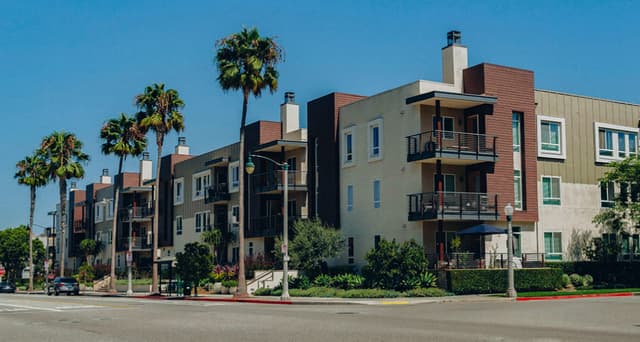
Image of Los Angeles, CA Multifamily Market Report Q1 2026 Success Story

Los Angeles, CA Multifamily Market Report Q1 2026

Los Angeles’ multifamily performance in Q1 2026 reflects continued softness, with vacancy reaching 5.6% as new supply outpaced demand. Approximately 1,100 units were absorbed during the quarter, trailing the roughly 2,300 units delivered, which contributed to a net increase in available inventory. Asking rents averaged about $2,300 per unit, but rent growth remained flat at 0%, highlighting limited pricing power and the need for concessions to maintain occupancy. Market conditions remain bifurcated, with higher-end properties experiencing the greatest pressure due to elevated supply levels, while mid-tier assets demonstrate relatively more stability. Affordability challenges and shifting renter preferences continue to dampen demand, resulting in a market that is stabilizing but still operating below peak performance levels.   Key Findings New deliveries have outpaced demand, resulting in modest absorption and continued leasing pressure, particularly among Class A product. Multifamily fundamentals in Los Angeles remained soft in Q1 2026, with flat rent growth and elevated vacancy reflecting ongoing supply-demand imbalance. Investment activity has stabilized at lower pricing levels, with cap rates holding steady as investors adjust to a higher interest rate environment.   Los Angeles Multifamily Supply & Demand Dynamics Source: CoStar Group, Inc.   Los Angeles Demographics Source: CoStar Group, Inc. Unemployment Rate: 5.8% Households: 3,475,543 Current Population: 9,677,403 Median Household Income: $94,934   The Los Angeles economy entered 2026 with mixed momentum, as modest job growth and structural challenges continued to weigh on housing demand. Employment trends have been relatively flat overall, with gains in sectors such as education, healthcare, and hospitality offset by softness in professional services, trade, and other cyclical industries. Despite these pressures, the region benefits from a diverse economic base anchored by entertainment, trade, tourism, and higher education, though some of these sectors are experiencing volatility due to labor disputes, global competition, and trade fluctuations. While upcoming global events and tourism activity may provide incremental support, overall economic conditions remain subdued, contributing to cautious renter behavior and slower multifamily demand growth.   Population, Labor Force, & Income Growth Source: CoStar Group, Inc.   Major Upcoming Events Hosted in LA Source: CoStar Group, Inc. 2026: FIFA World Cup, NBA All-Star Weekend 2027: Super Bowl LXI 2028: Olympics & Paralympic Games   Los Angeles Multifamily Construction Construction activity remains elevated yet gradually moderating as development conditions become more restrictive. Approximately 19,400 units are currently under construction, representing a sizable pipeline that will continue to impact market balance in the near term. Deliveries totaled about 2,300 units in Q1 2026, adding to existing supply pressures, particularly in the luxury segment where most new development is concentrated. However, construction starts have slowed in response to higher financing costs and tighter capital availability, which should reduce future supply volumes over time. Regulatory changes aimed at easing development constraints may support longer-term activity, but near-term impacts are limited.   Units Construction Starts Source: CoStar Group, Inc.   Units Under Construction Source: CoStar Group, Inc.   Los Angeles Multifamily Sales Investment activity remained subdued yet stable, with $2.0B in quarterly sales volume, pricing at $355K per unit, and cap rates holding at 5.0%. Transaction volume over the past 12 months totaled $7.9B, reflecting a modest year-over-year decline as soft fundamentals, elevated vacancy, flat rent growth, and the ongoing impact of Measure ULA continue to restrain deal flow. While overall activity remains well below pre-pandemic and 2021–2022 peaks, institutional investors have become more active, accounting for a growing share of transactions and signaling increased interest in repriced assets. Market sentiment suggests pricing has bottomed, with cap rate expansion largely complete; however, a meaningful recovery in values is expected to be gradual, with prior peak pricing levels unlikely to return until 2029 or later.   Sales Volume Source: CoStar Group, Inc.   By the Numbers Q1 2026 | Source: CoStar Group, Inc. Sales Volume: $1.4B Price Per Unit: $350K Cap Rate: 5.1% Vacancy Rate: 5.6% Rent Growth: 0% Asking Rent Per Unit: $2.3K Units Under Construction: 19.4K Units Delivered: 2.3K Units Absorbed: 1.1K  

Image of Southern California Gas Station Market: 2025 Review & 2026 Outlook Success Story

Southern California Gas Station Market: 2025 Review & 2026 Outlook

2025 At A Glance In 2025, gas station properties across Southern California continued to attract strong investor interest. Despite tighter lending conditions and elevated borrowing costs, transaction activity remained active across the region, with more than 100 reported sales across major counties.   Investors are increasingly viewing gas stations not only as operating businesses but as long-term real estate assets located on highly visible corner sites with consistent consumer demand. Limited development opportunities and strong traffic patterns continue to support the value of well-located properties. Tax Strategy and Real Estate Fundamentals One factor supporting investor demand is the continued use of cost segregation and bonus depreciation, which can provide meaningful tax advantages for certain investors. While bonus depreciation has begun phasing down from previous levels, these strategies still play a role in how some buyers evaluate returns.   At the same time, gas station development in Southern California remains difficult due to zoning restrictions, environmental review requirements, and limited available sites. As a result, many existing stations benefit from high barriers to entry and limited competitive supply.   Sale-leaseback transactions have also become more common as operators look to unlock capital tied up in real estate while continuing to operate their locations. The Regional Footprint Southern California remains one of the most densely populated fuel markets in the country. High commuter volumes and limited land availability contribute to sustained demand for strategically located sites.   Estimated station counts across the region include: Los Angeles County: ~2,700 stations San Diego County: ~900 stations Orange County: ~820 stations San Bernardino County: ~850 stations Riverside County: ~720 stations Why Investors Continue Targeting Gas Stations Several factors continue to attract capital to the sector: Tax advantages: Cost segregation and accelerated depreciation can improve after-tax returns for certain investors. Long-term lease structures: Many properties operate under triple-net leases, offering stable income streams with limited landlord responsibilities. High-visibility real estate: Gas stations are often located on signalized intersections with strong traffic counts. Retail modernization: Expanded convenience stores, food service offerings, and additional amenities are increasing revenue potential at many sites. Sale-leaseback activity: Operators frequently monetize real estate while retaining operational control of their locations. 2026 Market Outlook In the current market environment, inventory remains limited and buyer interest continues to be strong across many Southern California submarkets. While underwriting standards remain disciplined, lenders are still supportive of properties with established operating histories and desirable locations.   Electric vehicle adoption continues to grow, but most investors view the transition as a long-term shift rather than an immediate disruption to the existing fuel retail model.   Overall, the market remains liquid for well-located gas station assets, although pricing continues to vary based on site quality, lease structure, and operator strength. Regional Transaction Snapshot County Transactions Top Sale Pricing Pattern Value Driver Riverside 13 $14.6M Larger newer sites achieve strongest pricing Growth corridors San Diego 16 $10M+ Premium pricing across most asset sizes Demographics & location Los Angeles 46 $8.32M Smaller sites still command strong pricing Land value San Bernardino 30 $8.2M Competitive pricing for larger sites Population growth Orange 14 $8.1M Mid-market stability around $4M–$6M Infill scarcity Regional trend: coastal and urban markets tend to trade at premiums driven by land scarcity, while inland markets often see pricing supported by larger site footprints and growth corridors. Owner Insight: Strategic Considerations Owners of gas station properties are currently operating in a market with strong buyer demand and limited new supply.   Buyers are typically looking for: High-visibility sites with strong traffic counts • Opportunities for retail expansion or redevelopment • Long-term land value in dense urban markets Owners may consider selling when: Pricing in their local submarket is near peak levels • Operational or partnership goals change • Upcoming capital expenditures could impact future returns Final Takeaway Gas station properties are increasingly evaluated as long-term real estate assets supported by location, limited supply, and consistent consumer demand.   Understanding current buyer demand and pricing trends is critical for owners considering refinancing, recapitalization, or a potential sale.

Image of Tarik Fattah Author

Tarik Fattah

Associate Vice President

Image of California Self-Storage Market Report 2026 Success Story

California Self-Storage Market Report 2026

California’s self-storage market is navigating a period of tempered performance as advertised rates face downward pressure from shifting migration patterns and persistent supply in select metros. While the state has historically benefited from high-density living and smaller than average housing units, recent data reveals a cooling trend, with year-over-year rate growth for main unit types turning negative in major hubs like San Diego, San Francisco, and Los Angeles. Despite this broader pullback, certain markets show signs of stabilization. For instance, San Jose maintained a flat 0.0% month-over-month rate change in January 2026, supported by one of the lowest new supply pipelines in the country at just 1.0% of existing inventory. Nationally, climate-controlled units continue to outperform non-climate-controlled counterparts, a trend mirrored in California where the performance gap is helping to absorb newer deliveries.   Los Angeles The Los Angeles market is characterized by constrained supply and a significant pullback in sales activity following major portfolio deals in previous years. As of January 2026, the under construction pipeline stands at 2.6% of existing inventory, a slight decrease from the 2.8% recorded in December 2025. While the market recorded a minor 0.4% year-over-year decline in advertised rates, it remains one of the highestpriced regions in the country with an average street rate of $27.18. The lack of buildable space in coastal urban areas continues to drive long-term fundamentals.   Rental Rates Source: Yardi Matrix, Real Capital Analytics   10 x 10 Average Street Rate  $27.22  Month-Over-Month Change  -0.10%  Year-Over-Year Change  -0.40%  Under Construction by Percentage of Inventory  2.80%  12-Month Sales Volume  $485M   Los Angeles Sales Volume Source: Real Capital Analytics     Inland Empire Emerging as a leader for population growth in Southern California, the Inland Empire benefits from more favorable housing supply-demand dynamics compared to neighboring Los Angeles. The market remains relatively stable, posting a marginal 0.2% year-over-year rent decrease and a small 0.1% month-over-month rate increase in January 2026. With an under construction pipeline representing only 1.7% of inventory, the metro maintains a healthy balance between new deliveries and household formation.   Rental Rates Source: Yardi Matrix, Real Capital Analytics  10 x 10 Average Street Rate  $17.28  Month-Over-Month Change  0.10%  Year-Over-Year Change  -0.20%  Under Construction by Percentage of Inventory  1.70%  12-Month Sales Volume  $146M   Inland Empire Sales Volume Source: Riverside & San Bernadino | Real Capital Analytics   San Diego San Diego’s self-storage demand is bolstered by household formation that has historically outpaced the state average. The market is currently navigating a 1.3% year-over-year decline in advertised rates as it absorbs existing inventory. However, the new supply pipeline remains disciplined, with projects under construction accounting for only 1.6% of stock. A high concentration of Millennials and Gen Z in the metro suggests that future family creation will continue to act as a primary catalyst for storage utilization.   Rental Rates Source: Yardi Matrix, Real Capital Analytics  10 x 10 Average Street Rate  $23.52  Month-Over-Month Change  0.00%  Year-Over-Year Change  -1.30%  Under Construction by Percentage of Inventory  1.60%  12-Month Sales Volume  $67M   San Diego Sales Volume   Bay Area The Bay Area continues to see some of the tightest self-storage space-per-person ratios in the state. High retail sales per capita and exceptionally small average apartment sizes necessitate the use of off-site storage for consumer goods. In January 2026, the market showed stability with 0.0% month-over-month change in street rates, even as it faced a 0.7% year-over-year decline. Development remains highly restricted, with only 1.0% of existing inventory currently under construction.   Rental Rates Source: Yardi Matrix, Real Capital Analytics  10 x 10 Average Street Rate  $26.03  Month-Over-Month Change  0.00%  Year-Over-Year Change  -0.70%  Under Construction by Percentage of Inventory  1.00%  12-Month Sales Volume  $403M   Bay Area Sales Volume    
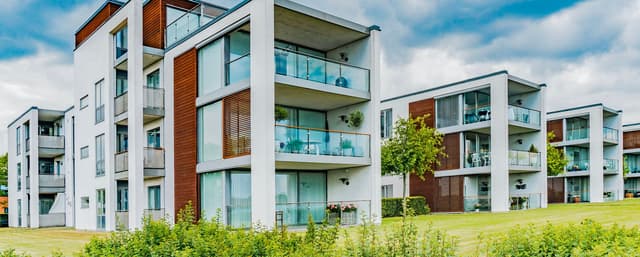
Image of Shane Avera Author

Shane Avera

Vice President

Image of The Return of Risk-Based Multifamily Valuations Success Story

The Return of Risk-Based Multifamily Valuations

Higher interest rates. Rent caps that limit increases. Rising insurance premiums. These forces aren’t just background noise in today’s multifamily market—they suggest that markets are once again factoring risk back into pricing. Valuations now hinge on the volatility of a property’s underlying cost structure and its flexibility to grow revenue. Before COVID, pricing followed a predictable hierarchy, as cheap f inancing and aggressive rent growth pushed values higher. In turn, cap rate spreads compressed, reducing price dispersion across quality tiers.   Today, that pricing logic has eroded into a renewed focus on risk-based pricing and wider dispersion amongst asset classes and location fundamentals. Cap rates have held firm amid higher expenses, regulatory limits, and more disciplined rent-growth assumptions. CoStar Group Inc.’s forecast projects modest movement with cap rates stabilizing at 6% through 2026, signaling that the valuation reset is being priced into fundamentals rather than a quick return to cheap debt. Cap rates remain tiered by asset quality, with Class A and B assets clustering in the low-to-mid 5% range while Class C properties often price around 6%. Uniform multifamily pricing is over—dispersion is back.   What’s Driving the Reset? The recalibration of valuations between 2023 and 2026 centralizes on the disruption of NOI. Insurance instability, above-yield borrowing costs, and stringent rent control each distinctly strain income performance, widening the bandwidth of operating outcomes investors must price, and pushing cap rate dispersion across asset quality and markets.   Insurance Shock and NOI Margin Compression Insurance costs have become a defining variable. Premiums rose about 28% year-over-year as of early 2024, according to Yardi Matrix’s national multifamily expense data, which showed a cumulative increase of 129% since 2018. Premiums remain structurally elevated relative to pre-pandemic levels, with projections tapering to 3-6% through 2026.   Above-Yield Debt Keeps Pricing Conservative Wider borrowing spreads have translated into more conservative pricing, often requiring greater yield cushion and/or price adjustment, and cap rates have been slow to compress as investors prioritize cash-flow certainty over rate-cut expectations.   Even with continued rate cuts expected by late 2026, pricing remains anchored to property-level risk and NOI sustainability under higher borrowing costs. As a result, negative-leverage deals should continue to fade throughout 2026, with investors demanding durable yield.   Myth: Value-add pricing will normalize once rates fall. Reality: The value-add spread is being driven less by rates and more by execution uncertainty, including higher all-in improvement costs and less reliable rentpremium capture. Pricing Impact: Investors are assigning a larger risk premium to transitional business plans, keeping value-add yields wider and basis expectations tighter.   Rent-Controlled vs. Market-Rate Rents and Revenue Rigidity Rent regulation introduces a structural mismatch between rising operating costs and capped revenue growth. Hard rent ceilings prevent owners from adjusting income to keep pace with inflation, tax increases, or insurance expenses, creating a predictable drag on scalable cash flow. Concurrently, rent-controlled properties typically trade at liquidity and pricing discounts, reflecting the regulatory risk embedded in their operating profiles.   Even modest rent resets allow owners to absorb cost pressures better, giving these properties a measurable pricing premium in today’s environment. The divide between regulated and unregulated income streams has become one of the most persistent valuation gaps between 2023 and 2026.   Revenue flexibility has become a central factor in valuation. Market-rate assets can adjust rents to absorb higher taxes, insurance, and operating costs, preserving NOI stability and attracting tighter yields.   Rent-controlled properties, by contrast, face capped income growth while expenses continue to climb, creating a structural drag on long-term performance. Trepp Research shows that multifamily property values declined roughly 30% in New York City following HSTPA and that rent-controlled assets in Los Angeles and the San Francisco Bay Area trade at discounts to unrestricted peers, with Bay Area tenants staying up to 20% longer—slowing rent resets and revenue growth. Investors price these constraints with wider yields, lower liquidity, and deeper discounts.   In 2026, investors continue to price this constraint through wider yields, lower liquidity, and deeper discounts.   National Valuation Snapshot: Rent-Regulated vs. Market-Rate Source: CoStar Group, Inc. | Q4 2025   Rent-Regulated Cap Rate: 6.4% Sale Price / Unit: $171,927 Positioning: Trades at wider yields and discounted pricing due to regulated rent growth   U.S. Market-Rate Cap Rate: 6.1% Sale Price / Unit: $233,197 Positioning: Higher pricing supported by rent-reset flexibility and deeper liquidity   Rent-regulated multifamily trades at a 30 bps higher cap rate, which translates into 26% lower pricing per unit. The higher required yield compensates for restricted rent growth and limited rent reset flexibility, which constrain NOI upside and make it harder to absorb rising operating costs.   Pricing Dispersion by Fundamentals Uniform pricing spreads have come and gone, and the market has returned to a tiered pricing structure. Investors are particularly meticulous, assigning substantial differences between asset quality, revenue flexibility, and geographic resilience.   Class A vs. Class C Pricing differences between Class A and Class C assets are contingent on the stability of the property type. Class A properties tend to show more predictable NOI, lower operating expense volatility, and modern building systems that reduce unexpected capital needs. That stability supports tighter pricing and more consistent liquidity.   At the opposite end of the spectrum, Class C assets are often characterized by aging infrastructure, longer repair cycles, elevated insurance exposure, and higher turnover rates, all of which introduce greater execution risk and greater performance variability. Investors now incorporate a broader risk premium in pricing.   In 2026, investors continue to price this constraint through wider yields, lower liquidity, and deeper discounts.   Myth: Class A and Class C spreads will tighten back to pandemic levels. Reality: Risk differentiation was temporarily muted between 2022 and 2024, when debt was cheap and aggressive growth assumptions compressed spreads across quality tiers. As that anomaly fades and the hierarchy of asset classes returns, RCA reports that the spread between Class A and Class C now ranges from 150 to 200 basis points, restoring a risk hierarchy more in line with historical norms. Pricing Impact: Spreads are likely to remain wider as long as operating costs and revenue outcomes remain volatile, particularly in Class C, where aging systems, insurance sensitivity, turnover, and capital expenditures introduce greater variability.   National Multifamily Fundamentals By Class Class A Vacancy Rate: 11.1% Asking Rent: $2,165 Effective Rent: $2,131 Absorption Units: 48,024 Price Per Unit: $327,541 Cap Rate: 5.5%   Class B Vacancy Rate: 8.1% Asking Rent: $1,611 Effective Rent: $1,595 Absorption Units: 7,114 Price Per Unit: $194,253 Cap Rate: 6.2%   Class C Vacancy Rate: 6.1% Asking Rent: $1,360 Effective Rent: $1,351 Absorption Units: (7,432) Price Per Unit: $179,022 Cap Rate: 6.6%   Suburban vs. Urban Markets Geographic fundamentals have also reasserted themselves in pricing. Suburban assets generally benefit from stronger household formation, steadier occupancy, and reduced concession pressure, supporting more defensible income profiles and steadier valuations.   Urban assets face different dynamics, including slower rent growth, higher concession packages, elevated turnover, and increased competition from new supply in many core metros. These headwinds support wider yields and more conservative underwriting.   The suburban-urban spread reflects investors’ focus on relative risk and transaction depth. CoStar data shows suburban cap rates modestly above urban levels, indicating investors may still require additional yield for suburban assets even when operating performance is more stable.   Myth: Stabilized assets are insulated from volatility. Reality: Even Class A properties can see NOI pressure when rent growth stalls and operating costs move higher, limiting nearterm upside versus value-add execution. Pricing Impact: Investors increasingly underwrite wider going-in yield cushions for stabilized deals when expense uncertainty rises, widening dispersion versus assets with clearer NOI growth pathways.   The widening gap between asking and effective rents, particularly as quality declines, underscores how concessions and price sensitivity are shaping real revenue outcomes, with weaker absorption in Class C reinforcing downside risk in lower-quality stock.   Houston, The Livewire in Multifamily Valuation This Gulf Coast growth market illustrates how quickly multifamily pricing can separate when operating costs rise and supply accelerates, making it one of the most telling barometers for today’s valuation environment.   Insurance Shock Premiums up 30-70% since 2022 (Source: FannieMae) Older assets are seeing 15-20% Operating Expenses vs. 8% national avg (Source: FannieMae) Class C assets absorb the steepest surcharges due to aging systems and elevated claims history New Supply Wave ~45,000 units projected to deliver from 2024-2026 (Source: CoStar Group, Inc.) Urban cores face the most extended lease-up timelines Concessions up 8–12% YoY across Class A in 2024-2025 (Source: FannieMae) Rent Fundamentals Effective rents flat to negative in several submarkets Renewal spreads compressing Rising vacancy in new deliveries Spread Behavior Apartment Loan Store Class A-Class C differential: 175-225 bps Suburban assets trade 50-100 bps tighter than urban Class C discounts deepest due to OpEx + CapEx exposure Investor Takeaways: Wide dispersion in NOI trajectories, Wider pricing cushions required, and Suburban stability priced at a premium   Even with near-term pressure from supply and insurance-driven operating expenses, Houston’s long-term growth outlook remains intact. Population and job gains continue to expand the renter base, supporting demand as the current delivery wave works through lease-up.   The New Multifamily Pricing Rulebook 1. Location Is About Variability, Not Glamour Suburban assets win because occupancy and concessions fluctuate less, not because they’re “hot” Urban assets face wider valuation ranges due to supply, turnover, and concession cycles 2. Cap Rate Floors Are Now Risk-Tiered Class A: stability benchmark Class B: execute and churn risk premium Class C: greater OpEx variability, CapEx burden, and turnover risk result in the widest cap rate levels 3. Stability Premiums Will Dominate Cap rate compression will be slow and uneven, as pricing is driven by operational risk, rather than macro relief The Class A/C spread remains structurally wide as aging stock absorbs higher insurance, CapEx, and turnover risk   Pricing the Durable Multifamily pricing has shifted toward what can actually be defended at the property level. In an environment defined by cost pressure and uneven demand, valuations reward assets that keep income steady and expenses predictable, and penalize those with wider operating variance. Reading the market now requires focusing less on broad narratives and more on the mechanics that determine whether NOI holds or erodes.   Looking ahead, the reset is likely to remain selective and spread-driven. Properties with flexible revenue, resilient systems, and stable tenant behavior will continue to command a clear pricing premium, while assets with heavier operating drift should face persistent valuation pressure and wider yields. Success in this cycle comes from aligning strategy with what is durable, measurable, and repeatable as the market continues to reprice risk.

Image of Daniel Withers Author

Daniel Withers

Executive Vice President & Senior Director

Image of New Construction Continues to Outperform the Resale Home Market Success Story

New Construction Continues to Outperform the Resale Home Market

New home sales slowed nationally in October as the market entered its typical seasonal cooldown and affordability pressures continued to limit buyer activity. Builders sold new homes at an annualized pace of just over 700,000 units during the month, down from late-summer levels. Even with that monthly slowdown, sales remained approximately 13% higher than a year earlier, underscoring how new construction continues to outperform the slower recovery in the resale market.   Real home prices increased just 1.8% on average in 2025, a pace that fell below inflation and helped prevent price growth from becoming a larger affordability obstacle. Looking ahead, market forecasts point to a potential rebound in home sales in 2026, with volumes expected to rise by roughly 7% as mortgage rates move closer to 6% and overall conditions normalize. Why New Construction Is Carrying the Market Despite modest price growth, affordability remains a central challenge. Rising non-mortgage costs have placed growing pressure on household budgets, with expenses such as insurance, utilities, and property taxes increasing by roughly 30% in 2025. Insurance premiums alone are expected to climb another 8% in 2026, once again outpacing inflation and limiting any relief created by slower home price appreciation.   In this environment, new construction has continued to play a critical role in supplying available inventory. Limited resale supply across much of the country has kept builders focused on incentives rather than higher prices. Mortgage rate buydowns and closing cost assistance have helped support absorption and sustain sales activity, even as many buyers remain cautious. Southern California Follows National Trend Southern California followed a similar trajectory in October. Across the six-county region, Los Angeles, Orange, Riverside, San Bernardino, San Diego, and Ventura, buyers completed approximately 14,600 home sales during the month, reflecting a measured and seasonally typical pace.   That volume aligns with historical norms for Southern California at this point in the year. The California Association of Realtors reported that regional home sales rose about 5.6% year-over-year in October, marking a modest improvement from last year despite persistent affordability constraints. Price growth in much of the state has been muted but relatively stable, with statewide median prices only slightly lower or flat compared to a year ago even as some Southern California counties have seen small gains; overall, pricing hasn’t collapsed but hasn’t surged either. Looking ahead, C.A.R.’s 2026 forecast anticipates modest price growth, with the California median home price projected to rise about 3.6% next year, suggesting a gradual upward trend in values alongside improving sales activity.    New construction continued to support overall activity, particularly as resale listings remained scarce. Buyers showed stronger interest in more affordable inland markets, while higher-priced coastal submarkets experienced longer marketing times. Entry-level and attached homes (i.e. Townhomes) attracted the most attention as buyers prioritized manageable monthly payments over square footage.   Looking Ahead As Southern California enters the heart of the winter season, new home sales continue to hold at a steady but subdued pace. Affordability constraints are keeping builder strategies focused on incentives and targeted product offerings as buyers wait for clearer improvement in borrowing conditions. Lower mortgage rates could still bring many sidelined shoppers back into the market, particularly first-time buyers, according to a recent BPG Inspections survey. Nearly two-thirds of first-time buyers said they would actively begin house hunting if mortgage rates fall to what they consider an affordable level. Respondents identified 4.86% as the highest manageable rate for a 30-year fixed mortgage.   First-time buyer preferences point to a strong desire for flexibility and control. About one-third (33%) said they prefer new construction, while 29% expressed interest in fixer-uppers. Another 16% favored flipped homes, and 22% remained open to other housing options.   Affordability continues to stand as the primary barrier to homeownership. More than eight in ten first-time buyers (83%) report that high housing costs have prevented them from purchasing a home, while fewer than one in ten say they prefer renting, underscoring that demand for ownership remains strong, but is constrained by pricing rather than preference.

Image of Stewart I. Weston Author

Stewart I. Weston

Executive Vice President

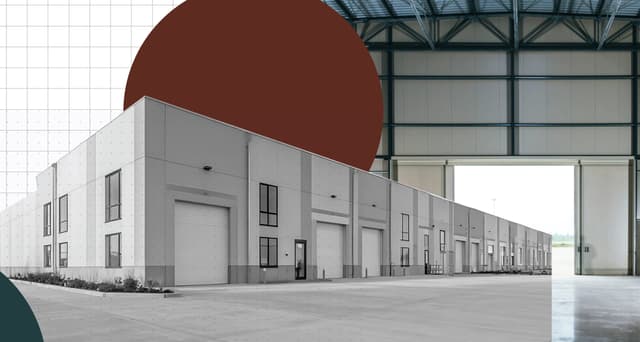
Image of The Rise of Small-Bay Industrial Success Story

The Rise of Small-Bay Industrial

The industrial sector has seen a significant change following the post-pandemic surge, which resulted in an oversupply of large-scale distribution centers that are 200,000 square feet or greater. Developers responded to the e-commerce boom and low interest rates, and added a record-breaking 1.8 billion square feet of industrial supply across the U.S. since 2020. The new additions outpaced demand as the pandemic slowed down, which led to climbing vacancy rates in the big-box segment.     As the market struggled to absorb this massive influx of large product, developers and investors shifted their focus on small- to mid-sized industrial properties, specifically those ranging from 5,000 to 50,000 square feet. This smaller-scale, or “small-bay,” product remains incredibly tight, with a national vacancy rate near historical lows around 3% to 4%, demonstrating its resilience and importance to last-mile logistics, small businesses, and trade-focused users. The shift highlights a key trend in the evolving industrial sector. While large warehouse development slows, with a vacancy rate around 6%, the demand for smaller, flexible facilities is driving a building boom that reflects the diversity of activity across industrial.   National Small-Bay Trends A variety of tenants are seeking properties between 5,000 to 50,000 square feet. The demand represents a move away from traditional heavy manufacturing toward specialized, knowledge-based services and high-tech operators. This user base includes local trade businesses—such as plumbers, electricians, and HVAC contractors—and small distributors focused on last-mile logistics who seek infill locations closer to their residential customer base.     Additionally, these small- to mid-sized spaces are essential for the growth of modern tech firms. Startups in robotics, drone technology, and specialized R&D require flexible, functional space for prototyping, light assembly, and system testing without the massive footprint of a traditional factory. This newer user base often prefers shorter lease terms than the 10- to 15-year commitments of large distribution centers, allowing for the agility to scale operations quickly with buildouts as their technology matures.     Across the country, the Sunbelt states, as well as markets with high population growth and limited supply, are experiencing the most acute demand and lowest availability. While urban centers like Los Angeles and New York’s outer boroughs remain tight, high-growth metros across the country, including Phoenix’s East Valley, Houston, Atlanta, and Central Florida, are seeing particularly low vacancy rates for this product type. The national availability for industrial spaces under 50,000 square feet is very tight at roughly 3.4%, which is well below big-box levels.   Competition and Constrained Supply The structural scarcity and increased demand for industrial spaces under 50,000 square feet are hindered by construction costs. While overall industrial construction prices have stabilized from their pandemic peaks, the cost per square foot for smaller, multi-tenant industrial projects is higher than for large big-box distribution centers. Small industrial properties recorded an average sales price of $142 per square foot, increasing by 17% over the previous year. In contrast, large industrial projects averaged around $75 per square foot, a lower level that dropped by 4.2% in one year.     This disparity is driven by factors like more extensive site work, complex utility infrastructure, a greater number of individual tenant build-outs, and increased costs for specialized labor. The expense of small-bay construction, coupled with high land costs in infill locations, creates significant barriers to entry for developers, limiting new supply and pushing a variety of highly-qualified tenants into further competition for the existing, limited inventory.   San Francisco: Top Metro for Smaller Footprints The San Francisco Bay Area is a prime example of the high demand and scarcity driving the small-bay industrial market’s outperformance. The Bay Area is a prominent metro for its land limitations and consistent demand from high-value, specialized companies. These factors create an environment where the price per square foot and rental rates for the sub-50,000-square-foot segment have demonstrated greater stability and often faster growth than large-scale facilities, which have seen more volatility due to oversupply in other national markets. The essential need for local logistics, high-tech R&D support, and vital trade services means tenants are willing to pay a premium to secure space close to the metro’s talent and consumer base.     Next-generation tenants are increasingly fueling this demand. While traditional logistics remain active, the region has seen an influx of AI and robotics firms securing smaller footprints for computer power and flex lab setups, often displacing traditional tenants. One example is the metro’s Peninsula submarket. Here, land is the most limited because it is home to several R&D, life sciences, and specialized tech operators, and the area often outpaces Silicon Valley in conversion activity. These users require older industrial stock that can be repurposed to meet high electrical power and specialized utility needs.     Meanwhile, the Oakland/East Bay submarket provides a lower-cost option. Fueled by activity at the Port of Oakland and last-mile distribution requirements, small-bay facilities here are essential for fabrication, local logistics, and distribution that serve other locations across the metro. Further south, San Jose/Silicon Valley is seeing increased demand driven by advanced R&D and manufacturing support services, with data center growth also adding to these expansions. While new additions here are consuming significant industrial land for large, power-intensive facilities, the demand also creates a large domain of support and technical services that rely on flexible, smaller industrial spaces.   Price per SF Rises Since Pandemic Metrowide, But Has Since Stabilized *up to 50,000 SF | Source: CoStar Group, Inc.   A Foundation for the Future Economy The small-bay segment demonstrates the essential, high demand backbone of modern industrial. Unlike the large-format sector, which grappled with post-pandemic oversupply, the small-bay market is characterized by essential demand outpacing scarce supply. With a variety of tenants, from specialized R&D firms and high-tech startups to local contractors and last-mile logistics providers, their operations require proximity to urban centers.   While new, Class A small-bay facilities command premium rents, the competition is increasingly driving smaller businesses to seek more affordable Class B and C industrial properties. This flight to quality underscores a core structural issue—the limited supply of small-bay facilities.   Developers are beginning to explore solutions, like multi-story industrial construction in land-constrained urban markets. While this model is effective for maximizing floor space on a small footprint, its high construction cost means it can only deliver high-end, Class A product, which does not meet demand. The gap between this new, high-cost supply and the consistent need for affordable flex and Class B/C space suggests that the small-bay segment will remain the most increasingly sought-after industrial asset for the foreseeable future.

Image of Belall Ahmed Author

Belall Ahmed

Senior Associate

Image of Sippin’ on California’s Coffee Market Success Story

Sippin’ on California’s Coffee Market

Coffee shops have emerged as a “third place,” neither home nor work, where customers have the option to grab a drink, or use the location to relax, work, and enjoy their free time.   Recent National Coffee Association data shows that in 2025, 66% of American adults drink coffee daily, and consume an average of three cups per day. Specialty coffee consumption has reached a 14-year high, with 46% of American adults having specialty coffee in the past day, surpassing traditional coffee consumption.   As demand for premium coffee experiences intensified, national and regional operators are finding room to thrive, even in saturated markets already dominated by major chains, like California. Coffee tenants continue to expand rapidly across the state, with Southern California noting increased developments from coffee retailers. These tenants are actively seeking spaces that range from 1,000 to 4,000 square feet, attracting national brands and local operators. For shopping center landlords, securing a quality coffee tenant can increase traffic and enhance the value of their center. Demographics and location are top priorities for coffee tenants with signalized intersections, strong car counts, and pedestrian inflows being factors that improve a coffee shop’s success. Outparcels or pads remain highly desirable, offering convenience and visibility. Drive-thru locations, end caps, and even select inline spaces are increasingly in demand as operators look to capture center traffic and attract more consumers.   While shopping pads and drive-thru locations are favorable, mixed-use spaces also prove beneficial for coffee shops. The ground-floor component creates vibrant street-level activity, and the mix with office and/or multifamily guarantees demand. For coffee shop operators, securing space within a mixed-use property allows for access to residents, office workers, and everyday consumers, guaranteeing built-in customers and traffic upon opening.   National Coffee Shop Monthly Visits Source: Placer.AI, January 2019-October 2025   National Tenant Movement in SoCal Footprint sizes for coffee shops across the region vary widely depending on format. Small kiosk/drive-thru concepts note locations under 1,000 square feet, while freestanding locations can reach up to 4,000 square feet.   Starbucks, in particular, leads national coffee tenants with the most locations in California. The coffee giant has a strong focus on Southern California, with 155 locations in Los Angeles, 131 stores in San Diego, and over 100 across Orange County. In order to maintain its positive performance in the region, Starbucks has begun new initiatives across its stores, including renovating locations to align with the Back to Starbucks plan. CEO Brian Niccol launched the initiative in September 2024 to bring more customers back to stores across the country. New features of the plan include lounge seating, warmer lighting, and reintroducing ceramic mugs for in-store orders. The goal of this plan is to create a community feel within their locations. A new site with these features has already opened in Los Angeles at the intersection of Sunset and Palisades Village.   Dutch Bros has become one of the fastest-growing national coffee chains across Southern California. The tenant first began operations in 2022 when it opened a location in San Diego County. Since then, it has spread to cities like Barstow, Apple Valley, Victorville, Baldwin Park, and Palmdale. Dutch Bros is planning its move in the Los Angeles metro, with a store under construction near the University of Southern California campus. The location will be similar to its other stores featuring a walk-up window, and it is expected for completion by year-end 2025. Other new sites for Dutch Bros across Southern California include Carson and Temecula, with both shops already approved for construction.   Starbucks Dominates National Tenants Across California Source: Placer.AI   A Cup of Local Brew Regional coffee shops attract consumers seeking high-quality products, with goods like specialty beverages or artisan-roasted beans. Younger consumers, like Gen Z, often drive visits as they are willing to pay more for premium, trending goods. These locations offer a unique setting that reflects the local population, attracting consumers that seek an authentic and community-focused experience. While national operators offer a convenient visit, regional operators create competition by prioritizing quality, community, and exclusive experiences.   California is home to the greatest number of coffee shops across the country, with local tenants playing a significant role in the state’s coffee performance. Regional coffee tenants most often lease 800- to 1,500-square-foot spaces with in-line or end-cap formats, as seen with regional operator Better Buzz. The coffee chain, which started as a coffee cart in San Diego, has become a staple in Southern California. Most of its locations are found in San Diego and Orange County, reaching as north as Fullerton. Upon its success in Southern California, the company has also expanded to Nevada and Arizona, with its first out-of-state store located in Phoenix. Better Buzz has around 40 locations across the three states, and it plans to double its size in the next few years.   Regional tenants that feature Vietnamese coffee are also aiding coffee shop activity. The nation’s coffee began to grow internationally in the 1990s when it became one of the world’s largest coffee producers. Since then, it has maintained its popularity for creating a unique coffee culture for consumers in the Southern California market. Trung Nguyen Legend Café, originally from Vietnam, began U.S. operations in 2023 with its Westminster location. The company is still growing across Southern California, with Matthews™ recently securing a 2,700-square-foot space for them in Huntington Beach. The coffee shop sought this location because of the end cap, visibility, patio and large seating area, as well as the community impact.   Blk Dot Coffee has also expanded the presence of Vietnamese coffee in Southern California. The company is a family-run business with a focus on providing traditional Vietnamese coffee, as well as some food items. Its first location opened at the Orange County Google offices in 2015, and has had a strong presence across the county ever since. Locations range from areas like Irvine, Newport Coast, Fountain Valley, and Long Beach, with many of its stores placed in shopping centers to take advantage of high foot traffic levels. Tierra Mia Coffee opened its first location in 2008, and has since expanded its reach to both Los Angeles and Orange counties. Known for roasting its coffee and baking their pastries in store, as well as serving Latin specialty drinks and unique latte art, the company has now grown to 20 stores.   Roasting Robust Results The national coffee market is projected for continued growth as consumers seek coffee shops for a third place experience. The U.S. coffee market size was estimated at $47.8 billion in 2024, and is forecast to grow at a CAGR of 9.5% to 2030. By providing free Wi-Fi, coffee shops continue to attract work-from-home employees, as well as create an environment for other consumers to relax and socialize.   Further growth across the sector will be aided by consumers seeking more unique flavors and high-quality products. This movement is advantageous for local operators as they can adjust menus to provide enticing options not found at national brands. To stay competitive, national tenants are prioritizing loyalty programs and drive- thru convenience, while local tenants leverage community connection and handcrafted goods to maintain performance levels.

Image of Matthew Sundberg Author

Matthew Sundberg

Vice President & Associate Director

Image of Inland South Bay, CA Multifamily Market Report 2025 Success Story

Inland South Bay, CA Multifamily Market Report 2025

The Inland South Bay, Gardena, Hawthorne, Lawndale, and Inglewood, continues to demonstrate resilient rental demand despite broader market volatility. These submarkets collectively contain over 3,000 multifamily properties with five or more units, making them one of the most active workforce housing corridors in Los Angeles County.   Our latest report analyzes recent transaction data, investor behavior, and emerging risks and opportunities shaping the South Bay multifamily market.   Key Trends Shaping the South Bay Multifamily Market Return of Private Capital Institutional capital has largely retrenched, while high-net-worth investors and family offices have re-emerged as the dominant buyer group in the South Bay multifamily market.   The 2026 Loan Maturity Wave A significant volume of loans originated during the 2020–2021 low-rate cycle will mature in 2026, creating important refinance and disposition decisions for owners.   Regulatory & Compliance Changes New regulations affecting rent increases, inspections, and operational requirements will continue to influence ownership strategies in the coming years.   Why This Matters for South Bay Owners Recent market shifts are creating new strategic considerations for multifamily owners, including: Refinance vs. disposition decisions Changing cap rate expectations Evolving buyer demand Long-term operational strategies Strategic Questions South Bay Owners Are Evaluating in 2026 As the market transitions into the next phase of the cycle, many multifamily owners in the Inland South Bay are evaluating several key strategic questions: Should I refinance or consider selling ahead of the 2026 loan maturity wave? How have rising cap rates impacted the current value of my property? Is there an opportunity to reposition equity through a 1031 exchange? How will new regulatory requirements impact long-term operating strategy? Understanding how your property compares to current market benchmarks can provide valuable clarity when evaluating these decisions.  

Image of Christopher Burcin Author

Christopher Burcin

Associate

Image of San Diego, CA Retail Development Report Q4 2025 Success Story

San Diego, CA Retail Development Report Q4 2025

The current leasing landscape across San Diego has become increasingly fragmented, characterized by intense competition for high-quality spaces even as older, mid-sized assets in legacy centers face persistent challenges. While big-box closures have pushed absorption into negative territory, vacancy rates have only edged slightly higher and remain historically stable, keeping overall market conditions near long-term averages. Meanwhile, rent growth has begun to moderate in response to rising availability; however, the combination of limited new construction and the ongoing trend of retail-to-residential redevelopment is effectively preventing a more pronounced softening of the market.   San Diego Market Demographics Source: CoStar Group, Inc. Unemployment Rate: 4.7% Current Population: 3,314,677 Households: 1,195,666 Median Household Income: $113,294   San Diego Market Performance The San Diego retail sector ended 2025 with softening fundamentals as store closures outpaced absorption over the year. Vacancy rose to 4.5%, up 50 basis points year-over-year. The vacancy uptick has been concentrated in older power centers, neighborhood centers, and malls where closures have added to available inventory. Strip centers and general retail properties have remained stable, aided by smaller tenants and local demand. Despite the challenges, overall vacancy remains close to the long-term market average of 4.4%. Rent growth has moderated to 1.0% annually as landlords adjust to a more competitive leasing environment. Looking ahead, stable consumer demand and constrained supply are expected to support the backfilling of vacant space, keeping fundamentals within a balanced range through the near term.   La Jolla Market Activity The overall La Jolla area posted stable performance with vacancy at 4.0% at the end of Q4 2025, a small uptick following around 2,000 square feet absorbed. Vacancy remains below its five- and 10-year averages, and is forecast to hold steady through 2026. Availability is similarly tight at 4.8%, with roughly 100,000 square feet on the market and no space under construction. Asking rents average $58 per square foot, reflecting 2.1% annual growth, outperforming the broader San Diego market despite moderating from historical trends.   Development Overview La Jolla began 2026 with 10 more retail vacancies than Pacific Beach and Ocean Beach combined. Village Streetscape, a new development, will bring La Jolla landlords more leverage in achieving competitive price per square foot rates and encourage more foot traffic to support local businesses.   Pacific Beach Market Activity Pacific Beach retail maintains stable fundamentals , with vacancy declining 1.8% year-over-year to a tight 2.5%, driven by 55,000 square feet of net absorption and minimal new deliveries. Vacancy now sits well below its five- and 10-year averages and is projected to compress further by year-end. Availability remains limited at 3.0%, with 94,000 SF on the market and no space under construction. Asking rents average $41.00 per square foot, reflecting modest 0.6% annual growth, trailing the broader San Diego market but expected to accelerate through 2026.   Development Overview 4450 Lamont Street: 14-unit, mixed-use development planned and approved. Rose Creek Village: 60-unit affordable housing project serving low-income families and veterans. It broke ground on Garnet Avenue and is expected for completion by 2027. Pacific Beach owners have stated they are increasingly interested in adding residential components to existing retail properties.   Ocean Beach Market Activity The Ocean Beach area maintained solid momentum, with vacancy declining 0.8% year-over-year to 2.7%, supported by 40,000 square feet of net absorption and limited new deliveries. Vacancy remains below its five- and 10-year averages and is expected to hold near current levels through year-end. Availability stands at 3.7%, with 170,000 square feet on the market, while construction activity is minimal at 2,900 square feet. Asking rents average $38.00 per square foot, reflecting 1.0% annual growth, slightly trailing the broader San Diego market but remaining positive overall.   Development Overview Matthews™ secured two leases in the last six months here and leased an additional 3,000-square-foot space on the second floor of 4967 Newport Avenue. Strong privately-owned businesses and popups are taking advantage of lower rents and a more stable local customer base, shifting into the area from northern markets.   Transaction Activity La Jolla Matthews™ facilitated a purchase of a property on Girard Avenue for $2.2 million and are taking on the leasing assignment. Matthews™ also put Free People on the main intersection of Girard Avenue and Prospect Street. The Matthews™ team also sold the corner of Pearl Street for $2.6 million and executed a lease with Roam Hardware.   Pacific Beach 960 Turquoise Street: The Turquoise Tower developer out of Los Angeles recently acquired the French Gourmet site for $7 million. While there are no formal plans, filings, or construction underway, market assumptions have contemplated a significantly larger project that is potentially up to three times the existing footprint. This reflects longer-term investor interest along the corridor. The Matthews™ team executed 18 Pacific Beach leases in 2025. However, summer 2025 saw more vacancies in Pacific Beach than it had in over a decade. 61% of on-market retail from summer 2025 was absorbed by Q1 2026. Tavern on the Beach Bar sold for $4.4 million, and the parking lot next to Maverick’s at 870 Garnet Avenue sold for $4.35 million.   Ocean Beach Rite Aid on Niagara Avenue sold for $12.6 million, signaling that demand remains strong. Despite having one of the lowest vacancy rates in San Diego, business owners along Newport Avenue are reporting sales are down 60% from previous years.

Image of Amara Bagabo Author

Amara Bagabo

Associate

Image of Los Angeles Strengthens Eviction Protections and Habitability Standards Heading Into 2026 Success Story

Los Angeles Strengthens Eviction Protections and Habitability Standards Heading Into 2026

Los Angeles has enacted a new round of housing legislation that meaningfully changes how rental properties are owned, operated, and underwritten. As of early 2026, updated eviction rules and habitability standards have expanded tenant protections, extended enforcement timelines, and shifted additional capital and operational responsibility onto housing providers.   Together, these changes affect when evictions can occur, how much unpaid rent is required before legal action is permitted, and what constitutes a legally “habitable” unit.   Just-Cause Evictions Apply Broadly Across the Market One of the most consequential changes is the near-universal application of just-cause eviction requirements. Nearly all residential rental units in Los Angeles, including single-family homes and condominiums, are now subject to just-cause protections once a tenant has occupied a unit for six months.   While at-fault evictions, such as nonpayment of rent or lease violations, remain permissible, no-fault terminations have become significantly more restrictive. Owner move-ins or major renovations now trigger mandatory relocation payments that can exceed $20,000 for long-term or vulnerable tenants. In practice, this has removed much of the flexibility owners once had to recover units without incurring meaningful cost.   Higher Bar for Nonpayment Evictions In February 2026, the Los Angeles County Board of Supervisors voted to raise the nonpayment eviction threshold in unincorporated areas to two months of Fair Market Rent. While the City of Los Angeles continues to maintain a one-month FMR threshold, the county’s move reflects a broader policy trend toward delaying enforcement and increasing tenant protections.   For operators, this change can allow arrears to grow substantially before an eviction filing is even permitted. In higher-rent units, that delay can translate into several thousand dollars in unpaid rent, increasing short-term cash flow exposure and placing more pressure on reserves and rent collection discipline.   Right to Counsel and New Habitability Requirements The Right to Counsel for income-qualified tenants is now fully in effect. Tenants earning at or below 80 percent of Area Median Income are entitled to legal representation in eviction proceedings. Landlords are also required to include a formal Notice of Right to Counsel, provided in the tenant’s primary language, with any eviction notice. Failure to comply can result in immediate dismissal of a case.   Separately, state law has expanded habitability standards as of January 1, 2026. Landlords are now required to provide and maintain a working stove and refrigerator in most residential units. This change eliminates the long-standing no-appliance rental model common in Southern California and introduces new maintenance obligations, as well as additional exposure to repair-and-deduct claims.   Implications for Owners, Investors, and Underwriting The combined effect of these measures is a rental environment where evictions are slower, more technical, and more expensive. Regulatory risk is no longer a background consideration in Los Angeles; it is now central to asset performance.   Several operational realities are becoming increasingly important in 2026: Rent caps remain constrained: As of February 2, 2026, the city implemented a new RSO rent increase formula that caps annual increases at 1% to 4% and removes the utility passthrough previously available to landlords. Eviction timelines are longer: With legal representation now common, unlawful detainer actions that once resolved in roughly two months can extend six to nine months if contested. Maintenance issues carry greater legal weight: Under expanded habitability standards, something as routine as a non-functioning refrigerator can pause enforcement and derail an eviction case.   Looking Ahead Los Angeles has firmly moved away from a light-regulation model. For housing providers, preserving value now depends on disciplined operations, thorough documentation, and underwriting assumptions that reflect longer timelines, higher compliance costs, and tighter revenue ceilings.   In this environment, local regulatory knowledge and operational execution are no longer differentiators, they are requirements.

Image of Changes to the Los Angeles Mansion Tax and Measure ULA Success Story

Changes to the Los Angeles Mansion Tax and Measure ULA

Changes to the Los Angeles Mansion Tax and Measure ULA Los Angeles’ famed “Mansion Tax” was a misnomer from the beginning. The city’s property transfer tax, officially known as the ULA Tax, was introduced as part of Measure ULA to fund affordable housing programs and provide resources to tenants at risk of homelessness. But what most voters failed to recognize in November 2022, when Measure ULA was billed as a tax on luxury home sales, is that its provisions apply broadly to residential and commercial properties above a certain value threshold. The so-called Mansion Tax was never just about mansions.   Updated ULA Tax Thresholds Following its first year in effect, the ULA Tax adjusted its thresholds to account for inflation. As of mid-2024, transactions above approximately $5.3 million are subject to a 4% transfer tax, while transactions above $10.6 million are assessed a 5% tax. These updated thresholds represent modest increases from the original $5 million and $10 million benchmarks, but continue to capture a wide swath of commercial and multifamily transactions across Los Angeles.   One Year Later: Revenue vs. Market Impact While Measure ULA was originally projected to generate between $672 million and $1 billion annually, early collections fell well short of expectations. Initial reports showed revenue lagging significantly during its first year, coinciding with a sharp slowdown in transaction volume as owners accelerated sales ahead of implementation and buyers adjusted underwriting assumptions post-launch.   More recent data paints a mixed picture. According to LA Business First, Measure ULA has now generated approximately $1 billion across more than 1,400 transactions since taking effect. Supporters argue the tax has become a meaningful funding source for housing initiatives, calling it an “economic engine” for the city.   However, opponents continue to point to structural distortions in the market. Research cited by CalMatters from UCLA and the RAND Institute estimates the policy has resulted in 1,900 fewer apartment units delivered annually, including a reduction in affordable housing production. A separate study by Harvard, UC Irvine, and UC San Diego researchers found that the slowdown in sales significantly reduced property tax collections, offsetting an estimated 63% of the transfer tax revenue generated by Measure ULA.   New Developments: Amendments May Head to the Ballot In a notable shift, the Los Angeles City Council has voted to advance proposed amendments to Measure ULA for further review by the city’s Housing and Homelessness Committee. The proposal, introduced by Councilmember Nithya Raman, includes a 15-year exemption from the ULA Tax for new commercial, multifamily, and mixed-use construction, tied to the issuance of a certificate of occupancy.   “The proposed 15-year exemption tied to a project’s certificate of occupancy could give developers the certainty needed to move forward on multifamily and mixed-use projects, helping bring much-needed housing supply back online in Los Angeles.” – Adam Feldman   Additional elements of the proposal include a one-time exemption for Palisades fire victims and technical changes intended to accelerate the deployment of collected funds. While an attempt to fast-track the amendments to a near-term ballot failed, the stated goal is to place the revised measure before voters in November 2026.   Industry groups, including NAIOP SoCal, have noted that a development-focused exemption could materially reduce ULA exposure on qualifying projects, restore financing certainty, and unlock reinvestment that has stalled under the current structure.   Current Listings Exposure Under Measure ULA Despite ongoing debate around amendments, Measure ULA continues to affect a significant share of active inventory across Los Angeles. According to CoStar, at the start of 2026, more than 1,000 active listings fall within or near the current ULA tax thresholds, underscoring the policy’s broad reach across commercial and residential assets: $5,000,000–$5,150,000 value: 53 properties $10,000,000–$10,300,000 value: 31 properties $5,150,000–$10,300,000 value: 800 properties $10,300,000+ value: 492 properties   Outlook for the Mansion Tax Compared to the pre-implementation rush to sell in 2023, today’s environment is defined by hesitation. Owners and buyers remain cautious, particularly when transaction values fall near ULA thresholds. While proposed amendments signal growing acknowledgment of the tax’s unintended consequences, uncertainty will likely persist until voters weigh in.   Until then, investors should expect continued friction in transaction activity, heightened sensitivity around pricing and timing, and ongoing headwinds for commercial and multifamily development in Los Angeles, even as the policy’s long-term future remains in flux.

Image of Catching the Falling Knife : Why Los Angeles’ 1900–1930s Apartment Buildings Took the Biggest Hit on Value In 2025 Success Story

Catching the Falling Knife : Why Los Angeles’ 1900–1930s Apartment Buildings Took the Biggest Hit on Value In 2025

For decades, Los Angeles’ oldest apartment buildings built in the early twentieth century were viewed as untouchable assets. Properties from the 1900s through the 1930s were prized for their scarcity, central locations, and architectural character. Owners believed these buildings would consistently attract buyers willing to pay near asking price, regardless of broader market conditions.   That assumption no longer holds.   In 2025, the market is no longer treating early vintage multifamily as a protected category. The current correction is not evenly distributed across the market. Instead, value declines have been concentrated most heavily in buildings constructed between 1900 and the 1930s. In this segment, discounts now exceed anything observed during earlier stages of the post-pandemic reset.   This is what it means to catch a falling knife. The Market Reset Since 2021: Establishing the Baseline To understand why 2025 stands out, it is necessary to start with the broader market reset. From the 2021 peak through 2025, Los Angeles multifamily values declined approximately 15 to 20 percent overall. This assessment is based on median sale prices and price-per-unit trends within the same ZIP codes. Because pricing remained elevated into early 2022, that year serves as a reasonable proxy for peak market conditions.   Across the data: Median sale prices declined by roughly 15 percent from peak levels Median sale price per unit declined approximately 12 to 13 percent By 2024 and 2025, properties were consistently closing below list price, shifting leverage toward buyers This initial decline affected nearly all property types. Newer construction, mid-century buildings, and older stock all repriced as higher interest rates, tighter lending standards, and rising operating costs forced buyers to reassess projected returns. However, by 2025 the correction had become more selective. 2025: When the Market Drew a Line on Vintage When 2025 sales are isolated and compared with prior years, a clear divergence appears, particularly among early-vintage buildings.   What the Data Shows: Buildings constructed between 1900 and 1919 are closing at a median discount of approximately 16.5 percent below list price in 2025 In prior years, these properties typically sold at or near asking price Buildings from the 1920s and 1930s close roughly 7 to 8 percent below list, representing a deterioration of more than seven percentage points versus historical norms Post-war assets from the 1940s and 1950s show declines, but at more moderate levels Buildings constructed in the 1980s and 1990s are holding pricing better in 2025 than during the immediate post-2022 reset Properties built in the 2000s and 2020s repriced earlier in the cycle between 2022 and 2024 and have largely stabilized While the broader market remains down roughly 15 to 20 percent from peak levels, early vintage buildings are experiencing additional value erosion beyond that baseline decline. Why Early-Vintage Is Being Singled Out This repricing cannot be explained by interest rates alone. Higher rates affect all assets. The drivers here are structural.   Insurance Constraints Insurance has become a gating issue for many early twentieth century buildings. Properties built before 1930 increasingly face higher premiums, limited coverage options, or an inability to secure insurance from standard carriers. Buyers are incorporating this uncertainty directly into pricing decisions.   Deferred Maintenance and Capital Exposure Issues such as aging electrical systems, obsolete plumbing, seismic risk, and life safety upgrades were once viewed as long-term considerations. In 2025, these risks are being priced at acquisition. Costs that were previously deferred are now reflected immediately in purchase price reductions.   Regulatory Limitations Rent regulation restricts an owner’s ability to offset rising operating expenses, particularly in older buildings that require more ongoing capital investment. As expense growth accelerates and income flexibility narrows, buyers demand wider margins of safety.   A More Analytical Buyer Pool The buyer universe has changed. Investors who once emphasized architectural character and scarcity now focus on risk-adjusted returns. Even smaller transactions are underwritten with stricter assumptions. Architectural appeal no longer offsets operational and capital risk. Why This Is Different from Prior Cycles In the past, early vintage Los Angeles apartments performed well during downturns. They were seen as safe investments because they stayed full, were in good locations, and had steady demand. What’s different now is the transparency of risk. The risks embedded in these buildings, insurance exposure, capital intensity, and regulatory constraints were always present. What has changed is that capital markets now price these risks explicitly and simultaneously. What was once a hidden risk is now front-page underwriting. “Catching the Falling Knife”: What It Really Means The phrase is often misapplied. In this context, it describes a market segment where prices continue to adjust downward as risks are reassessed.   Buyers Who Should Avoid This Segment Under-capitalized investors Yield-only buyers Operators without deep rehabilitation or construction expertise Owners assuming values will revert to 2021 pricing. For these groups, today’s discounts are not opportunities; they are warning signals.   Buyers Who Can Engage Selectively Investors targeting a low basis Long-term hold horizons Proven experience with heavy capital programs Owners with no near-term debt pressure and sufficient reserves Early vintage buildings are no longer hands-off investments. They now require active management and come with real risks. This analysis is meant to describe what’s happening in the market, not to predict the future. Owners with strong finances and a long-term view might benefit from these price changes, but others may not. The Broader Lesson for Los Angeles Multifamily Since 2021, Los Angeles multifamily values have declined meaningfully, roughly 15–20% overall from peak levels. But in 2025, the market is no longer asking whether an asset is multifamily. It is asking: What risks am I inheriting if I buy a 90 to 100-year-old building? For properties constructed between 1900s – 1930s, the answer has changed meaningfully. Final Thought For much of Los Angeles’ history, early twentieth century apartment buildings were viewed as irreplaceable assets. In 2025, the market increasingly treats many of them as liabilities unless proven otherwise. This does not suggest values cannot stabilize. It does not imply that every early-vintage building is unviable. It does mean that blind confidence is no longer rewarded. The knife is still falling. For early-vintage multifamily, success will not come from optimism or precise market timing. It will come from discipline, capitalization, and a clear understanding of the risks being acquired.

Image of Henry Bell Author

Henry Bell

Associate

Image of Glendale, CA Multifamily Market Report 2025 Success Story

Glendale, CA Multifamily Market Report 2025

Glendale’s multifamily market is navigating a period of softer fundamentals, following several years of rising vacancy. The vacancy rate has climbed to 4.6%, driven in part by recent deliveries, including the 2025 completion of TENTEN Glendale, which pushed Class A vacancy to 6.9%. Net absorption was negative at –58 units, reflecting short-term demand friction. Still, Glendale continues to outperform the broader Los Angeles metro, where vacancy averages 5.7%. Rents remain competitive at $2,357 per month, aligning with overall Los Angeles averages. With limited construction underway and a measured development pipeline, elevated vacancy is expected to keep rent growth muted through 2026.   Key Highlights Vacancy Has Risen, but Remains Below Metro Levels: Glendale’s multifamily vacancy rate increased to 4.6% at year-end 2025, nearly double its 2021 low, largely due to recent new deliveries. However, vacancy continues to outperform the broader Los Angeles metro average of 5.7%, reflecting resilient demand. Rent Growth Has Cooled Sharply Amid Higher Vacancy: Average asking rents are approximately $2,357 per month, but annual rent growth has slowed to 0.4%, down from a peak of 6.1% in 2022. Elevated vacancy is expected to keep rent growth subdued through 2026. New Supply Remains Constrained, Supporting Long-Term Stability: Construction activity is modest, with only 108 units under construction. Measured development and a limited active pipeline should help the market rebalance as absorption improves.   Glendale Demographics Source: CoStar Group, Inc. Unemployment Rate: 5.8% Current Population: 193,452 Households: 75,647 Median Household Income: $84K    Rents Across Glendale, rent performance has decreased. The metro recorded year-over-year rent growth of 0.4% at the end of 2025, which is a drop from prior peaks at 6.0%. Rent growth is expected to remain slow throughout 2026, with a recovery forecast for 2027. Glendale is also sought after for its affordable rents, which average around $2,357 per month. Class A properties note a monthly rent of $3,401, Class B at $2,477, and Class C at $1,845.   Market Asking Rent per Unit Source: CoStar Group, Inc.   Vacancy Glendale’s multifamily vacancy has trended upward over the past several years, reaching 4.6% at the end of 2025. This level is below the Los Angeles average of 5.7%. Recent new supply has been a key driver, most notably the delivery of TENTEN Glendale. The new addition pushed vacancy in Class A properties up roughly 500 basis points to 6.9%. In contrast, Class C assets, which comprise about three-quarters of the local inventory, remain comparatively tight at 4.3%. Limited construction should help stabilize vacancy as the market moves toward equilibrium.   Vacancy Rate Source: CoStar Group, Inc.   Construction Multifamily construction in Glendale remains slow, aiding near-term supply pressure. At the end of 2025, just 108 units were under construction, representing roughly 0.3% inventory growth upon completion. Recent development has been measured, with approximately 310 net new units delivered over the past three years. While the pipeline includes notable proposed projects, such as the 294-unit Lucia Park tower, the current level of active construction is modest by the metro’s standards. Glendale’s planning framework continues to attract developer interest, but restrained building activity should support gradual stabilization in vacancy and rents.   Units Under Construction Source: CoStar Group, Inc.   Glendale Sales Activity Glendale’s multifamily sales gained further traction in 2025, building on the recovery that began in the second half of 2024. Sales volume reached $134 million in Q4 2025, underscoring renewed investor confidence. The metro has averaged 53 trades annually over the past five years, including 65 transactions in the past 12 months.   While deals continue to occur, highlighted by Pacific Urban Investors’ $76 million acquisition of the 208-unit Eleve Apartments, most transactions remain concentrated among private buyers at lower price points. This mix of institutional and private capital reflects both depth and liquidity in Glendale’s investment landscape.   Sales Volume & Market Sale Price per Unit Source: CoStar Group, Inc.   By the Numbers Q4 2025 | Source: CoStar Group, Inc. Sales Volume: $134M Cap Rate: 4.9% Price Per Unit: $376K Vacancy Rate: 4.6% Rent Growth: 0.4% Asking Rent Per Unit: $2,357 Units Under Construction: 108 Units Delivered: 51 Units Absorbed: -58  

Image of Johnathan Perez Magana Author

Johnathan Perez Magana

Associate

Image of Faith Meets Housing: How Religious Institutions Are Unlocking the Next Wave of Affordable Development Success Story

Faith Meets Housing: How Religious Institutions Are Unlocking the Next Wave of Affordable Development

Across the United States, churches, synagogues, mosques, and other faith-based organizations (FBOs) own some of the most underused real estate in the country: well-situated land in established communities. Much of this property, such as surface parking lots, surplus land, or aging facilities, was acquired decades ago and no longer meets current congregational or neighborhood needs. Meanwhile, cities face a severe shortage of affordable housing, while developers and investors deal with rising construction costs, land shortages, and lengthy approval processes.   What was once seen as a niche or mission-driven idea is now becoming a credible, scalable way to develop housing. Faith-based land is increasingly being used for affordable and mixed-income housing, blending social impact with solid real estate practices. Policy changes, especially in California, have sped up this trend, making religious institutions key partners in solving the housing crisis. An Untapped and Strategically Located Asset Religious institutions collectively own tens of thousands of acres of land across the country. Many of these sites are near transit, jobs, schools, and services, exactly the features that sustain strong demand for infill multifamily housing. While nearby neighborhoods have become denser over time, the institutional parcels themselves often remain underused, creating rare opportunities in urban markets where supply is limited.   As housing shortages grow more severe, policymakers have started to recognize the special role these properties can play. In California, Senate Bill 4 (SB 4), often called the “Yes In God’s Backyard” law, permits certain affordable housing projects on land owned by religious groups and nonprofit colleges to move forward through a streamlined approval process if specific criteria are met. In Los Angeles, Executive Directive 1 (ED 1) further speeds up eligible 100% affordable housing projects by requiring accelerated review.   Together, these frameworks minimize the need for discretionary approvals and related delays, giving developers and capital partners more certainty about entitlements and timelines. In a market where unpredictability can threaten otherwise feasible projects, this policy clarity acts like an economic incentive. From Mission Alignment to Market Viability For faith-based organizations, housing development often aligns directly with their mission. Many congregations see affordable housing as an extension of their commitment to serve seniors, working families, and residents vulnerable to displacement. At the same time, development can generate long-term financial stability through recurring income, helping sustain worship, social services, and community programs.   For developers and investors, the appeal is mostly structural rather than ideological. Faith-based sites can offer: Access to well-placed infill land at a price suitable for affordable or mixed-income financing. Lowered entitlement risk via ministerial or expedited approval pathways. Potential community goodwill stemming from the institution’s role as a long-standing neighborhood anchor.   When properly organized, these partnerships can significantly enhance project feasibility while maintaining institutional ownership and independence. How the Deals Are Structured Although the land source may be unconventional, transaction structures are generally well-known within the multifamily industry. The most common method is a long-term ground lease, which allows the religious institution to keep ownership of the land while leasing it to a development entity. The developer funds, builds, and manages the project, while the institution receives ground rent, often with scheduled increases and, in some cases, participation features.   In other cases, institutions might contribute land as equity through a joint venture, especially when supported by experienced advisors and clear governance structures. Financing usually depends on established affordable housing tools, including Low-Income Housing Tax Credit (LIHTC) equity, local soft funding, and mission-aligned capital like community development financial institutions (CDFIs) and impact-focused investors.   What differentiates these transactions is less the capital stack itself and more the sourcing channel and partnership dynamics. Institutions that have held land for decades often prioritize long-term stewardship and impact over maximizing near-term sale proceeds, creating opportunities for sustainable development outcomes. Policy Momentum and Capital Response California’s leadership has generated interest beyond its borders. States like New York, Washington, Oregon, and Maryland are exploring or implementing similar laws that offer zoning relief, technical support, or funding options for faith-based housing projects. At the federal level, recent administrations have also shown support for using nontraditional land sources to increase the housing supply.   Capital is starting to follow this policy momentum. Mission-aligned funds, impact investors, and CDFIs are increasingly focusing on faith-based projects as stable, values-driven investments that support ESG and community reinvestment goals. For private developers, partnering with an FBO can boost competitiveness for tax credits and public subsidies while enhancing public perception. Constraints and Execution Risks Despite the promise, faith-based development remains complex. Many organizations lack in-house real estate expertise and might need education and technical support to evaluate proposals and manage risks. Governance processes can involve several approval steps, including boards or congregations, which may extend decision timelines.   Operational coexistence is another key factor, as worship and community activities often continue on-site during and after construction, requiring careful coordination of access, parking, and phasing. Common affordable housing challenges, such as subsidy competition, construction cost fluctuations, and interest-rate sensitivities, also persist. Policy support reduces friction but does not replace disciplined underwriting or realistic scheduling. From One-Off Projects to a Repeatable Channel What is changing is scale and sophistication. More institutions are proactively assessing their property portfolios, more jurisdictions are formalizing approval pathways, and more developers are building repeatable expertise in this area. While faith-based land is unlikely to replace traditional acquisitions, it serves as a growing and credible complement in markets characterized by land scarcity and execution risk.   For developers and investors interested in affordable and mixed-income housing, faith-based partnerships present a unique combination of location quality, policy support, and scalable models. For religious institutions, they offer a way to further mission-driven objectives while ensuring long-term financial stability.   As the housing crisis persists across cities nationwide, faith-based organizations are emerging as unexpected yet influential agents for change, not just through charity, but via strategic, well-planned real estate investments that bolster both communities and investment portfolios.

Image of Henry Bell Author

Henry Bell

Associate

Image of Los Angeles, CA Multifamily Market Report Q4 2025 Success Story

Los Angeles, CA Multifamily Market Report Q4 2025

In Q4 2025, Los Angeles’ multifamily market continued to face pressure from weak demand and elevated supply, pushing vacancy to 5.7%, the highest level since 1Q21, as negative absorption coincided with increased deliveries and 17.6K units under construction. Despite this rise, vacancy remains well below the national average of 8.2%, though Los Angeles trails other major California metros. Rent performance remains muted, with average asking rents of $2.3K per unit and rent growth slightly negative at -0.1%, reflecting constrained pricing power and ongoing concessions.   Performance varies by quality and location, with higher-end properties absorbing demand but posting elevated vacancy, while more affordable submarkets maintain tighter conditions and modest rent growth, underscoring a bifurcated market as supply-side pressures persist.   Key Findings Vacancy elevated on weak demand and supply pressure. Vacancy reached 5.7%, the highest this decade excluding 2020, driven by negative absorption, sharply lower demand, and heavy deliveries, particularly in 4 & 5 Star assets and Downtown LA. New deliveries continue to weigh on performance. Oversupply has limited lease-up, pushed high-end vacancy to 9.9%, and constrained rent growth. Sales totaled $2.0B at $355K/unit and a 5.0% cap rate, while rents averaged $2.3K/unit with -0.1% growth, reflecting flat pricing and increased concessions despite expectations for improved fundamentals as the pipeline tapers.   Los Angeles Multifamily Supply & Demand Dynamics Source: CoStar Group, Inc.    Los Angeles Demographics Source: CoStar Group, Inc. Unemployment Rate: 5.8% Current Population: 9,760,728 Households: 3,479,379 Median Household Income: $95,149   Los Angeles is the nation’s second-largest metropolitan economy, anchored by a diverse mix of industries including entertainment, tourism, international trade, aerospace, and fashion, and supported by a deep pool of creative and entrepreneurial talent. The region benefits from major universities such as USC, UCLA, and Caltech, which help sustain workforce depth, though high living costs and labor disputes continue to pressure economic stability and contribute to outmigration. Tourism remains a major economic driver, generating nearly $35 billion annually and supporting over 500,000 jobs, with long-term growth supported by major infrastructure investments ahead of the 2028 Olympics.   Major Upcoming Events Hosted in LA Source: Discover Los Angeles 2026: FIFA World Cup, NBA All-Star Weekend 2027: Super Bowl LXI 2028: Olympics & Paralympic Games   Population, Labor Force, & Income Growth Source: CoStar Group, Inc.   Los Angeles Multifamily Construction While construction activity remains elevated, there are clear signs of deceleration, following several years of steady development. Despite 17.6K units under construction, both construction starts and the pipeline have trended downward as higher interest rates, rising development costs, anti-density policies, and lengthy permitting timelines constrain new projects. New supply remains heavily concentrated in Class A assets, particularly in Koreatown, Downtown Los Angeles, and Greater Inglewood, which together account for roughly 30% of units under construction. Looking ahead, slowing starts and a forecast decline in deliveries, less than 5,200 units expected in 2026, should ease supply-side pressure and support improving occupancy beginning in mid-2026.   Units Construction Starts Source: CoStar Group, Inc.   Units Under Construction Source: CoStar Group, Inc.   Los Angeles Multifamily Sales Investment activity remained subdued yet stable, with $2.0B in quarterly sales volume, pricing at $355K per unit, and cap rates holding at 5.0%. Transaction volume over the past 12 months totaled $7.9B, reflecting a modest year-over-year decline as soft fundamentals, elevated vacancy, flat rent growth, and the ongoing impact of Measure ULA continue to restrain deal flow. While overall activity remains well below pre-pandemic and 2021–2022 peaks, institutional investors have become more active, accounting for a growing share of transactions and signaling increased interest in repriced assets. Market sentiment suggests pricing has bottomed, with cap rate expansion largely complete; however, a meaningful recovery in values is expected to be gradual, with prior peak pricing levels unlikely to return until 2029 or later.   Los Angeles Multifamily Sales Volume Source: CoStar Group, Inc.   By the Numbers Q4 2025 | Source: CoStar Group, Inc. Sales Volume: $2B Price Per Unit: $355K Cap Rate: 5.0% Vacancy Rate: 5.7% Rent Growth: (0.1%) Asking Rent Per Unit: $2.3K Units Under Construction: 17.6K Units Delivered: 1.7K Units Absorbed: (304)

Image of The Rising Tide of Hotel Delinquency Success Story

The Rising Tide of Hotel Delinquency

While post-pandemic tourism seemed to promise a robust recovery for the hotel industry, 2025 has emerged as the year of significant financial headwinds, with growing loan delinquencies indicating underlying stress. An analysis of hotel delinquency reveals an increase in loan distress driven by broader macroeconomic pressures, shifting consumer behavior, and a complex capital markets environment. These challenges are disproportionately affecting specific hotel sectors and metropolitan areas, creating a nuanced and uncertain outlook for the industry going forward. The overall CMBS delinquency rate rose through mid-2025, driven partly by lodging loan distress. For instance, Trepp data shows the CMBS delinquency rate climbing to 7.03% in April 2025, the highest since January 2021. While the lodging delinquency rate showed volatility, it contributed to the broader upward trend. The overall outlook for lodging performance in 2025 is modest, with projected Revenue Per Available Room (RevPAR) growth under 1%. Industry forecasts suggest a modest recovery beginning in 2026, assuming improved economic conditions, more certain federal policy, and stabilizing inflation.   Economic Drivers of Delinquency High Interest Rate: The prolonged period of elevated interest rates has made refinancing difficult and more expensive for hotel owners, increasing the risk of maturity defaults. Persistently High Inflation: Elevated inflation has increased operating and ownership expenses for hotels faster than revenue growth, squeezing profit margins. Weakened Economic Growth: A projected slowdown in U.S. GDP growth in 2025 dampens overall consumer and business spending, negatively affecting hotel demand. Slowing Consumer Spending: High inflation and macroeconomic fatigue are impacting consumer behavior, with a noticeable decline in travel intent, especially in certain market segments.   How Capital Markets Environment is Impacting Distress Tightened Lending Standards: Banks and other lenders have become more selective and conservative in underwriting new hotel loans, tightening coverage requirements and reducing leverage. Bank Pullback: Regional and mid-tier banks, a vital source of financing for many hotel owners, have significantly pulled back from commercial real estate lending. Increased Maturity Defaults: The combination of higher interest rates and tight lending has led to an increase in loan maturity defaults, forcing borrowers to seek extensions or face special servicing.   Sector-Specific Distress Facing the most acute wave of refinancing stress since the Global Financial Crisis, the data for Q4 2025 reveals a nationwide swell of loans reaching maturity between late 2025 and early 2026, with an alarming concentration of full-service hotel assets on watchlists or already transferred to special servicers. According to data, roughly 40-45% of full-service loans are flagged as “potentially troubled”, “troubled,” or “transferred to special servicer.” The distress is particularly concentrated in gateway and convention-heavy markets such as: New York City San Francisco Los Angeles Atlanta Miami Boston These are properties that were historically resilient due to strong business and international travel demand but are now struggling under the weight of variable-rate debt, declining RevPAR recovery trajectories, and inflated expense structures (labor, insurance, property tax). Meanwhile, limited-service hotels — though not immune — show greater stability, with distress levels closer to 15–20%, mostly among older assets in secondary or tertiary markets.   Sector Breakdown Economy and Extended-Stay Segments: Recent trends show rising strain in the economy and extended-stay categories, particularly concerning the latter. While initially resilient during the pandemic, extended-stay delinquency rates surged in 2024 and 2025, possibly due to oversupply in some areas and macroeconomic pressure on budget-conscious consumers. Full-Service Properties: This segment has seen a slower recovery than limited-service hotels as, as of July 2025, remains well above pre-pandemic delinquency levels. Their reliance on business, group, and international travel makes them vulnerable to shifts in these demand channels. Luxury and Upscale Segments: These properties generally fare better, as high-income travelers have maintained their spending, allowing these hotels to maintain stronger performance. However, not all luxury and upscale hotels have scrapped by. Some high-profiles assets have been flagged as distressed, with nearly 60% having variable-rate loans, often structured as fully interest only, these include: The Ritz-Carlton Kapalua Embassy Suites Denver Downtown Ritz-Carlton San Francisco Renaissance Atlanta Midtown Marriott Charlotte City Center The floating-rate structure has compounded stress as benchmark rates surged, doubling interest costs in under 24 months. The Maturity Wall Effect The data shows over 70% of loans maturing in Q4 2025, corresponding with refinancing vintages from 2015 and 2020. These loans originated during eras of either: historically low interest rates (2015–2020), or COVID-era forbearance extensions. As these mature into a 2025 environment with rates 300–400 bps higher, debt service coverage ratios are collapsing — especially for hotels with variable-rate or interest-only structures.                                                                 Geographic Concentration of Risk Oversupply and Market-Specific Factors: Banks and other lenders have become more selective and conservative in underwriting new hotel loans, tightening coverage requirements and reducing leverage. Reliance on Specific Travel Types: Metro areas heavily dependent on business or international travel may experience heightened risk, while leisure-driven or drive-to markets may be more insulated. For example, a decline in inbound international travel impacted major U.S. markets in 2025. Political or Economic Events: Localized events, such as the deployment of National Guard troops or FEMA have also been noted as affecting hotel performance and occupancy.   West Distress Concentrated Maturity Risk: Nearly half the regional hotel debt will mature by 2027, the peak point of refinancing risk due to higher interest rates and slower RevPAR recovery. Limited-Service Weakness: While full-service hotels capture headlines, the distress here is deeply structural and operational, concentrated among smaller franchised assets in suburban markets that lack pricing power and have absorbed operating cost inflation. California’s Market Divide: Northern California’s tech-linked metros (San Jose, East Bay, Sacramento) show more stress than Southern California, where leisure demand remains resilient. Institutional Fallout ahead: Given the clustering around major flagged portfolios (Larkspur and Marriott-affiliated loans), expect loan sales, recapitalizations, or CMBS transfers through 2026-2027.                                                                                                            Southwest Distress Texas: The Epicenter of Refinancing Risk: With over 70% of Southwest exposure, Texas is the region’s stress point—especially Dallas, Houston, and Austin, where high concentrations of CMBS debt originated during the 2016-2018 boom now approach maturity. Limited-Service Saturation and Margins: The distress curve is driven by margin compression rather than occupancy collapse. Labor and insurance costs are eroding NOI for franchised, limited-service hotels. Maturity Wall Alignment with National Pattern: The Juen 2027 concentration mirrors the West’s pattern, signaling that across both regions, the 2027-2029 refinancing window will likely trigger a broader restructuring cycle. Brand-Level Vulnerability: Brands like Travelodge, Hampton, and Holiday Inn Express dominate distress counts, signaling systemic exposure for select-service operations tied to midscale demand                                                                                                                                                                                                                        Northeast Distress Urban/Suburban-Weighted: Northeast distress is anchored by legacy business travel metros and secondary cities with aging hotel infrastructure. Structural Loan Risk—Mezzanine Exposure: At 22% mezzanine loans, the region shows one of the highest mezz debt shares of all regions, a key indicator of capital stack complexity and limited refinance flexibility. Cross-Brand Refinancing Risk: Even upper-midscale brands (Residence Inn, Courtyard, Hilton Garden Inn) are facing refinancing pressure. This suggests the issue is macro-financial (interest rate and NOI compression) rather than localized underperformance. Maturity Wall Alignment with National Trend: The June 2027 spike aligns with the cross-regional pattern, confirming that most of the U.S. hospitality sector will hit a refinancing wall in mid-2027.                                                                       Midwest Distress Twin Maturity Cliffs: The Midwest will face two separate stress waves—a 2027 maturity surge driven by 2017 loan vintages, and a 2029 wave tied to later-cycle CMBS issuance. This will extend refinancing risk deeper into the decade. Limited-Service Saturation and Margin Pressure: High exposure to limited-service hotels (89%) creates systemic vulnerability. Persistent operating cost inflation (labor, utilities, insurance) continues to erode debt coverage, especially for older franchised assets. Diffuse Distress, Localized Pain: The Midwest’s pattern is broad and diffused, reflecting a slower bleed rather than a single collapse. Tertiary metros in Ohio and Kansas will face the most acute refinancing hurdles due to limited lender appetite. Economy and Extended-Stay Weakness: Both extremes of the market—low-end economy chains and older extended-stay brands—are struggling. This reflects a bifurcated recovery, limited ADR growth for economy properties and prolonged business travel softness for long-stay assets                                                                                                                                                                                                                                                       Southeast Distress Early Maturity Wall: The Southeast faces an earlier maturity surge in mid-2026, setting it up as the first regional test case for hotel refinancing outcomes. Florida, Georgia, and the Carolinas will likely see repricing events in early 2026 as institutional owners seek discounted refinances or sell debt at par losses. Diverse Market Exposure, Concentrated Risk: Distress is concentrated in Sunbelt metros (Atlanta, Charlotte, Raleigh, Nashville, and New Orleans). Many high-growth markets that overbuilt between 2015-2019. Furthermore, the highest exposure sits in suburban corridors and interstate-linked nodes (outside primary business districts) leaving them more exposure to cap rate expansion. Brand-level Stress Across Chain Scales: Distress extends from budget (WoodSpring, La Quinta) to upscale (Embassy Suites, Courtyard) — revealing that rate pressure and higher debt costs are sector-wide issues, not confined to lower-tier operators. Refinancing Complexity Rising: The 14% mezzanine share signals layered capital stacks, making workouts more complex. Many mezz positions likely originated during the 2020–2021 recovery wave, meaning borrowers now face constrained equity and debt yields.                                                                                                            Outlook The overlap between maturity walls and rate resets implies distress will intensify into Q4 2025–Q1 2026. For many borrowers, refinance proceeds won’t cover existing debt balances, forcing capital calls, equity dilution, or hand-backs to lenders. As hotel owners navigate this environment, they will seek loan extensions, focus on operational efficiencies, and in some cases, target value-add properties that can be repositioned. Vulnerability to Continued Distress Consumer Credit Stress: Growing credit card delinquency rates, particularly among lower-income consumers, pose an ongoing risk to the economy hotel segment. Rising Expenses: Inflationary pressures and a tightening labor market continue to increase operating costs, eating into profit margins and pressuring hoteliers. Capital Expenditures (CapEx) Challenges: With thinner margins, some limited-service properties may defer necessary maintenance and renovations, leading to asset quality deterioration and longer-term risks. The increasing hotel delinquency market is a complex issue driven by high interest rates, inflation, and shifting consumer behavior. The impact is not uniform, with economy and extended-stay properties showing rising distress, while luxury segments remain relatively stable. The ability of individual markets to recover depends on local demand drivers and overall economic health. The delinquency trend highlights the broader stress in the commercial real estate market and is susceptibility to macroeconomic shocks. It underscores the importance of resilient capital structures and agile management strategies. The coming years will test the resilience of many hotel owners as they navigating refinancing hurdles and a more cautious consumer climate.

Image of Mabelle Perez Author

Mabelle Perez

Vice President

Image of North Hollywood Multifamily Sales Comparison Success Story

North Hollywood Multifamily Sales Comparison

This report compares North Hollywood apartment sales for Rent-Stabilized (RSO) and AB 1482-regulated properties, highlighting year-over-year changes and key market trends through 2025 year-to-date. RSO vs. AB 1482 Overview In Los Angeles, multifamily assets generally fall under one of two rent control frameworks: Rent Stabilization Ordinance (RSO) and AB 1482, also known as the California Tenant Protection Act of 2019. RSO applies to properties built before October 1, 1978 and imposes stricter rent increase limits, along with enhanced tenant protections. AB 1482, by contrast, governs newer properties, typically those built after 1980, and allows modest annual rent increases tied to inflation, subject to statewide caps. Understanding how each regulatory environment influences pricing, yields, and investor demand is essential when evaluating market performance.   RSO properties have held relatively stable year-over-year, but expansion in cap rates suggests investors are increasingly cautious about operational drag and regulatory restrictions.   AB 1482 assets, which historically commanded a sizable premium, saw the most recalibration in 2025—price compression and cap rate expansion reflect the new reality that buyers need immediate yield to justify acquisition.   North Hollywood multifamily sales across both RSO and AB 1482 properties show a consistent theme through 2025 YTD: cap rates are rising, GRMs are compressing, and buyers are valuing stabilized cash flow over longer-term rent appreciation. While the submarket continues to command a premium relative to Van Nuys, elevated expenses and limited rent upside (especially for RSO assets) are keeping valuations in check.   Overall, North Hollywood remains one of the stronger rental markets in the Valley, but the pricing reset is real, and 2025 trades demonstrate that buyers are disciplined, selective, and underwriting with more conservative assumptions.

Image of Daniel Withers Author

Daniel Withers

Executive Vice President & Senior Director

Image of Mid-Wilshire, CA Multifamily Market Report Q3 2025 Success Story

Mid-Wilshire, CA Multifamily Market Report Q3 2025

Mid-Wilshire’s multifamily market is stabilizing as vacancy edges down to 6.3%, though it remains above the metro average due to softer demand, with only 150 units absorbed versus a typical 390 annually. Rents remain among the highest in Greater L.A. at $2,789/month, yet the submarket recorded -1.72% annual rent losses, underperforming the flat marketwide trend. Development remains active, with 790 units underway, a 2% inventory expansion led by large mixed-use projects near The Grove. Sales volume reached $275 million over the past year, below historical norms, as higher debt costs and transfer taxes slowed activity. Pricing has reset to an average $428K per unit, roughly 20% below the 2022 peak but showing signs of stabilization.   Key Findings Vacancy in Mid-Wilshire declined slightly to 6.3%, above the metro average of 5.6%. Limited renter demand and historically higher vacancy reflect the submarket’s high price point and affordability constraints. Average asking rents are $2,789/month, roughly 20% above the Greater L.A. average. Over the past year, rents fell -1.72%, underperforming the flat metro trend, while Class B apartments remained nearly stable with minimal losses. The submarket has 796 units under construction, expanding inventory by 2%. Sales totaled $275 million over the past year, below historical averages, as prices reset to $420,000/unit, down 20% from 2022 peaks.   Sales Mid-Wilshire recorded $275 million in multifamily sales over the past year, well below the submarket’s 10-year annual average of $496 million. Q3 contributed $67.7 million, as elevated debt costs and Los Angeles’ 2023 transfer tax continued to suppress transaction volume. Property values have reset following declines that began in late 2022, with the average $428,000 per unit now roughly 20% below peak pricing but showing signs of stabilization. Notable trades include the Seminole Tribe of Florida’s purchase of Vinz on Fairfax for $68.4 million and Brasa Capital Management’s acquisition of Estelle for $41.5 million, both reflecting market repricing and continued investor selectivity.   Sales Volume & Price Per Unit Source: CoStar Group, Inc.    Construction Mid-Wilshire has 793 units under construction, a 2% inventory expansion that outpaces the metro’s 1.7% growth. The largest project, Bloom on Third, will deliver 331 units and significant retail space near The Grove, while Wiseman Development is adding 125 units along Pico Blvd. Over the past five years, the submarket added 2,100 units, expanding inventory by 5.7%, with luxury 4 & 5 Star projects making up more than 80% of deliveries. In the past year, 56 units were completed, including CIM Group’s 68-unit 701 Hudson in Hancock Park, which converted office space into new residential units.   Under Construction (SF) Source: CoStar Group, Inc.   By the Numbers Q3 2025 | Source: CoStar Group, Inc. Sales Volume: $67.7M Average Sale Price Per Unit: $428K Cap Rate: 4.9% Vacancy Rate: 6.3% Rent Growth: 0% Average Market Asking Rent Per Unit: $2,789 Units Under Construction: 793 Units Delivered: 38 Units Absorbed: (37)

Image of Henry Bell Author

Henry Bell

Associate

Image of Hollywood, CA Multifamily Market Report Q3 2025 Success Story

Hollywood, CA Multifamily Market Report Q3 2025

Hollywood’s multifamily market in Q3 2025 reflects a cooling yet stabilizing environment, with vacancy at 6.7%, one of the higher rates in Greater Los Angeles and renter demand of 300 units over the past year, well below historical norms. Construction has slowed substantially from its 2018 peak of more than 3,000 units underway to just 336 units today, a modest 0.6% planned expansion. Pricing continues to reset, with the average of $348,000/unit sitting roughly 20% below 2022 highs. Even so, transaction activity remained solid, totaling $587 million over the past 12 months. Elevated financing costs and Los Angeles’ 2023 transfer tax continue to weigh on valuations, but moderating development and steady investment interest suggest the market is moving toward a more balanced, sustainable footing.   Key Findings Hollywood’s vacancy rate sits at 6.7%, near its long-term average, as renter demand of 310 units remains well below the submarket’s historical pace. Deliveries of 84 new units helped keep fundamentals stable despite muted absorption. Rent Growth Stalls Amid High-End Competition: Rent performance was essentially f lat, with year-over-year asking rents dipping 0.1%, trailing the metro. A decade of heavy top-tier development has increased competition, suppressing long-term rent growth. Construction Cools as Values Reset: Construction activity has moderated, with just 336 units underway. Investment volume reached $742M over the past year, though property values remain about 20% below their 2022 peak due to elevated debt costs and transfer taxes.   Hollywood Sales Hollywood recorded $587 million in multifamily sales over the past 12 months, well above its long-term annual average of $442 million, with $251 million closing in Q3 alone. Despite this elevated activity, pricing remains well below peak levels as higher debt costs and Los Angeles’ 2023 transfer taxes weighed on values. After declines that began in late 2022, pricing appears to have stabilized in the back half of 2024, with the average market price down roughly 20% from its 2022 high to $380,000/unit. Notable recent trades include Grubb Properties and PCCP’s $98.4 million acquisition of The Fifty Five Fifty, purchased at a significant discount to its 2018 sale price, and Friedkin Property Group’s $52.15 million purchase of La Belle Hollywood Tower, also at a loss to the seller’s prior basis.   Sales Volume & Price Per Unit Source: CoStar Group, Inc.    Hollywood Construction Hollywood’s development pipeline remains active but far more modest than in prior years, with 280 units underway, an increase of just 0.6% once delivered. This follows a decade of exceptional construction, during which the submarket added 7,200 new market-rate units and expanded inventory by nearly 20%, far outpacing the metro’s 10% growth. Most of this surge came from Class A projects, more than doubling Hollywood’s luxury stock and elevating the area’s profile alongside new office and hotel development. Over the past year, about 310 units delivered, including major projects like Modera Argyle and Faring’s Rae on Sunset.   Under Construction (SF) Source: CoStar Group, Inc.   By the Numbers Q3 2025 | Source: CoStar Group, Inc. Sales Volume: $251M Average Sale Price Per Unit: $348K Cap Rate: 5.0% Vacancy Rate: 6.7% Rent Growth: 0.6% Average Market Asking Rent Per Unit: $2,420 Units Under Construction: 336 Units Delivered: 84 Units Absorbed: 57

Image of Henry Bell Author

Henry Bell

Associate

Image of Van Nuys Multifamily Sales Comparison Success Story

Van Nuys Multifamily Sales Comparison

This report compares Van Nuys apartment sales for Rent-Stabilized (RSO) and AB 1482-regulated properties, highlighting year-over-year changes and key market trends through 2025 year-to-date. RSO vs. AB 1482 Overview In Los Angeles, multifamily assets generally fall under one of two rent control frameworks: Rent Stabilization Ordinance (RSO) and AB 1482, also known as the California Tenant Protection Act of 2019. RSO applies to properties built before October 1, 1978 and imposes stricter rent increase limits, along with enhanced tenant protections. AB 1482, by contrast, governs newer properties, typically those built after 1980, and allows modest annual rent increases tied to inflation, subject to statewide caps. Understanding how each regulatory environment influences pricing, yields, and investor demand is essential when evaluating market performance.   RSO product has seen continued price softening as rising rates and operating cost pressures (insurance, utilities, maintenance) eat into investor appetite. Cap rates have expanded more than a full percentage point since 2023, with buyers emphasizing cash flow stability over appreciation. GRMs have compressed accordingly, indicating stronger income multiples but overall lower valuations.   RSO product has seen continued price softening as rising rates and operating cost pressures (insurance, utilities, maintenance) eat into investor appetite. Cap rates have expanded more than a full percentage point since 2023, with buyers emphasizing cash flow stability over appreciation. GRMs have compressed accordingly, indicating stronger income multiples but overall lower valuations.

Image of Daniel Withers Author

Daniel Withers

Executive Vice President & Senior Director